
Branded Content by Cosmic Press
Over the past 15 or 20 years, a rare form of cancer known as mesothelioma has become increasingly common – affecting as many as 3,000 Americans each year. Additionally, roughly 2,500 mesothelioma-related deaths occur each year. The more we understand about this disease, the better we can address it moving forward.
What is Mesothelioma?
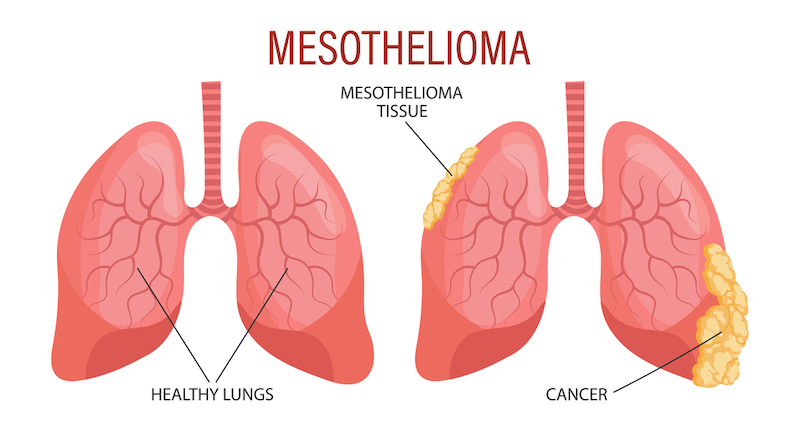
Mesothelioma is a rare and aggressive form of cancer that primarily affects the lining of the lungs (pleural mesothelioma) but can also occur in the lining of the abdomen (peritoneal mesothelioma), heart, or testicles. This cancer is predominantly caused by exposure to asbestos, a naturally occurring fibrous mineral once widely used in construction, automotive, military, and other industries due to its resistance to heat and chemicals.
Pleural mesothelioma makes up 80 percent of cases and is caused by inhaling asbestos fibers. These sharp fibers can become lodged in the lining of the lungs (known as the pleura). These microscopic fibers cause irritation and inflammation in your pleura, which is made up of mesothelial cells.
Other forms of mesothelioma have different symptoms, but the vast majority of people who are diagnosed will be dealing with pleural mesothelioma.
The connection between asbestos exposure and mesothelioma is well-documented. But the long latency period, often ranging from 20 to 50 years, means that mesothelioma is mostly diagnosed in older adults aged 60 and above.
The Symptoms of Mesothelioma
Symptoms of mesothelioma vary depending on the type but typically do not appear until the disease is in its advanced stages. For pleural mesothelioma, symptoms may include:
- Shortness of Breath: As the pleura thickens due to tumor growth or fluid accumulation (pleural effusion), it can restrict lung expansion, causing difficulty breathing.
- Chest Pain: This can range from a dull ache to severe discomfort and is typically felt under the rib cage. The pain may worsen with coughing or deep breathing.
- Persistent Cough: A dry or wheezing cough that doesn’t go away can be a sign of pleural mesothelioma. Occasionally, the cough may be accompanied by hoarseness.
- Unexplained Weight Loss: Significant weight loss without changes in diet or exercise routines can be an early warning sign of cancer, including mesothelioma.
- Fatigue: A common symptom in many types of cancer, fatigue in mesothelioma patients can be pronounced and debilitating.
- Lumps Under the Skin on the Chest: In some cases, tumor masses may be felt as lumps under the skin on the chest.
Outlook for Individuals with Mesothelioma
The prognosis for mesothelioma has historically been quite poor, with many patients living only about 12 months after diagnosis. However, the outlook depends significantly on several factors, including the cancer’s stage at diagnosis, the patient’s age and overall health, and the cancer’s cell type. Early detection plays a crucial role in improving prognosis, but unfortunately, the disease’s subtle symptoms often lead to late diagnosis.
Advancements in treatment over the years have slightly improved the survival rates, especially for those diagnosed at an earlier stage. For instance, the survival rate for patients with stage 1 pleural mesothelioma is significantly higher, with many living longer than three years post-diagnosis.
Evolving Treatment Options
Treatment for mesothelioma is challenging and typically involves a combination of surgery, chemotherapy, and radiation therapy. However, recent advancements and ongoing research have introduced new hope in the form of emerging treatment options:
- Surgery: Depending on the stage of the disease and the patient’s health, surgery can involve removing the cancerous tissue, part of the lining of the chest or abdomen, or part of an organ. In some cases, surgery aims to reduce symptoms and improve quality of life rather than cure the disease.
- Chemotherapy: This is the most common treatment for mesothelioma, often used to shrink tumors before surgery or kill remaining cancer cells post-surgery. New chemotherapy combinations and the introduction of drugs that can directly target cancer cells without harming normal cells are currently under investigation.
- Radiation Therapy: Radiation may be used after surgery to kill any remaining cancer cells, or it can be used as a palliative treatment to relieve symptoms in inoperable cases.
- Immunotherapy: This is a promising area in mesothelioma treatment, with several drugs being tested that boost the immune system’s ability to fight cancer. Drugs like pembrolizumab (Keytruda) have shown promising results in clinical trials and are being explored further.
- Gene Therapy: Although still in the experimental stages, gene therapy holds potential for treating mesothelioma by fixing the genetic changes that cause normal cells to turn into cancer.
- Multimodal Therapy: Combining surgery, chemotherapy, and radiation therapy has shown improved results compared to when these treatments are used alone. Doctors are increasingly relying on multimodal therapy approaches as a way of improving results.
The outlook for people with mesothelioma is gradually improving with the development of better diagnostic tools and more effective treatments. However, the long-term outlook is still bleak compared to many other types of cancer.
The hope is that within the next several years, researchers and doctors will have discovered a cure so that those diagnosed with mesothelioma can have the hope of living long and healthy lives.
Branded content furnished by our promotional partners. The Daily Sundial editorial staff is not involved in its production. Content does not reflect the views or opinions of the editorial staff.