Branded Content by Cosmic Press
When you use hair thinning scissors correctly, they can refine bulky sections, blend layers, and give a cut a softer, more natural finish. Used at the wrong moment (or on the wrong hair type) they can leave hair looking uneven, frizzy, or harder to manage. The difference comes down to knowing when they’re the right tool for the job and when it’s best to put them aside.
Picture this: you’re mid-trim, and the scissors in your hand seem like the perfect quick fix to smooth out a heavy spot. A few snips later, though, the hair falls differently than expected, and styling becomes trickier.
That’s the risk with thinning scissors; they’re precise tools, but only in the right context. Understanding when to use them ensures your style stays polished instead of unpredictable.
Luckily, we can help. Let’s go through when and how to use hair thinning scissors.
What Hair Thinning Scissors Do
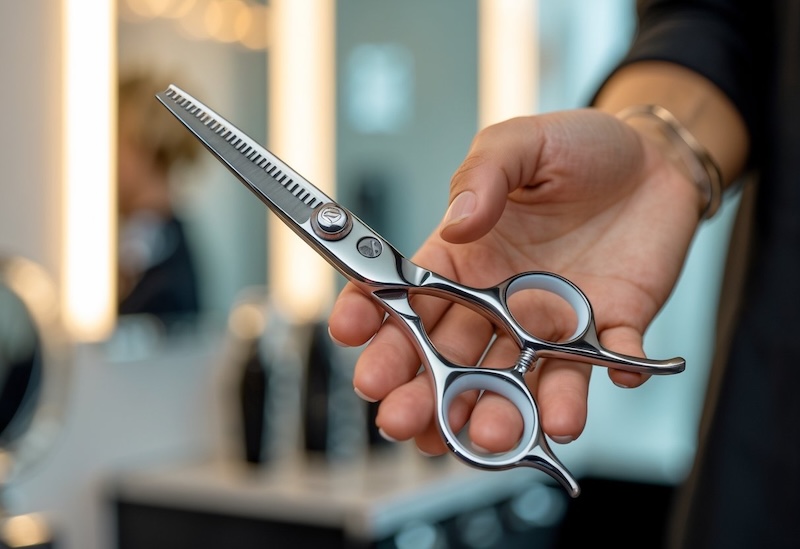
Hair thinning scissors are designed differently from standard shears. Instead of two smooth blades that cut a full section of hair in one motion, thinning scissors feature one or two blades with evenly spaced teeth.
These notches remove only a portion of the hair strands with each cut, which reduces density while leaving some hair intact. The result is a softer, lighter texture rather than a blunt edge.
Stylists often turn to thinning scissors when a haircut needs subtle refinement. Used correctly, they can:
- Lighten thick or heavy sections without changing the overall style
- Blend shorter and longer layers so transitions appear seamless
- Add movement and reduce stiffness in structured cuts
- Create a more natural grow-out compared to a straight, uniform line
The goal is not to shorten hair dramatically but to fine-tune its weight and shape. That makes thinning scissors a finishing tool rather than the primary method for cutting.
Haircut Tips: When Thinning Scissors Work Best
Thinning scissors are most effective on hair types that naturally carry extra bulk. Thick, coarse, or dense hair often benefits from selective thinning because it reduces heaviness without changing the overall length. By lifting weight from the crown or sides, a stylist can improve movement and give the cut a softer shape.
These scissors also help when blending different lengths. For instance, if a haircut has sharp transitions between layers, thinning can smooth the contrast.
Another common use is refining volume around the face. Thinning strategically placed sections can prevent hair from looking boxy, allowing features to stand out while the style maintains balance.
When Not to Use Thinning Scissors
Thinning scissors are not a one-size-fits-all tool. On certain hair types, they can do more harm than good. Fine, delicate, or already thinning hair is the most vulnerable.
Removing even a small portion of strands from these textures often leaves the hair looking sparse or flat. Instead of adding movement, thinning scissors in these cases can highlight weak spots and create a thinner appearance than intended.
They should also be avoided at the roots. Cutting too close to the scalp can cause frizz or a choppy texture that is difficult to manage as hair grows out. Overuse across the same section is another common mistake, resulting in wispy or frayed ends that require more trimming to correct.
Thinning scissors should not be relied on to fix a poor haircut or bad hairstyling techniques. Trying to “erase” uneven layers with thinning often makes the problem worse, leading to patchiness or gaps.
Using The Right Tools
Not all scissors are created equal, and choosing the right pair makes a noticeable difference in the outcome of a haircut. Thinning scissors are designed for selective bulk removal, but they should never replace sharp, standard shears for shaping and defining a style. A stylist’s toolkit usually includes both, along with specialty versions like texturizing shears or chunking scissors, each designed for specific effects.
For at-home use, quality is especially important. Cheap or poorly made thinning scissors can tug at strands instead of making clean cuts, leaving behind split ends or uneven texture. Professional-grade shears, even if used sparingly, protect the hair by cutting smoothly and reducing unnecessary stress on the strands.
Look into precision styling tools from Japan Pro Tools to make sure you have the best possible scissors for thinning hair.
FAQ
Can thinning scissors damage your hair?
They can if used the wrong way. Over-thinning leaves strands weak, frayed, or uneven, and on fine or thinning hair, it can make the problem worse. Cutting too close to the roots or making too many passes often causes the most damage.
In the hands of a trained stylist, though, thinning scissors are generally safe; they use them sparingly, on mid-lengths and ends, to add softness without stripping away too much hair.
Are you supposed to use thinning scissors on wet or dry hair?
Stylists usually prefer thinning hair when it’s dry. Working on dry hair shows the true weight, texture, and fall of each section, making it easier to avoid over-thinning.
On wet hair, it’s harder to judge how much bulk has been removed, which can lead to uneven results once it dries. Some stylists may start thinning slightly on damp hair for control, but most finishing touches are done on dry strands.
How to properly use hair thinning scissors?
The key is moderation and placement. Thinning scissors should be used on mid-lengths and ends, never at the roots, with just a few light cuts at a time. Stylists typically section the hair, angle the scissors slightly, and close them gently so only some strands are removed.
The goal is to soften bulk and blend layers, not to slice away large sections. Overuse can leave hair wispy or uneven, so professionals apply them sparingly as a finishing tool rather than the main method of cutting.
Use Hair Thinning Scissors: Now You Know
There are a lot of times it’s best to use hair thinning scissors. With this guide, you should have an easier time.
Do you want more hairstyling tips and tricks? Check out some of our other articles.
This story was produced, reviewed, and distributed by Next Net and not Nexstar Media Inc. The story contains links for which Next Net receives consideration.
Branded content furnished by our promotional partners. The Daily Sundial editorial staff is not involved in its production. Content does not reflect the views or opinions of the editorial staff.