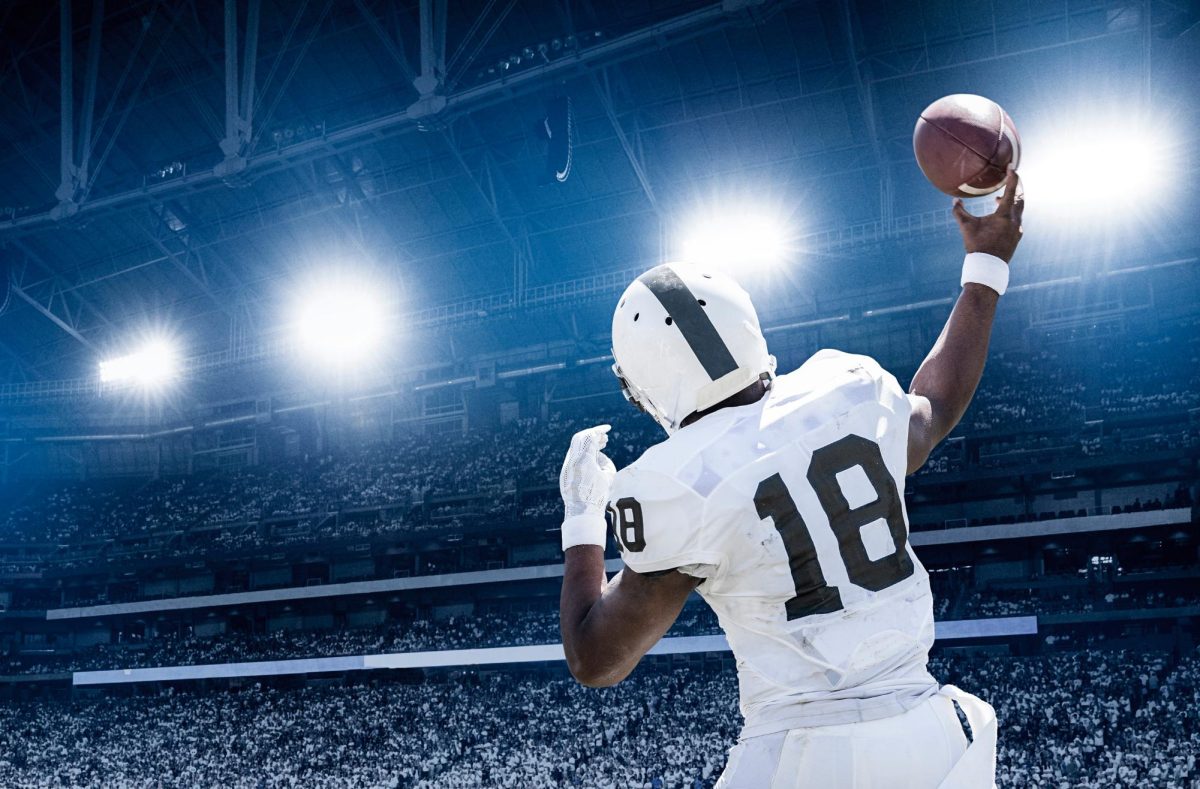
Black franchise quarterbacks (QBs) cementing themselves as leaders in the National Football League (NFL) were unimaginable in the origins of the league.
White QBs historically ran the offensive playcalls with a plethora of names that baffled the gridiron community. Tom “G.O.A.T.” Brady, Peyton Manning, John Elway, Joe Montana and Aaron “A-Rod” Rodgers are praised as what the expected NFL quarterback should look like – what a quarterback was designed to be, if you will.
On the flip side, this meant restrictions or requirements that went outside the skill set of the position. To see what is going on in real-time with the multitude of starting black QBs actively playing would be unheard of based on how this league was established.
The league, founded in 1920 and formally known as the American Professional Football Association (APFA), included Fritz Pollard. Pollard was not only the first Black player but also the first Black head coach in 1920. Many legendary, barrier-breaking players followed, helping to shape the sport into the athletic entertainment powerhouse it is today. With that success, hatred would soon rear its ugly head after the NFL’s emergence.
After 12 seasons of building a rising fan base and showcasing upcoming stars to baffle over, the start of the NFL’s “The Gentlemen’s Agreement,” or the era of exclusion, followed the 1933 season.
This period, orchestrated by George Preston Marshall, owner of the Washington Redskins (now Commanders), lasted from 1933 to 1946. This practice of bigotry was broken due to the Cleveland Rams’ relocation to Los Angeles and their seeking to play in the publicly funded Los Angeles Memorial Coliseum. Because the stadium was funded by a multiracial taxpayer population, the team faced pressure to integrate.
According to a 2014 report by the UCLA Newsroom, Jackie Robinson’s former UCLA teammates, Kenny Washington and Woody Strode, forced compliance to play in the Coliseum.
The integration of the Rams helped break down the gentlemen’s agreement with other teams, especially from the rival All-American Football Conference (AAFC), and also began the integration of Black players.
The agreement denied Black athletes opportunities and significantly altered the course of football history by removing talented players from the league. Even after the agreement was broken, discriminatory practices continued, with the Washington Redskins being the last NFL team to desegregate in 1962.
Known as the “The Forgotten Four,” Kenny Washington, Woody Strode, Bill Willis and Marion Motley were notably the first African American players signed by the Los Angeles Rams and Cleveland Browns.
Washington was an early Black running back who received all-league honors. The Hall of Fame careers of Motley and Willis were elected to the Pro Football Hall of Fame in 1968 and 1977, and Emlen Tunnel became the first Black player elected to the Pro Football Hall of Fame in 1967.
“For the first half-century of its existence, no social issue implicated the game of football more than the racism embedded in it, particularly seen through stacking at the quarterback position,” Critical Debates in Humanities, Science and Global Justice (Critical Debates HSGJ) said.
The piece describes a turning point in Black football history, when Doug Williams became the first Black quarterback to win a Super Bowl and MVP trophy in 1988. Following the win, the ideologies of fans began to change and adapt.
“This forced racist fans and media members to entirely reevaluate their ideals and subconscious tendencies, culminating in today’s league: one where Black QBs are now seen for more than the value of their ‘raw athleticism,’ now appreciated as some of the most intelligent leaders the game has ever had the opportunity to witness, and now valuable social critics as much as they are performers on the field,” Critical Debates HSGJ said.
Despite the broader reintegration, Black QBs were a rarity, with racial stereotypes about intelligence and leadership leading to “racial stacking,” as described by Critical Debates HSGJ.
I believe the media doesn’t emphasize enough what the game has transformed into over the years: the Black quarterback era. We have seen lone stars like Willie Thrower, the NFL’s first Black quarterback in 1953, ‘68 Marlin Briscoe who became the first Black quarterback to start a modern NFL game, the ‘80s Warren Moon as the first Black franchise player at that position and Cam Newton in 2015, the first Black quarterback to win the NFL MVP award outright.
Honorable mentions like Steve McNair, Donovan McNabb, Vince Young, Randall Cunningham and the legendary Michael Vick bear crawled so the current 16 Black starting QBs in the 2025 NFL season could shine bright and run the league like their predecessors once did.
This new generation of Black QBs, such as Lamar Jackson and Patrick Mahomes, sets new standards for the position and dictates how it should be recruited, coached and measured. Players like them are the forefront of half the league’s starting play-callers, representing the Black community.
A record breaking 16 Black QBs started as of the 2025 season: Patrick Mahomes from the Kansas City Chiefs, Lamar Jackson of the Baltimore Ravens, Kyler Murray from the Arizona Cardinals, Michael Penix Jr. of the Atlanta Falcons, Bryce Young from the Carolina Panthers, Caleb Williams of the Chicago Bears, Jayden Daniels from the Washington Commanders, Dak Prescott of the Dallas Cowboys, Jordan Love from the Green Bay Packers, Justin Fields of the Pittsburgh Steelers, Jalen Hurts from the Philadelphia Eagles, C.J. Stroud of the Houston Texans, Cam Ward from the Tennessee Titans, Russell Wilson of the New York Giants, Geno Smith from the Seattle Seahawks and Spencer Rattler of the New Orleans Saints.
These players force the league to reimagine a new beginning, a new age for the position, a new perspective on the NFL’s culture and a positive influence for aspiring Black and underserved kids with a dream that is now attainable.