
In my experience, it’s not uncommon to hear students at CSUN complain about petitioners who are posted on walkways and corners. Many see them as a persistent annoyance, and whether it be on Reddit or Yik Yak, these grievances are made well-known.
This isn’t a resentment I share; in fact, I welcome them and see petitions as a great way to use our voices to promote political change. But for those who want to sign in the name of an appealing initiative, I encourage you to take your time and do your research – or you could end up with a bad deal.
While some cite wasted time or persistence as their issue with petitions, there are different and much larger problems with the initiatives themselves: a lack of information and even manipulative wording.
Even though all ballot initiative descriptions and titles are prepared and approved by the California Attorney General for neutrality, the petition format as it is doesn’t provide enough information for the average signer to make a politically informed decision. Since many potential signers will be between destinations when they encounter them, they’re left with little time to weigh any possible downsides. To fill this informational deficit, doing the necessary research before signing is crucial and is often an overlooked aspect of political activism.
While some might dismiss this in favor of using their own intuition with the provided information, it’s important to note one crucial factor: petitions are meant to be signed. This means that descriptions given by circulators are typically the most persuasive and favorable toward the cause. The provided title and description are also often at the surface level and too narrow in scope for someone to understand the full range of pros and cons.
It’s also not uncommon for the potential ballot measure to have unintended consequences, which, to many, might not even be worth the signature. Spending a handful of time researching initiatives could be the difference between signing something you support and signing something entirely oppositional to your views.
For example, one might leave their signature on Initiative 25-0007A1 to require voter identification at the polls in hopes of having more secure elections, but not know that stricter voter identification laws have been shown to impact voters of color disproportionately.
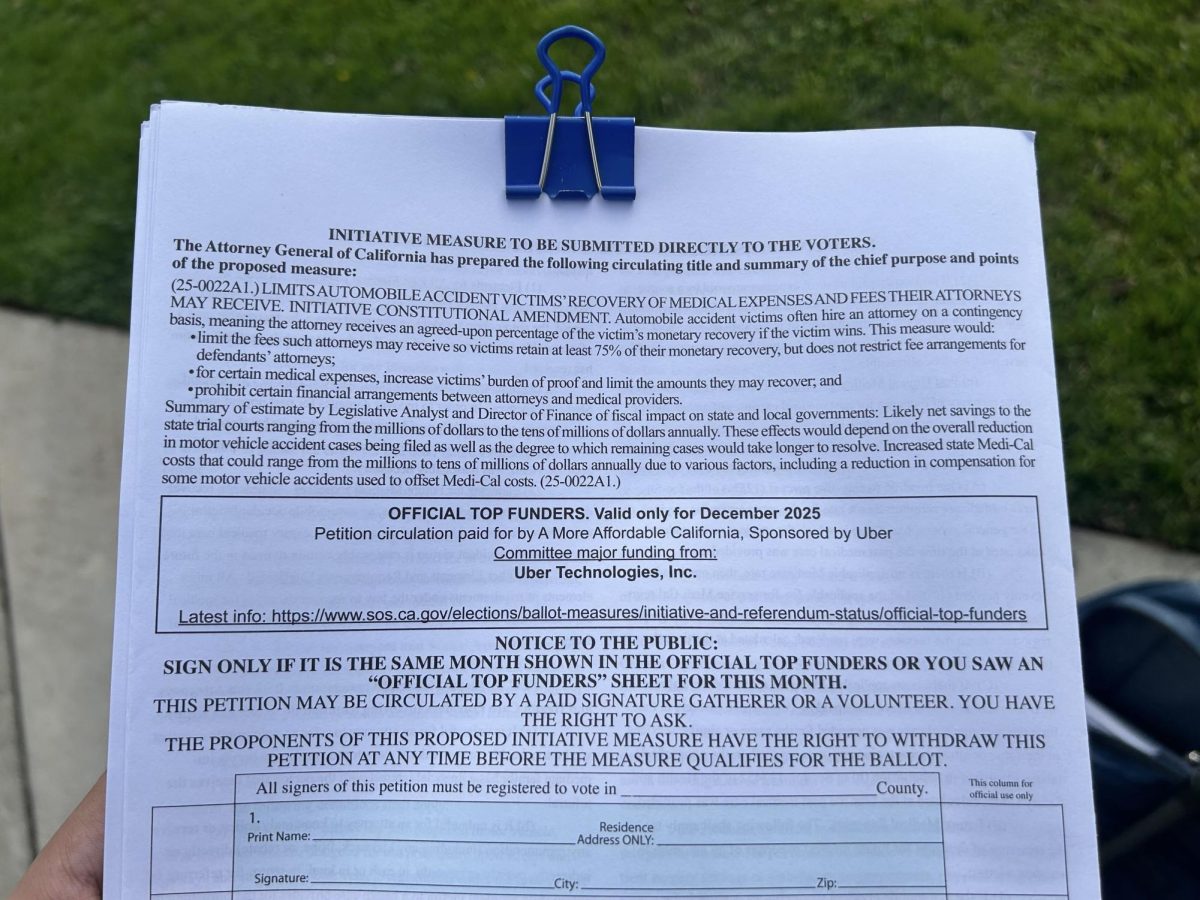
In other cases, petitions might have intentions contrary to what they appear to say. One prominent example is Initiative 25-0022A1, which aims to limit the percentage of automobile accident victims’ winnings that is allocated to attorney fees. Typically, this potential measure is framed as protecting car crash victims from greedy billboard lawyers, and on the surface, it seems to do just that.
After closer inspection, however, the initiative is carefully written in a way that would make it financially impossible for many attorneys to take on some cases after factoring in costs. This malicious wording begins to make more sense after realizing the main backer of this initiative is ride-share giant Uber, which would gain immensely from limiting car crash victims’ access to attorneys.
All of this isn’t to scare off those who want to put their name behind a cause – it’s quite the opposite. Petition signing, demonstrating and voting should all be highly encouraged and celebrated. But we should be encouraging these actions in tandem with becoming informed through our own open-minded research.
If you are interested in participating, ask for a link. Snapping a quick picture of it and tapping in the Photos app opens descriptions, titles and funders on a California government website. From there, reading articles on different perspectives will leave you ready to make a decision the next time you encounter the petition.