
As an Iranian American student at CSUN, I’ve seen how quickly an internet shutdown stops being a “technology issue” and becomes a human one. When communication is cut off, families lose access to updates, reassurance and even emergency support. For students with family in Iran, the ripple effects of blackouts are felt far beyond the media’s coverage. It isn’t just happening overseas; it follows us into classrooms, work shifts and everyday life.
I know my connection to Iran means some people may question my perspective, but this isn’t about politics for me – it’s about what happens when communication disappears and families are left with silence. When internet service is severed, families are unable to confirm and receive updated information. For Iranian students at CSUN with family in Iran, that uncertainty is not just where their families are, it’s also where they are each day as well.
Iran has experienced an internet shutdown since late December that has now con
tinued into January. Some students at CSUN who have family in Iran have struggled to reach their loved ones and receive updates during the ongoing crisis. When that link is cut, even basic communication becomes a guessing game.
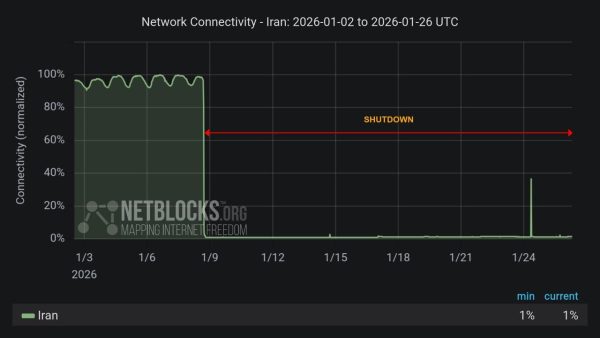
According to NetBlocks, an internet watchdog group, Iran is now experiencing day 18 of its internet shutdown. NetBlocks’ network data shows Iran’s internet connectivity plummeted during the shutdown, with some temporary and sporadic access.
CSUN student Mahsa Amininasab said that she still fears for her family’s safety.
“The blackout has been one of the most traumatizing events I’ve ever gone through,” Amininasab said. “I’ve never been this scared in my life.”
Mahsa’s story highlights how internet blackouts harm citizens who rely on digital connectivity to assure themselves that their family and friends are safe. Family members being cut off from each other can cause intense anxiety in short order, which can be particularly challenging for young people like Mahsa who are trying to focus on their studies.
“I’ve been looking at my phone every single day and night, waiting to hear from my family or my friends. For the longest time, I couldn’t reach them,” Amininasab said. “I didn’t know if they were okay, if they were hiding, hurt or even if they were still alive. Every time the internet is cut, it feels like my family is being erased from the world.”
CSUN Professor Homa Esfarjani explained how internet blackouts can negatively impact civilians because they rely on communication for medical emergencies and basic needs.

“If you don’t have any information about your family, you start to panic,” Esfarjani said.
“Those with heart problems or other diseases are at higher risk without proper communication and response times for emergencies can be heightened when phones and internet go out.”
Student wellness and mental health are frequently discussed at universities like CSUN. However, during an internet shutdown, it can be hard to focus on anything else. Not only are students restricted from using social media, but family routines are thrown off. They are cut off from reassuring their loved ones, and each hour feels like an eternity.
Students having to sit through class, wondering about their loved ones’ well-being overseas, can lead to issues with focus, lack of sleep and normal functioning. Students in other countries also suffer from these consequences. If Iran faces an internet outage, many daily routines are affected and the impact can be spread among family and friends.
Protests have also spread outside of Iran, including Los Angeles, New York and parts of Germany, as people call for international attention to those who can’t speak freely inside Iran. Iranian officials cracked down on weeks of protests by arresting protesters and threatening them, CBS News reported. Rights groups reported to CBS News that thousands of people were arrested.
The blackout isn’t simply an inconvenience for families and students. It derails their daily lives and causes an eerie silence that’s difficult to put into words if you haven’t experienced it. Communication isn’t a luxury – it’s a lifeline.