
The evening of Nov. 5th, 2024, my group of friends and I got together after school to watch the presidential election. I remember walking into my friend’s house feeling hopeful for the future. Everyone brought homemade food, and we were all sitting on the couch talking about how we thought it would go — “There is no way Donald Trump is going to win.”
That night, after everyone had already gone home, we were still up texting each other screenshots of the polls until Trump made it over the 270-vote threshold for the presidency. I ended up turning off my phone that night, lying down in bed and just staring at the ceiling, hoping that it would be better than the first time.
Lo and behold, we’re a little over a year into his presidency, and I’ve eaten my words.
A potential third partial government shutdown occurred only a week after the second partial government shutdown, and the first full shutdown was historically the longest, lasting for 43 days.
Approximately 32 people have died under the custody of Immigration and Customs Enforcement (ICE).
Renee Nicole Good, a 37-year old mother of three who attempted to support her immigrant neighbors, was murdered. Per the Secretary of Homeland Security Kristi Noem, she committed “an act of domestic terrorism” by trying to drive away from ICE agents.
The murder of Alex Pretti followed – an apparent “agitator and, perhaps, insurrectionist” according to President Trump, who was really a 37-year-old intensive care nurse who was filming an arrest by ICE agents on his phone before being tackled to the ground and shot.
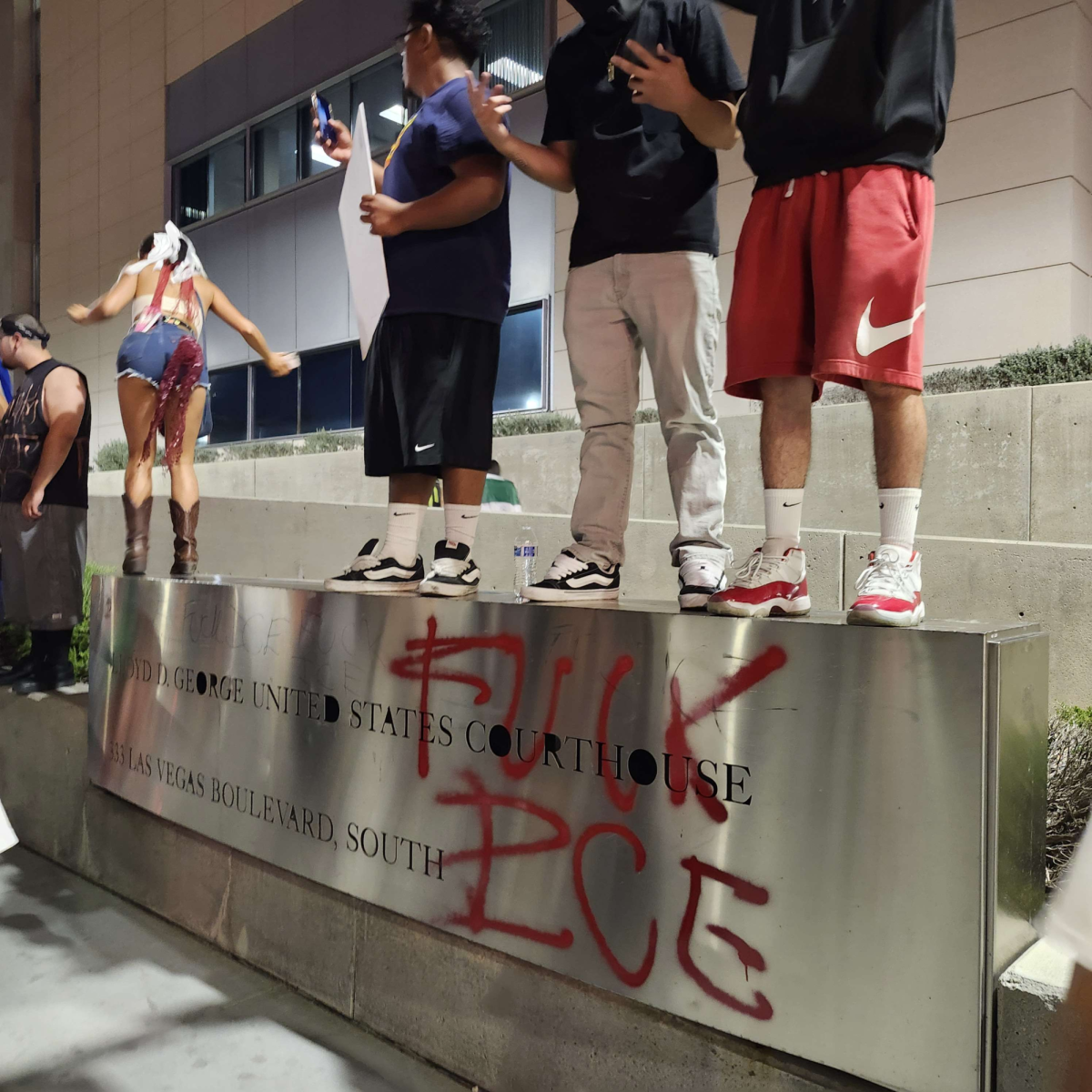
These resulted in protests against ICE across the entire country that are, according to Trump, filled with “highly paid Lunatics, Agitators, and Insurrectionists.”
These are only a few examples from the past couple of months. It’s no wonder that only 17% of Americans have genuine trust in the federal government, according to the Pew Research Center. American citizens can’t see themselves changing the system, and thus, the individual indifference to politics, or “political apathy,” is born.
This phenomenon’s history is not new – there are deep roots through every reformational period. Shortly after the Civil Rights Movement, which saw massive changes in government due to the citizenry’s work, came the Watergate scandal under former-President Nixon, which began to turn Americans’ trust around.
That apathy grew with the Vietnam War, which had Eisenhower lying about how the United States was winning. Then came the Iran-Contra affair in the 1980s, which put the Reagan administration in the hot seat for an arms-for-hostages deal.
The ultimate break of trust was the ruling of Bush v. Gore, where the Supreme Court of the United States (SCOTUS) decided the 2000 election with a single ruling.
Since then, politicians focused on that apathy to win office, as seen by President Trump with his 2016 and 2024 platforms of “Make America Great Again” (MAGA) and “Drain the Swamp.” Both were broad campaigns that were tailored to “the people” and seemed to have plans on hot-button issues.
As a citizen, it’s easy to connect to him. He talks about what Americans care about and what individuals care about. Once voted into office, it should be trusted that he’ll go through with his rhetoric, right? After all, there’s nothing to do individually that could majorly affect any political outcome.
And as a citizen right now, that’s how it can feel. One person can’t stand up against ICE or against the government by themselves. Even with a group of people, it can feel futile, so why try? Doing nothing and letting time pass will eventually allow the situation to fix itself; after all, time heals all wounds.
However, that line of reasoning is dangerous. To not choose one side or the other is still choosing a side. To quote bishop and theologian Desmond Tutu, “If you are neutral in situations of injustice, you have chosen the side of the oppressor.”
The only way that genuine change, the kind that is looked back on in retrospect as fundamentally altering, can be achieved is through active participation.
The Tulsa Race Massacre in 1921 was the worst incident of racial violence in American history. Oklahoma’s second-largest African American community was burned to the ground over the course of 18 hours, with an official 36 recorded deaths – 26 Black people and 10 white people, however, the riots had an estimated death count as high as 300.
And still, the series of events never made it to national news as both sides of the conflict didn’t want to openly discuss it. Newspaper accounts from the period were removed before they could be preserved. Not enough people actively participated and told their stories, leading to the entire situation amounting to very little, not being documented in history books today.
It was only 30 to 40 years after the Tulsa Race Massacre that the history that is taught occurred, including the Montgomery Bus Boycott, the Greensboro sit-ins, the Albany Movement and civil discourse as we know it today. It “happened” because there was active participation by all people, minority or not.
There was no room for political apathy when African Americans were being attacked by police dogs and fire hoses on live television; the only thing that could and should have happened was the 11th largest protest in the U.S. to date, the March on Washington and the fundamental changes in government with the Civil Rights Acts of 1964 and the Voting Rights Act of 1965.
The same happened with the Women’s Rights Movement. The fight began with Antislavery Petitions from women in 1835 as they sought to influence Congress through means other than voting, only for former Vice President John C. Calhoun of South Carolina to start a debate over a “gag rule” that barred these petitions from being accepted.
This history is rarely taught, and the Women’s Rights Movement really “happened” when publicity grew on the Seneca Falls Convention and led to the first and second waves’ protests that amounted to the 19th Amendment and the almost Equal Rights Amendment (ERA). Again, the beginnings of the Women’s Movement in their petitioning isn’t largely taught because of the apathetic line of thought that sought to bar the petitions.
The political climate during these key reformational periods and the political climate now aren’t all that different. Since the conception of this country, immigrants of color and women have been manipulated and extorted, just for that history to be altered or not covered because of political apathy. As such, with new developments of ICE or the federal government seeming to come out every day, the time to get apathetic is not now.
The federal government is seeking to attack the politically active press, shown through the recent arrests of former CNN anchor Don Lemon and independent journalist Georgia Fort, two reporters who covered an anti-ICE protest at a church in Minnesota. This, in turn, restricts the ability of citizens to get information and become politically active participants themselves.
In just one weekend at the end of January, there were more than 300 anti-ICE protests, and more will happen. Institutions and communities have been having more protests recently. As an American citizen, I urge everyone to civically engage. As more people make their voices heard, the greater the chance for genuine change grows.
And though correctly planned, non-violent protests are safe, they can feel the exact opposite. It’s understandable that people may not want to protest. Still, there are other ways to be heard, like reaching out to congressional representatives, which, according to studies, raises the probability for legislators to support relevant legislation by about 12%. Additionally, participating in national strikes like the recent January 30th national shutdown can incite change.
As Founding Father Thomas Jefferson stated, “I know no safe depository of the ultimate powers of the society, but the people themselves.”
Right now is not the point in history to feel politically apathetic and utterly hopeless; the fight against ICE and the Trump administration has to continue to come from the people in pursuit of a more perfect future.