
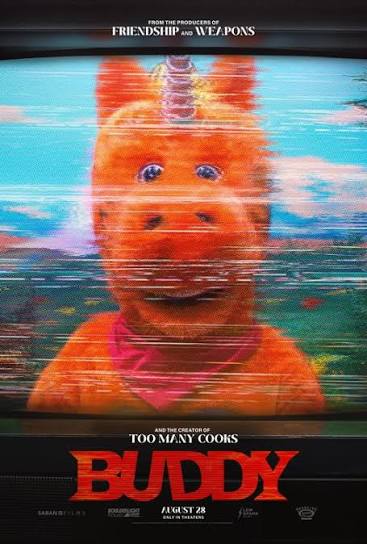
Childhood is filled with many nostalgic memories, such as a favorite childhood TV show or favorite foods and songs. Reminiscing about childhood memories or doing things to “heal your inner child” has become increasingly popular in recent years. “Buddy,” however, takes these comforting elements and gives them a sinister spin.
The movie centers on “It’s Buddy!,” a fictional children’s show that seems inspired by the TV series “Barney & Friends.” Keegan-Michael Key uses aspects that are extremely memorable, with the catchy educational songs, dances, bright pastel colors and even the friendly and familiar voice of Buddy. We begin to see Buddy’s dark side after one of the kids refuses to go along with the singing and dancing.
Casper Kelly directed “Buddy” and was the writer of the horror short film “Too Many Cooks,” which is a horror parody of the opening sequences of ‘90s sitcoms. In “Buddy,” we can definitely see many of the similarities between the films, especially in how they mess with nostalgic moments and twist them.
The movie doesn’t stay in its episodic format for long, as the kids uncover Buddy’s sinister side and witness him commit several murders. The movie begins to expand beyond the TV set and even pauses to show what is going on in the outside world. Where the audience sees Grace, played by Cristin Milioti, as a mother who begins to feel empty, telling her husband, played by Topher Grace, that it felt like they had another child.
From Buddy’s first introduction, the film does an extraordinary job of evoking childhood nostalgia and creating that sense of comfort. Key gave an amazing performance as Buddy and created the illusion of a familiar, friendly voice through his character. The visuals also help understand when Buddy flips from his comforting self to the sadistic side. For example, the songs being slowed down and the on-screen visuals becoming distorted.
However, the film begins to lose its way in the second half. In the first half, the storyline is well set up, and viewers may have an idea of how the film might end, but it takes many turns and introduces new information without much explanation or resolution. For instance, we see a mural with two other characters apart from Buddy, even meeting one as the kids try to escape the set, with no explanation as to who they were and what the history was.
Overall, “Buddy” stands out for its childhood-like visuals and its commitment to going above surface-level ideas. The film touches on ideas like sexual assault, how the TV industry can be detrimental to children and implies that things that may be comforting can come from something traumatizing. We see a mix of all these ideas through the small comedic moments in the film and through the songs the kids would sing to self-soothe.
While the film loses focus at times and lacks consistency in the storyline, it strives to create childlike innocence and humor while incorporating it with a frightening, threatening presence, making it stand out from its competitors and fellow horror movies.