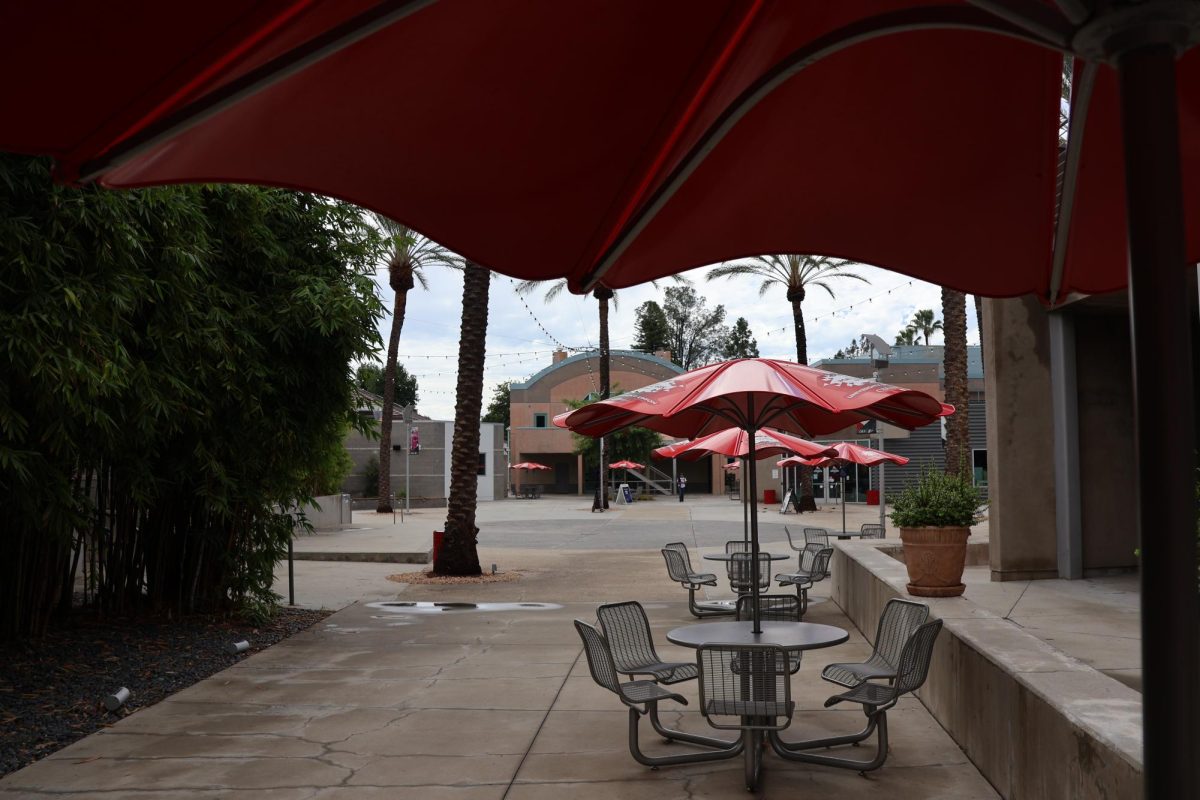
By the time Frankie Witt, an art major with a focus on animation, steps outside the California State University, Northridge (CSUN), the umbrella is already open.
For Witt, a day with temperatures in the triple digits means moving quickly between air-conditioned buildings, carrying ice water and spending her free time between classes at the University Library. The umbrella provides shade while walking across the parts of campus without much cover.
“That’s like literally my answer for everything, is the umbrella,” Witt said.
During the triple-digits heat days in the San Fernando Valley, students said the heat has affected much more than what they wear. It changes how they get to campus, plan their classes, attend events, spend money on drinks, choose where to study and spend time with friends.
CSUN’s Environmental Health and Safety Heat Illness Prevention Program considers temperatures of 95 degrees or higher to be “high heat conditions.” The program lists conditions students also deal with, including direct sunlight, hot surfaces, limited air movement, staying hydrated and choosing proper clothing.
The program notes that all students affected by the heat must hydrate and stay in the shade, as well as the air-conditioned buildings that can be used to cool down.
For students, staying out of the heat often means planning their day carefully.
Tanya Flores, a psychology major, said she leaves home early and tries to have classes in the same building or nearby buildings whenever possible.
“I kind of scheduled my classes around that so I wouldn’t have to leave from one side of campus to the other side,” Flores said. “I know it gets extremely hot during the fall.”
On cooler days, she likes walking with friends, spending time near the Orange Grove or getting coffee. On very hot days, she avoids those activities and tries to leave campus sooner.
“My classes end around 12:01, and that’s usually the peak hours,” Flores said.. “It’s horrible.”
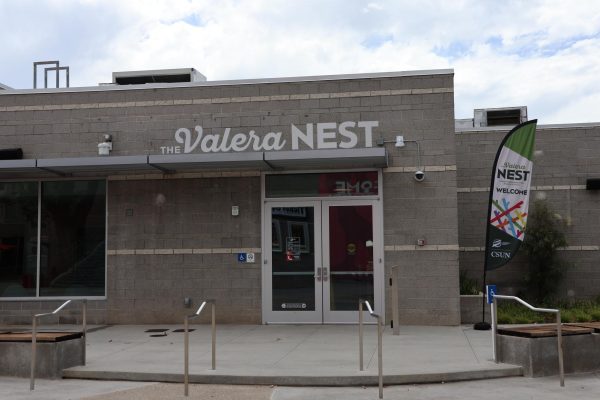
Flores explained that she stays in places such as the Valera Nest, the University Library and Ronni and Shepard Goodman Hall, formerly known as Maple Hall. She said the Valera Nest works well because it has Wi-Fi, microwaves and a cool place where she can eat and study. The Valera Nest is located in the University Student Union (USU), situated between the Grand Salon and Subway, and provides students with resources and support.
Flores also uses campus buildings to avoid walking in direct sunlight.
“Plan your day strategically,” she said. “Instead of just walking the pathways outside on campus, I would go through buildings to just avoid the sun as much as I can.”
Other students said the hardest part of the heat is walking between classes.
Ethan Uchino, an accounting major, said the afternoon heat is the strongest when he is walking across campus.
“Sometimes what I don’t think a lot of people talk about is the heat hitting the white pavement,” Uchino said. “Because white light reflects off lighter surfaces, it bounces off and hits you more”
Uchino said, like many students, he goes to the University Library to cool down. He also added that he goes to Noski Auditorium, located near the campus business area around Etiwanda Avenue. He especially likes to go there when the auditorium is empty. He also carries a 60-ounce water bottle filled with ice and refills it at campus water stations.

CSUN has water stations throughout the campus. A campus mapping project documented 138 locations, including touchless and FloWater stations. The university also lists refillable water stations as one of its campus resources.
Even with access to water, walking through the campus under direct sunlight remains difficult.
Lopez added that walking between classes is especially difficult because there is not much shade. She avoids unnecessary trips across campus on hot days, including walking farther to get lunch. She usually goes to the library when she needs to cool down and carries sunscreen and water.
“By the time I actually do arrive, it’s really hot and I have to walk across the campus, and the heat just gets really overwhelming,” Lopez said.
The library has become an important place for students to escape the heat. Students use it to study, charge their devices, eat, meet friends and wait for the hottest part of the day to pass.
Witt said the heat can make an already long day more difficult. She is often on campus from about 8:30 a.m. until 10 p.m., when several classes take place.
“I’m just walking in the heat for a long time, and I’m sweating profusely,” Witt said. “I mostly just hide in the library for most of the day when I am not in class,”
For students experiencing their first San Fernando Valley heat wave, the advice is simple: Drink plenty of water, stay in air-conditioned places and spend less time in direct sunlight.