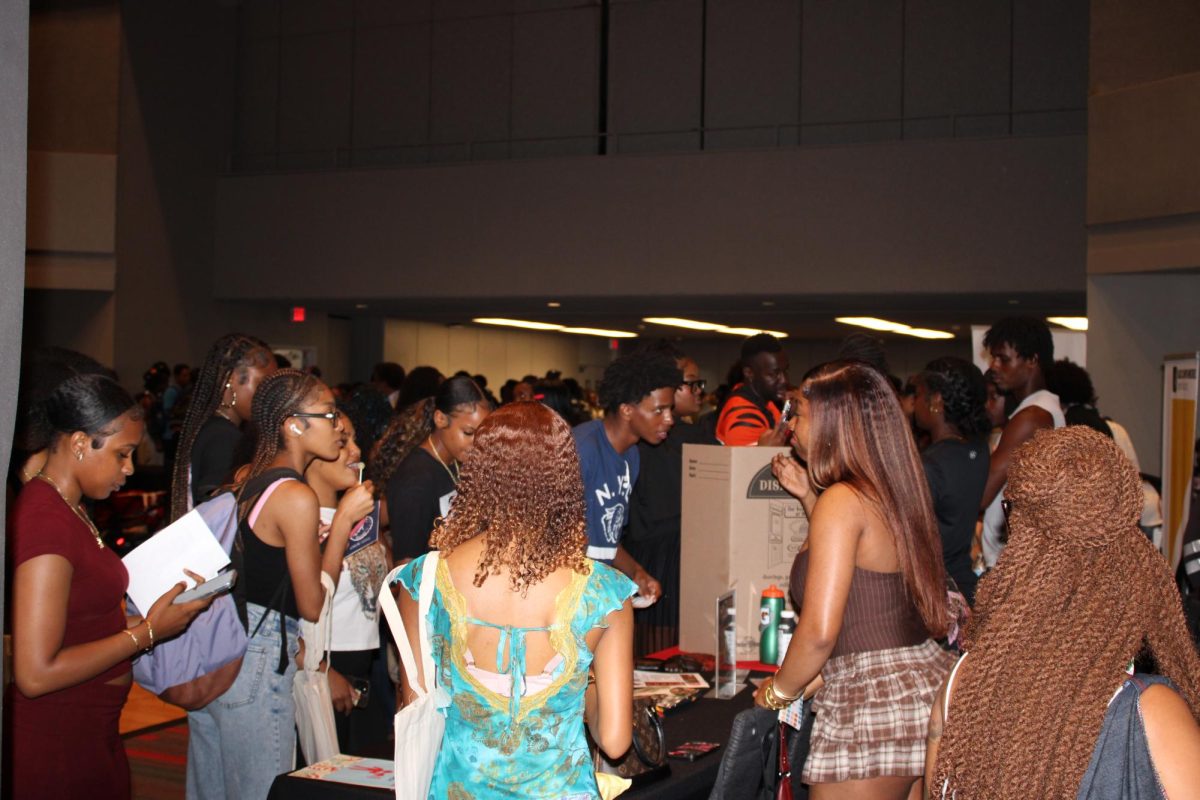
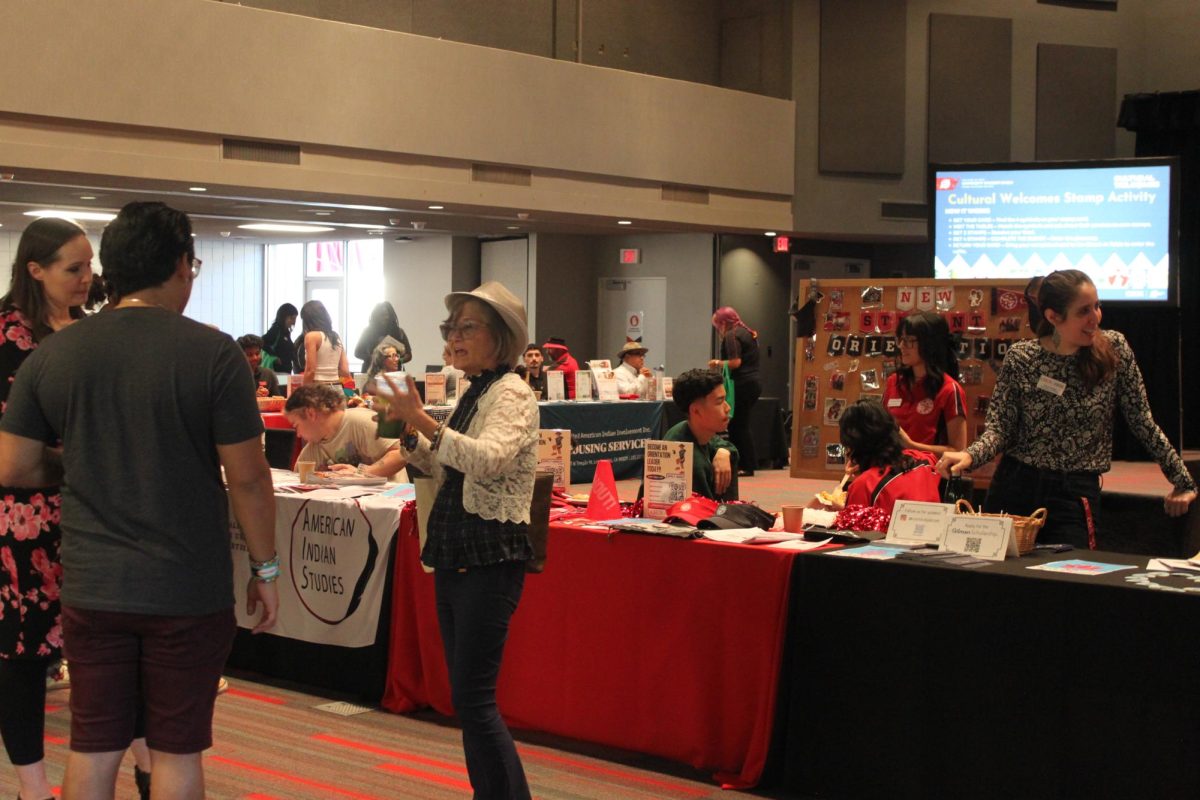
The fourth and final of the Cultural Welcomes events series was held on Tuesday, Sept. 15, 2026 from 4 p.m. to 7 p.m. This time, the Northridge Center hosted the Native American Welcome event and job fair.
Attending students were welcomed with stamp cards that allowed them to receive food, such as frybread, after visiting and getting stamps from four tables and a bingo card for a short game that would happen around an hour after the event began. The bingo card was themed “Native Foods of Turtle Island” and featured traditional foods such as fry bread, kak ik and seal.
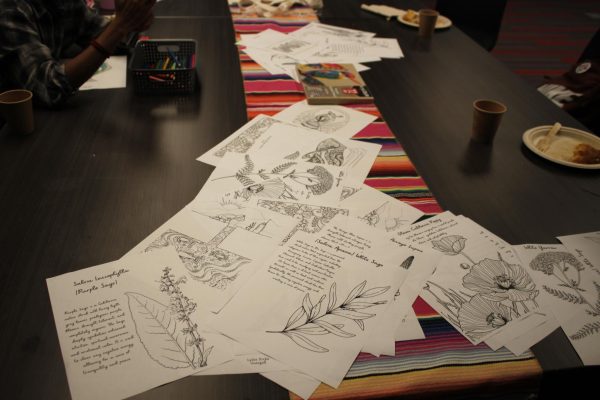
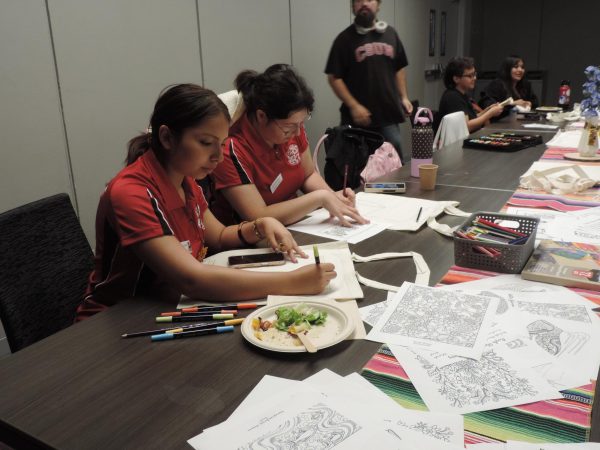
Plain tote bags, markers and coloring pages of indigenous culture imagery were laid out on tables for students to decorate as well.
The event had tables organized in a U-shape which featured Native American community organizations, school resource programs, advocacy organizations, CSUN’s American Indian Studies (AIS) program and the American Indian Student Association (AISA). Each table highlighted a significant area of interest that would benefit Native American visibility.
AIS student Lilliana Rice explained the importance of Native American visibility in academics.
“Often American Indian students are left out of the academic circle,” said Rice. “Historically we have not been represented in scholastic environments…It’s such a small group of us, and we deserve to have more places that allow us to flourish scholastically, especially because of the social and global circumstances that we’re going to school under.”
Although AIS enrollment is low, the program is optimistic in its mission to create a space for Native American students at CSUN.
“I would like to provide safe spaces, welcoming spaces Native students and their friends and allies,” said AIS Director and Senior Tribal Liaison Officer Teresa Williams León. “I’m hoping that we’ll increase the Native students, faculty, staff population on campus and that we come to be known in Southern California as this is the place for Native students to come.”
The AIS program is working toward offering a Bachelor of Arts degree next year. Williams León, Chief of Staff Genevieve Evans Taylor and tribal elder and Chairwoman of the Yo’emem Kombicha Californiapo are currently proposing an initiative called the American Indian Native Access (AINA) Program to build a pathway for recruitment to CSUN, student retention, professional development and job placement. The program, rooted in cultural belonging for Native students, aims to support them throughout their academic careers and beyond.
In further efforts to increase Native student enrollment, AISA attended the Native College Fair held at College of the Canyons earlier that same day and attended similar events at different community colleges and high schools.
Formal academics isn’t the only way for Native students to gain visibility. Programs like the Tucint Youth Empowerment, founded by the tribal nation that CSUN resides in, the Fernandeño Tataviam Band of Mission Indians, have cohorts of Native youth ages 17 to 26 that engage them in cultural activities and advocacy.
The United American Indian Involvement Inc. displayed its health and cultural resources tailored specifically for Native American experiences. Located in Echo Park, they offer medical, dental and behavioral health services. They also have a youth substance abuse and suicide prevent program called the Walking In a New Direction (WIND) Program.
The California Native Vote Project attended with intent to introduce Native students to governmental advocacy. Their goal is to “engage Native American communities across dozens of counties to build political power through an integrated voter engagement strategy,” which they aim to achieve through research, youth organization and voter education.
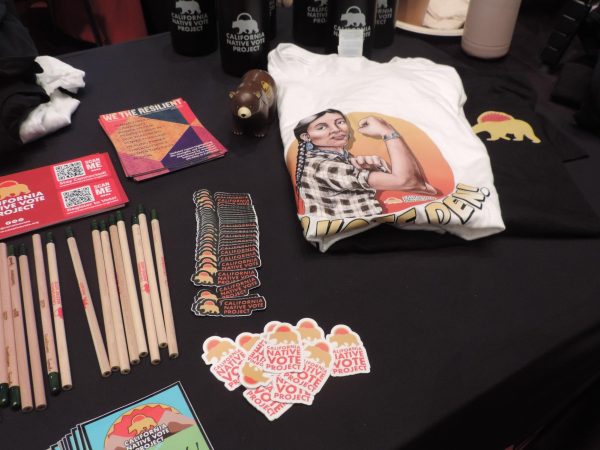
“Right now, we’re really focusing on getting out to vote for the upcoming election in November,” said California Native Vote Project staff member, Renee Perez.
Aside from outside organizations and school resources, the American Indian Student Association (AISA) also tabled. AISA holds meetings, events and workshops for indigenous students, and helps organize CSUN’s Annual Powwow.
“We’re tabling at this event so people could get the knowledge and understanding that, hey, we’re here, we do exist,” said Diogo Lopez, AISA social media manager.
Despite it seeming like a small community at CSUN, Native students and AIS are optimistic in evolving the program and further growing the community.