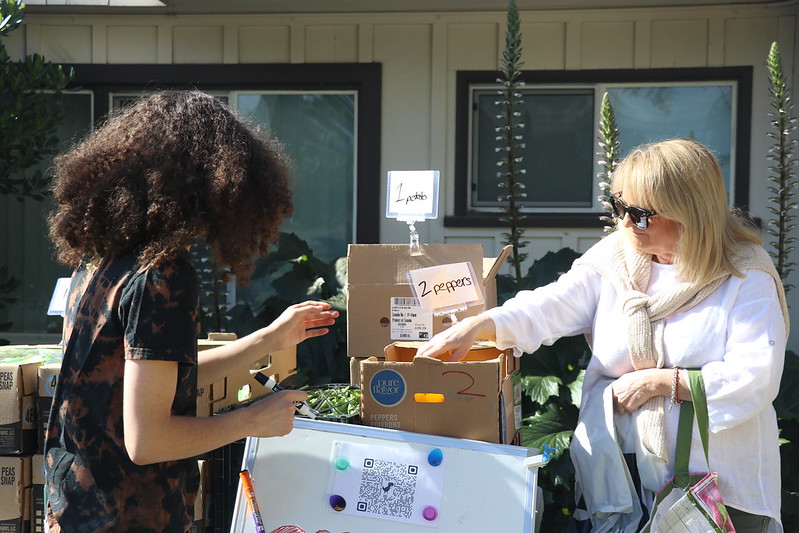
Nestled in the far corner of CSUN’s campus, there is a hidden oasis of resources and community. The Women’s Research and Resource Center (WRRC) has been serving students for years, silently working behind the scenes to meet their needs.
Located behind the B6 parking lot near the corner of Halsted Street and Reseda Avenue, the WRRC provides free menstrual products once a month and a food pantry where students can pick up canned foods and toiletries, as well as fresh produce once a week. The center, which is a queer and transgender run space, is focused on building community and bringing awareness to issues that primarily affect LGBTQ+ and gender equity.
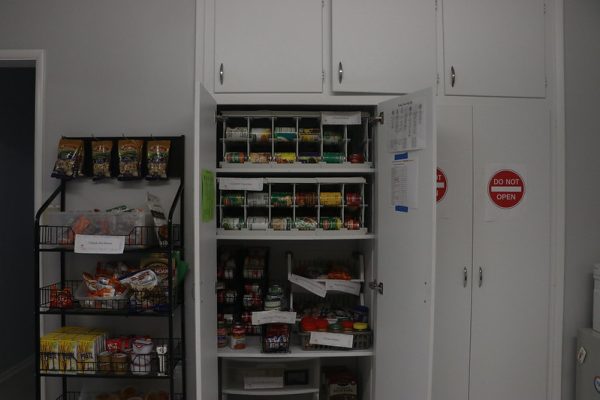
They are also responsible for filling the wellness vending machines located around campus, stocking them with everything from cold medicine to condoms and Narcan.
“For us, it’s really about figuring out what could impact a student’s progress, and then providing resources so that they can, you know, just continue to do what they need to do to graduate, which is ultimately the goal of every department on campus, right?” Shira Brown, director of the WRRC said.
The center moved back to its space on Halsted Street last semester after being relocated to Santa Susana Hall for renovations. Because the center is far from the main campus, Brown welcomed the change as a chance to have an easily accessible and centrally located space for students.
“We had to move to Santa Susana into a very small office space, but there was something very charming about it,” Brown said. “We were limited in what we could do, and you know, what we could provide for students. We did everything on a much smaller scale.”
The center’s renovations were finished before the start of the ‘25 spring semester, and they returned to freshly painted walls, polished floors and an opportunity to start anew.
Although they now have a much larger space, the distance from students on campus is much greater. On average, it is a 10 to 20 minute walk from any central location, such as the University Library. The center has seen a smaller turnout than they did during their relocation due to it being out of most students’ paths.
“The biggest thing that we have a hard time with is getting, like, that range of students. We’re far off campus. You’ve gotta walk. It’s a big walk, depending on what side of campus you’re coming from,” said WRRC Student Director Corrin Popick. They said that at times, their walk spans around 25 minutes.
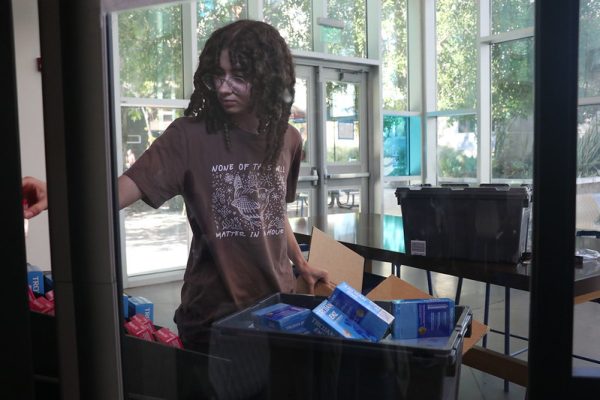
The trade for a farther walk through campus is having the space and resources to hold events and better cater to the community. Popick noted that having their building back last semester allowed them to have a quiet space and plan more organized events, like Take Back the Night, which aimed to raise awareness about sexual assault while uplifting survivors. It is also a space that gives students privacy if they need access to pregnancy tests, menstrual products or Plan B and wish to do so discreetly.
“People feel generally a lot more comfortable coming here because it’s a little bit kind of private. It’s off campus, it’s not directly school-related,” Popick said. “You’ll be safe, and you don’t have to worry about other people seeing you or judgment from other people. I’m not saying that people will judge you automatically, but like, that’s just one of those, like, inherent fears.”
Popick noted that many students they meet at the WRRC do not know that these resources are available to them until years after arriving at CSUN. They said once students do find out, they only have a short time to take advantage of all the center has to offer.
The WRRC has existed for over 50 years, and it is one of the first WRRCs to be established within any CSU. Despite being a well-established organization on campus, Popick feels the WRRC has not been promoted in ways that would help them gain traction. Since the center is located in an area that may not be easily accessible for students, Popick wishes that CSUN would help spread the word about their center, as well as their neighbors, the Glen Omatsu House, the Black House and La Casita.
“I would love to see the university really start lifting these places up and helping promote us and what we do for the minority communities, especially in the current times we live in. It is so important for students to know that we have these resources,” Popick said.
The WRRC is currently in the process of changing its name to better reflect the services it provides and its mission statement. The change is a part of a larger conversation surrounding WRRCs around the country. Brown and Popick agreed that considerations for their future name is in-part due to wanting to respect the extensive history behind the center, which is rooted in the women’s rights movement.
“Historically, women’s centers have been specifically for women, but that has changed drastically over the last 10 years or so, and so we just want to reflect that change,” Brown said. “It’s really important to us for people to know that we are a space for everybody, versus just a place for women. And so when you just have women in the title, it can often alienate people who maybe don’t identify as women.”
Brown and Popick both emphasized that the center is a space where everybody is welcome – regardless of gender or sexuality. Their resources are free to access for all CSUN students.
“Our core values and our core goals of being this diverse space where everyone feels welcome, no matter their sexuality, no matter their race, no matter their gender, no matter their ethnicity. Like, that is what I strive for,” Popick said.
For more information about the WRRC, visit their website or follow them on Instagram.