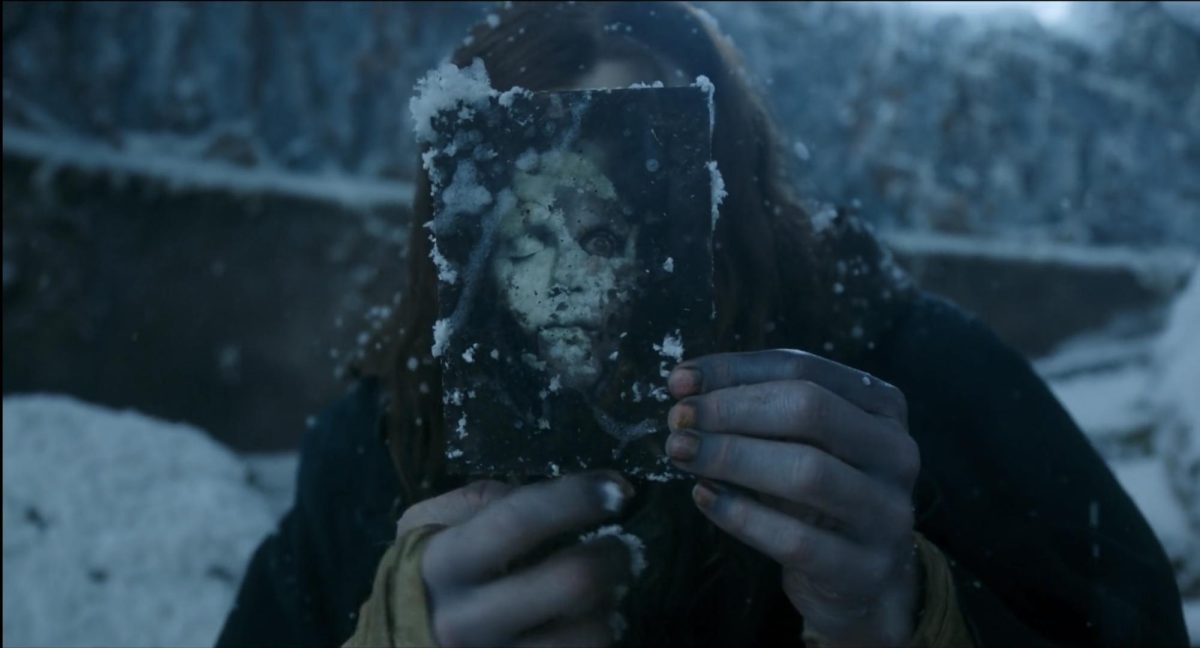
Well, he did it again. Guillermo del Toro’s new film, “Frankenstein,” has impressed both audiences and critics with its adaptation of Mary Shelley’s classic tale.
After its release, the film earned an 85% rating on Rotten Tomatoes, while audiences gave it an even higher rating of 95%. Although it had a short theatrical run before being released on Netflix, the film received strong praise for its haunting visuals and human drama.
del Toro deviates from the novel by reimagining the title characters and shifting the setting to the 1850s during the Crimean War. Victor Frankenstein, portrayed by Oscar Isaac, is a brilliant but troubled scientist obsessed with conquering death. His experiment gives life to the Creature, portrayed by Jacob Elordi, who becomes both a marvel and a mirror of his creator.
The film explores the theme of fatherhood. Victor’s cold, abusive father drives him to be a better man, but his hubris blinds him to the fact that he is treating the Creature the same way his father treated him.
What struck me most was how del Toro and Elordi transform the Creature from a raging beast to a sympathetic figure. The Creature is reimagined as an innocent and a victim of Victor’s actions. Unlike the novel, the Creature never attacks or kills anyone on his own accord; he only kills in self-defense. The only time he willingly hurts someone is Victor, and he only does it out of anger and frustration. Elordi’s performance gave the Creature humanity and vulnerability that made me feel sorry for him.
The film is divided into three parts: Prelude, Victor’s Tale and The Creature’s Tale. The story is told from both Victor’s and the Creature’s perspectives, focusing on themes of family, identity and the need to belong.
However, of all the characters, Elizabeth, played by Mia Goth, is the most memorable. Goth’s performance blew me away. Unlike the gentle fiancée from the original novel, Goth’s portrayal of Elizabeth is intelligent, fierce and emotionally complex.
One line that Elizabeth delivers is so defining of Victor’s character that it stayed with me long after the credits rolled. When describing Victor, she says, “He tries to control and manipulate everything and everyone around him. Like every tyrant, he delights in playing the victim.”
That single line defines the arc of Victor’s journey through the film.
Additionally, unlike the novel, Elizabeth forms an emotional connection with the Creature. This added a fresh layer to the film, humanizing the Creature even more.
The production design by Tamara Deverell and Dan Lausten’s cinematography immersed me in the gothic world. Every frame and shadow creates an eerie, otherworldly atmosphere. Both cinematographers had previously worked on the set of del Toro’s Oscar-nominated film, “Nightmare Alley.”
The film also benefits from a stirring score by composer Alexandre Desplat, who collaborated with del Toro on “The Shape of Water” and “Pinocchio.” His blend of orchestral and subtle electronic elements heightens the film’s emotion and tension. The score in the scene where Elizabeth and the Creature meet for the first time amplifies the Creature’s humanity.
In my opinion, del Toro’s “Frankenstein” is a masterpiece that deserves to be experienced on the biggest screen you can find. The film is a fresh and unforgettable take on a classic story of pain and rejection.
The stunning visuals, remarkable performances and emotional depth of the film will stay with the viewers long after watching. If you love gothic tales or movies that explore the complexities of humanity, this film is not to be missed.