An original concept in the horror genre, with a message that champions women, created by a male dominated crew. No, this is not a bar joke: it’s “Send Help.”
In the current climate of pop culture, it is an impressive feat to create a horror film that is not a sequel, reboot or retelling of some pre-existing franchise. Today’s cinephiles may be quick to give flowers to anything with the slightest nuance, but “Send Help,” directed by horror master Sam Raimi and starring Rachel McAdams and Dylan O’Brien, has earned every rave review from its opening weekend.
The secret to this success seems to lie in hiring a cast and crew who not only bring just the right amount of levity to a dark premise, but also believe in the underlying message. This film’s message? Never underestimate the power of an independent woman.
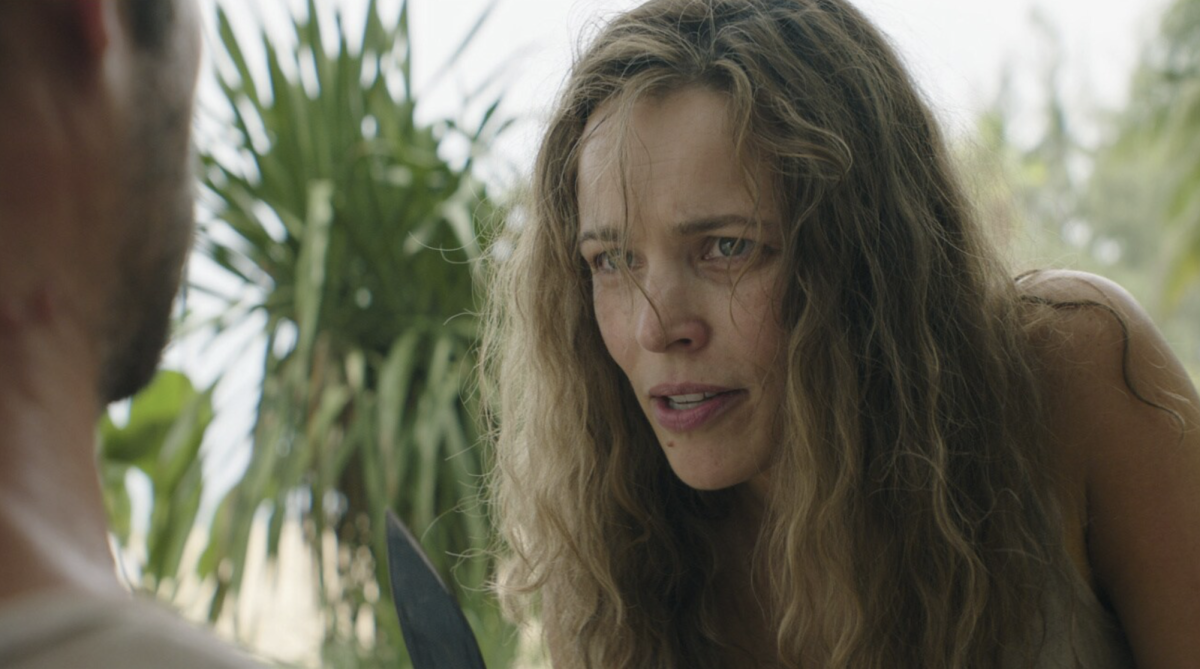
At the start of the film, the audience is introduced to Linda Liddle, played by McAdams, the hyper-independent, unappreciated lead of the Strategy and Planning team at Preston Strategic Solutions. Linda is presented as messy, unkempt and unpopular amongst her coworkers, but impeccable at her job. She has been promised a promotion, but when nepotism strikes and Bradley Preston, played by O’Brien, inherits the company from his late father, he revokes the offer.
Bradley, a chauvinistic, silver-spoon fed “bro” of a character, sees Linda only as displeasing to his male gaze and dismisses her value to the company, quickly making plans to be rid of her. Linda advocates for her years of experience and dedication, so Bradley invites her on a company trip to Thailand to “prove herself,” but those tables quickly turn.
Instead of the intended destination, the company jet crash lands in the ocean, leaving Linda and Bradley as the sole survivors. A battle of wits ensues as an injured Bradley – as inexperienced in the wild as can be – must depend on Linda, who we learn is a die-hard Survivor fanatic, for survival. This “who would you hate to be trapped on a deserted island with” on-the-nose premise is just the beginning of a film packed with ironic synchronicities that lend themselves to the message perfectly.
Raimi, one of the godfathers of ‘80s horror (“The Evil Dead”) returned to the genre after 17 years to team up with Los Angeles-based writing duo Mark Swift and Damian Shannon (“Freddy vs. Jason”). Adding on producer Zainab Azizi (“Boy Kills World”) made for a quartet that really understood how to mix bloody fight scenes with suspense and humor.
Danny Elfman, Tim Burton’s right-hand sound man with a flair for the eccentric, lends his hand to the music of the film. Instead of the dramatic swells Elfman has come to be known for, this particular score uniquely moved with each tonal shift of performance.
Though I admittedly love Raimi’s signature cheesy digital effects and maniacally screaming, blood-covered women, the constant laughter sprinkled into the horror was not the only thing that made this an enjoyable theatrical experience.
McAdams and O’Brien have the perfect at-odds chemistry: you truly cannot stand Bradley and want Linda’s revenge to be sweet. Their commitment to who these characters are is so strong that in one particularly impressive scene, the two elicit a visceral reaction from the audience without once seeing anything gory. Instead, it’s simply five minutes of close-up shots and skilled acting.
In an interview during the film’s premiere, Shannon shared that the intentional mix of genres is an attempt to make the moviegoing experience as enjoyable and unique as possible for each viewer. Though I found this endeavor successful, my favorite takeaway was the commitment to defining what the “final girl” really is.
In a horror film, she is the girl that happens to outwit, outplay and outlast her fellow group members against an enemy or a threat. While society roots for her in a fun horror movie, “Send Help” turns a bit meta in rhetorically asking why society and gender norms have us not applying that same ideology in the real world.
From nods to some unconventional ‘90s “final girl” scenes (“Enough,” “Urban Legend,” “Cruel Intentions”) that may have been either clever intentions or coincidence, to the only licensed music used being that of the Debbie Harry-fronted Blondie, each detail to champion women in this film was appreciated. In a society that has historically rooted against the independent woman, this film did everything to back Linda Liddle’s mantra: “No help is coming, so you better start saving yourself.”