Anne was looking for community when she strolled through the bi-annual Meet The Clubs event during her sophomore year at CSUN. Having come from a religious background, it was instinct for her to navigate towards a Christian club.
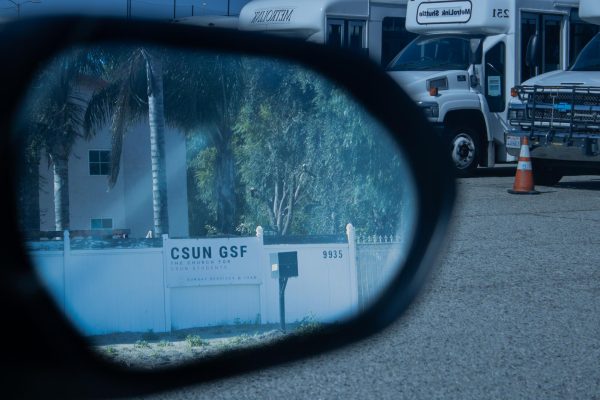
This is how Anne, who requested to go by an alias due to safety concerns, found Good Shepherd Fellowship (GSF) – a group she now labels a cult.
GSF is a small church located on Lindley Avenue across from student housing. The church was founded in the 1990s by a man called Pastor Paul, along with his two associates, Pastor Abraham and Pastor Isaac.
Pastor Abraham is also known on CSUN’s campus as Robert McIlhenny, an associate professor of computer science and faculty advisor to the GSF club.
The church’s mission, ultimately, is to expand to 10 UCs, 23 CSUs, 42 private universities and 119 community colleges in California, according to their website.
Pastor Paul was originally part of the University Bible Fellowship (UBF), an international organization that was established in South Korea in the 1960s. GSF was founded as a branch to UBF, but distanced itself from the church after allegations began to surface that UBF may be a “cult.”
Now, years after the separation, GSF is receiving its own allegations on Reddit.
When first attending church services, Anne said she felt an immediate sense of community from the welcoming members. Free food provided after service and Friday game nights also attracted Anne, driving her to become more involved with the group.
“That was a good time to talk to people and just connect with others,” Anne said. “I think just the connection, the community and just the convenience of it was very enticing.”
For a while, Anne felt safe with GSF. They were her home away from home, having grown up outside of Northridge.
Then came “this thing called retreats,” Anne said.
Retreats occur each season, and are promoted by the group as a “weekend of worship, the Word, and wild fun,” according to the group’s Instagram page. Anne attended her first retreat entirely on the dime of GSF.
But it was during Anne’s second retreat, which occurred over the summer and required her own funding, that she first began to see what she called “red flags.”
“I told my Bible teachers I couldn’t join because I wanted to go to the summer classes,” Anne said. “But then they were saying things along the lines that Jesus would prefer for me to go to this retreat instead of taking these classes.”
For the next three years, Anne said her world flipped upside down. She went from living in the dorms to residing on the church premises, paying the group approximately $500 in rent each month. The place where she once felt included, she grew to resent.
Much like Anne, ex-GSF members and CSUN students Wesley Lassiter and Casey Brewer sought out the church while seeking community on a commuter campus.
The pair joined the group a few months apart, but had the urge to leave simultaneously.
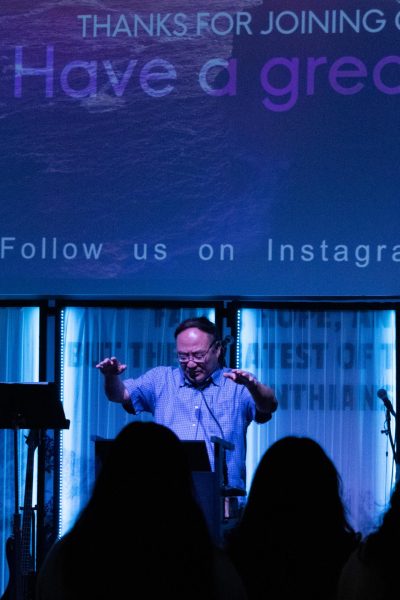
At a fall retreat in 2024, which the two claimed was poorly planned, Brewer recounted a sermon given by Pastor Paul that allegedly exhibited blatant homophobia.
“The government is allowing gay people to exist, and that is what is wrong with the country,” Brewer said the Pastor stated. “I guess it’s just the ‘exist’ part that is the crazy part. That implies that they should not exist.”
As explained by the ex-members, the church has established hierarchies, with Pastor Paul sitting at the top. New students may be considered “disciples,” who then become “shepherds” as they move up in leadership. Next come the “bible teachers,” young leaders who guide newer members.
All members of the church refer to each other as “brother” and “sister.”
According to current members of GSF, these titles are not meant to establish social order because “we are all equal to God.”
Lassiter pointed out that the pastor seemed angry during the retreat, demanding perfection from other church leaders and asserting his position in the church’s hierarchy.
Both Lassiter and Brewer said Pastor Paul’s behavior was their breaking point with the group. They left the church separately, but later reconnected, becoming fast friends and roommates.
Once separated from GSF, Brewer said he began to recognize other odd behavior, including an alleged unspoken rule that opposite genders should not interact. He recounted a time when he turned to a female student and introduced himself.
“She looked at me like I was a monster,” he said, explaining he was then instructed to speak to a male church member instead.
Lassiter was unsettled by the group’s recruitment method, which they call “fishing.”
Former members said “fishing” is a practice where GSF students are taught to recruit new members in pairs. They are allegedly encouraged to only approach students who look like freshmen and are sitting alone. Current members say the approach comes from Matthew 4:19, in which Jesus encourages his followers to be “fishers of men.”
Anne’s own breaking point with GSF came when her own personal boundary was shattered. Anne explained that sisters in the church were “very touchy,” causing Anne to become uncomfortable.
When she communicated her boundaries, Anne said she was met with hostility. One sister allegedly stated there were too many members in the church to remember and respect Anne’s personal space.
Through tear-filled eyes, she described how her sisters put her through a type of exposure therapy against her wishes.
“I literally said ‘I’m uncomfortable with you touching me,’” Anne said. “They said that I need to get used to it and invited all the other sisters that were sitting there to touch me.”
At this moment, Anne said she disassociated from reality. Soon after, her family helped her leave.
“The pastor said, ‘If you were to leave, you’re also banned from coming back.’” Anne said, ultimately deciding to return home to her family.
Eunice McIlhenny, daughter of Pastor Abraham, contacted The Daily Sundial to squash the Reddit allegations and put her own story on the record.
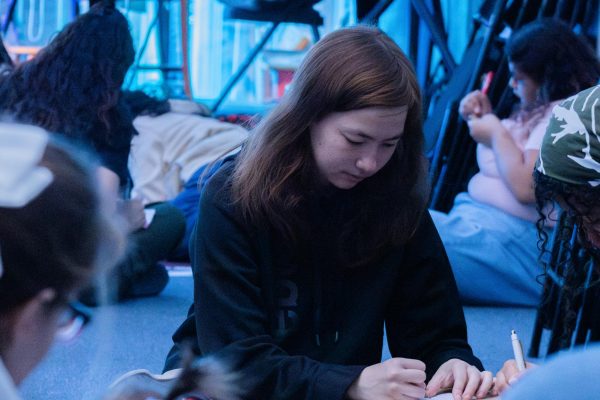
Current members gathered in a conference room within the church to discuss the posts – not separated by gender – with both men and women joining around a long table. According to GSF, while it may seem natural to hold a grudge against those who throw accusations online, they feel the opposite and accept ex-members as “God’s creations.”
“We still love you as a person,” one member said. “We would love to hash things out, like, talk about this.”
Members shared that GSF was born out of Pastor Paul’s desire to help college students and spread the Lord’s word. Those who accuse the pastor of being cruel, McIlhenney said, are misinterpreting him due to Korean being his first language.
“He’s like a big teddy bear,” she said, sending chuckles around the room. “He loves everyone very genuinely.”
Accusations against the group posted on Reddit also include the use of monetary and corporal punishment when members commit wrongdoings, which members vehemently denied. Additionally, ex-members have reported the inability to attend other churches while part of GSF.
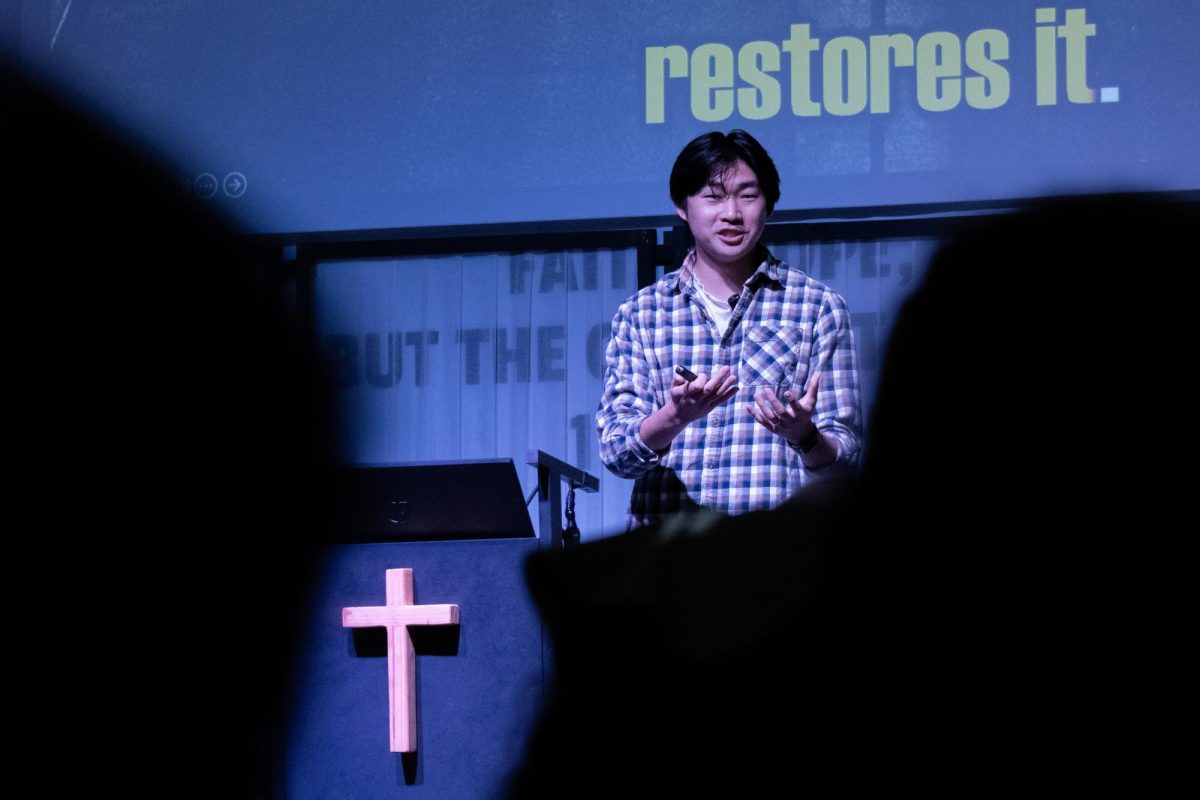
“I never tell people we’re the only church or the perfect church,” Intern Pastor and CSUN alum Jacob Kim said in response, explaining GSF encourages students to find a church that fits them and their spiritual growth best. “Our main goal is that we want them to grow closer to God.”
Another major Reddit allegation states Pastor Paul “decides on who you date.” While GSF shuts down the insinuation of arranged marriages, they do look to the pastor for guidance when pursuing romantic connections.
Kim, who is the son of Pastor Isaac, said it is encouraged for young members to approach their bible teachers when interested in pursuing a relationship within the church. After time in counseling to “approach it biblically,” the member will then turn to Pastor Paul and ask for his blessing of the possible union.
“Usually in the church setting we encourage, like, a blessing from the pastor,” Kim said. “We’ve had people not get that blessing, but still get into a relationship.”
Now, Kim said he believes some members are fleeing after reading the allegations on Reddit. GSF has also reported that Reddit users are targeting prospective new members on campus, approaching them after they interact with GSF members and warning them to stay away.
“Don’t trust everything you read online,” Kim said. “Come and see if you’re open – we’re here. We’re not going anywhere, and you’re welcome.”
Natalie Feinblatt, a Los Angeles psychologist who specializes in cult deprogramming, said that while daily organized activities or the offer of cheap housing may seem innocent, there can be underlying motives.
“Many cults work to isolate their members,” she said. “To have them as much in the cult environment as possible, like 24/7 … is one of the easiest or most efficient ways to do it.”
Though religious groups offer free will for followers, claiming that they accept everyone regardless of whether they follow their expectations, Feinblatt explains that members likely feel obligated to conform out of fear of being ostracized.
According to Feinblatt, the defining test is whether a group weaponizes its belief system to manipulate, exploit or harm its members. When ideology becomes a tool for control rather than support, that marks a critical boundary.
Those who are most vulnerable to these types of groups are those who are either experiencing a loss or in transitional periods, making college campuses an ideal target. However, Feinblatt said “we’re all susceptible,” noting that a third of her private practice patients are those who left cults.
“They divorce you from your intuition and your authentic self,” Feinblatt explained. “A huge part of cult recovery is getting back in touch with who actually are you without this group.”
For Anne, her time away from GSF has meant recovery. Once removed from GSF, she struggled with panic attacks, disinterest in hobbies she once loved and a general distrust in others.
“It was just so hard to listen to what I was feeling versus what the church was feeling,” she said.
Anne explained that it has been hard to move on when she knows other students may experience the trauma she faced as a member of GSF. This is what led her to come forward with her story.
To this day, Anne has not set foot in a church. However, through therapy and time, she is finally regaining her ability to trust.
“I’m starting to finally make friends … meet new people, go outside,” she said. “It’s like trying to relearn that no one’s going to be judging me for the things I do. I can just wear whatever I want. I can do my hobbies. I can enjoy my own activities.”