Since 1894, September has been marked annually by its sole federal holiday, Labor Day. While Labor Day might not evoke the same kind of excitement or carry the flashiness its fellow federal holidays have, its importance can’t be overstated. A lot has changed since its introduction and with the effects AI and automation have had on jobs, it may be time to revisit what the holiday represents, as it could be more relevant than ever.
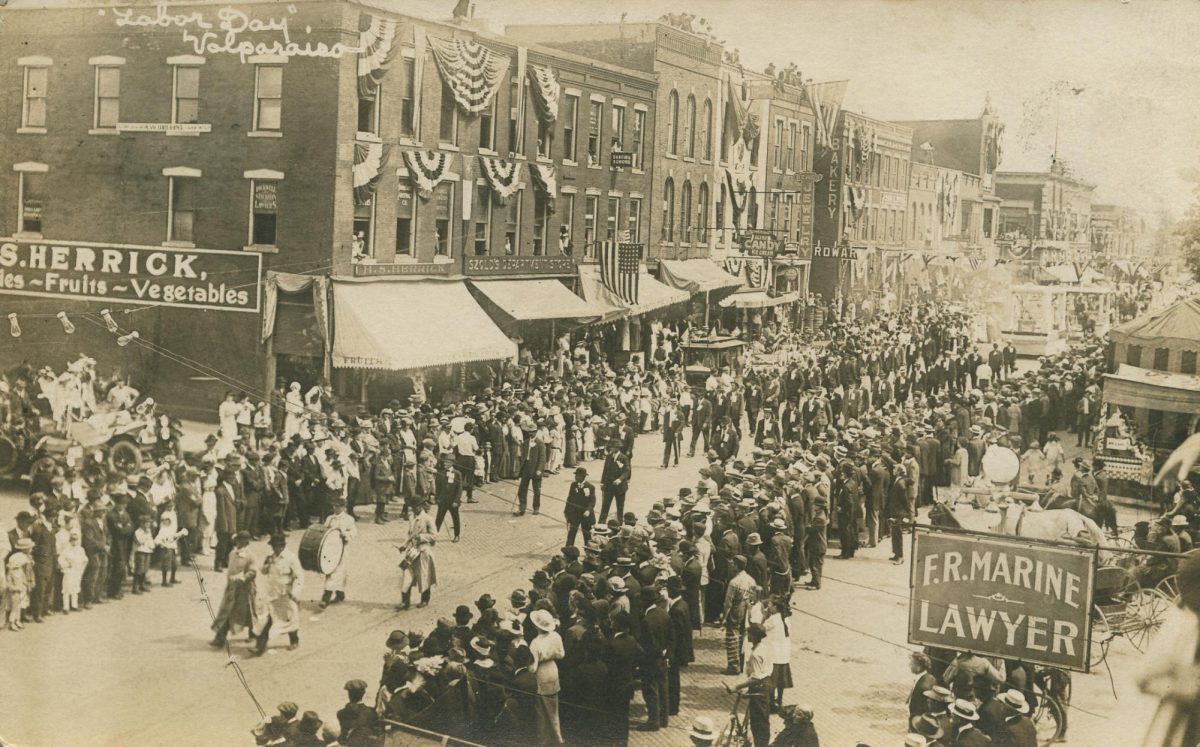
The first Labor Day celebration was held years before it became an official federal holiday. It was celebrated in New York City on Sept. 5, 1882, organized by the Central Labor Union of New York City to celebrate American workers and their contributions.
Beginning in May 1894, a widespread labor movement known as the Pullman Strike spread across the nation in response to poor working conditions and wages at the Pullman Palace Car Company, resulting in widespread boycotts and rioting. The conflict led to the use of the National Guard to put down demonstrations. During this period, President Cleveland, in tandem with Congress, adopted Labor Day as a federal holiday, which has been viewed as a peaceful concession to the movement amid conflict.
Much has changed since the days of the Pullman strike, yet we often find ourselves embroiled in the same tug-of-war between labor rights and corporate interests. In recent years, the conversation has been dominated by artificial intelligence, automation and how they are implemented across several fields of work.
As AI technology has rapidly advanced, its influence on job markets in certain industries, such as art, has grown. A Stanford Graduate School of Business study found that introducing AI images into an online marketplace directly competed with human artists, causing 23% of non-AI artists to lose their platform presence. Additionally, 26% of surveyed illustrators have already lost work due to AI and 37% report that their income has decreased for the same reason.
Similarly, AI affects many entry-level roles that provide experience and career skills in addition to serving as stepping stones to higher-paying jobs for those just entering the workforce. As AI advances, it has the capacity to increasingly replace these positions, particularly in fields like software engineering and customer service. This could be especially dire for groups such as recent graduates or current students like kinesiology major Elijah Inez.
“Most students take, like, entry-level jobs,” said Inez. “It’s definitely harder to get a job if it’s being replaced by a machine.”
Overall, these instances of AI impact may seem disconnected on the surface, but despite their unrelated fields, they share one common thread: worker leverage. When these technologies are introduced without regulation, workers may struggle to demand the wages or working conditions they desire. For the artist, it’s because AI images can be generated more cheaply. For the new graduate, it’s the reason one of the remaining non-automated customer service jobs may not pay as well.
This isn’t to say the technology itself is inherently negative or should be banned altogether. Like the rapid industrialization leading up to the Pullman Strike, a seemingly neutral technological improvement can harm the average worker when left unchecked, leading to power imbalances between workers and corporate interests. Throughout that era, the value of human labor declined and workers’ bargaining power weakened; with AI, we face a similar dynamic.
Concerns about this power imbalance have catalyzed labor unions throughout California to advocate for bills regulating a myriad of artificial intelligence uses in the workplace, sparked by claims that workers could face job displacement, surveillance and algorithmic managerial decisions. Even the founder of tech giant Microsoft, Bill Gates, has recently spoken out regarding the potential impact unregulated AI implementations could have on employment.
But political action cannot happen without a widespread understanding of the issue it seeks to tackle; information should be readily available to those directly impacted and to those with no prior knowledge, whether through social media or other means.
In times such as these, a holiday steeped in a history of the fight for labor rights that celebrates the contributions of the American workforce should serve as a significant platform for spreading this information to defend them against the threats that catalyzed the holiday in the first place.
Through activism, Labor Day can return to the mainstream conversation, but with an important distinction: the holiday should act not just as a remembrance of labor victories and current contributions, or as a conciliatory gesture in a time of conflict.
Instead, the holiday should serve as a platform for open dialogue on the state of workers’ rights and the most relevant issues affecting them before we can ever put our workforce in another dire position where progress comes before people.