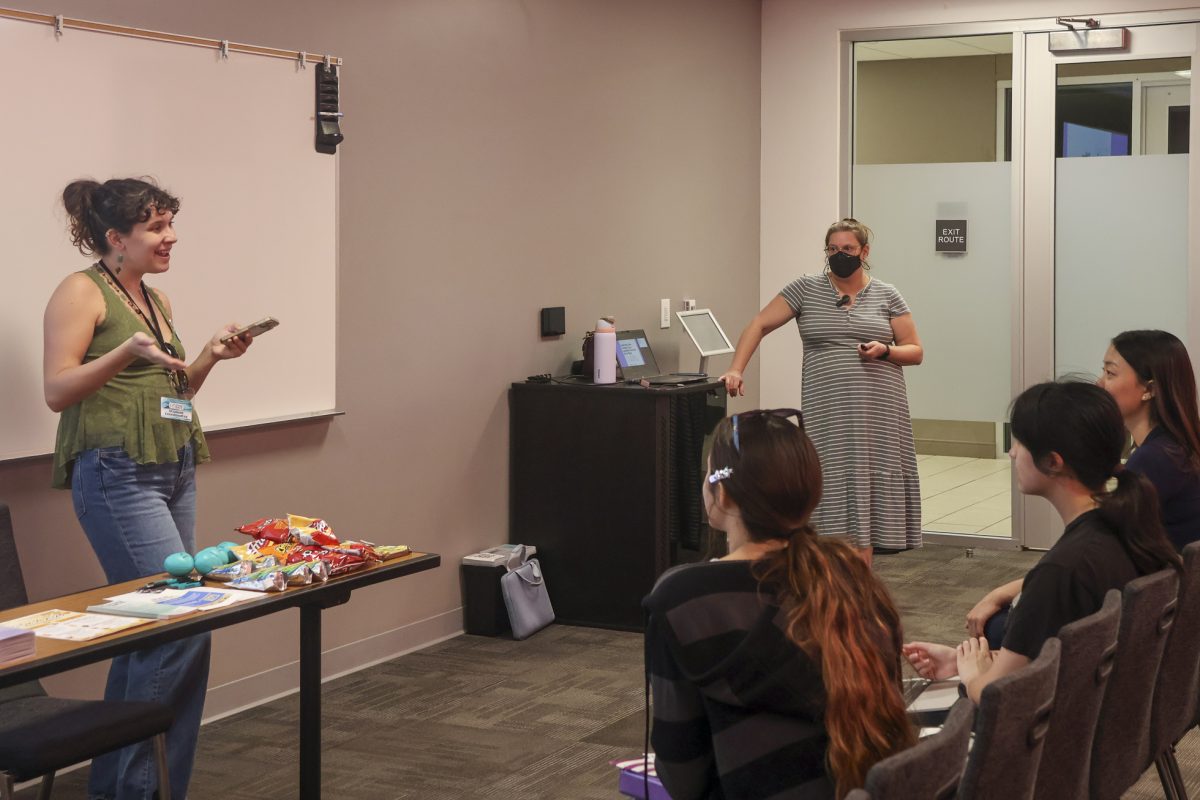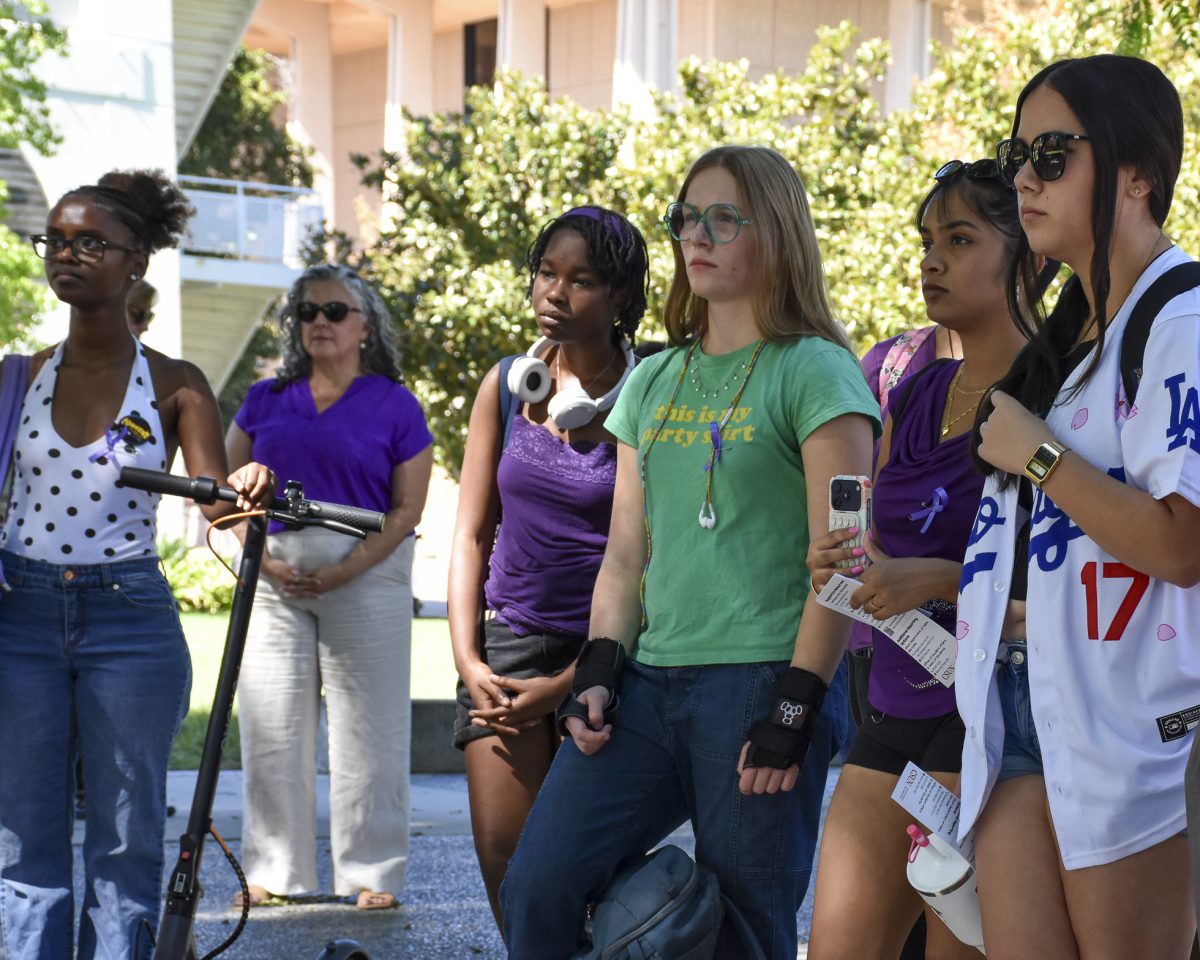
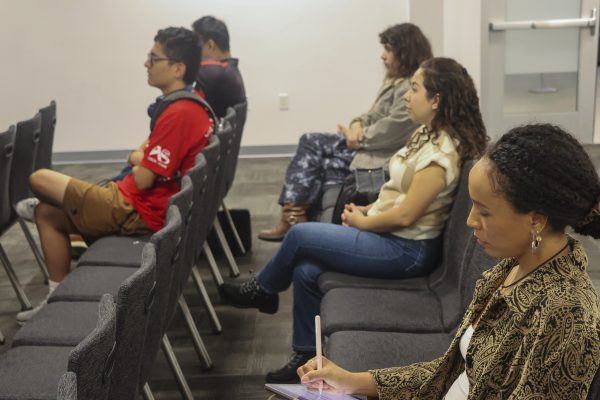
CSUN students practiced ways to interrupt potentially harmful situations during Project D.A.T.E.’s “It’s On Us” workshop, where campus advocates emphasized that preventing sexual violence requires community involvement and accessible support for survivors.
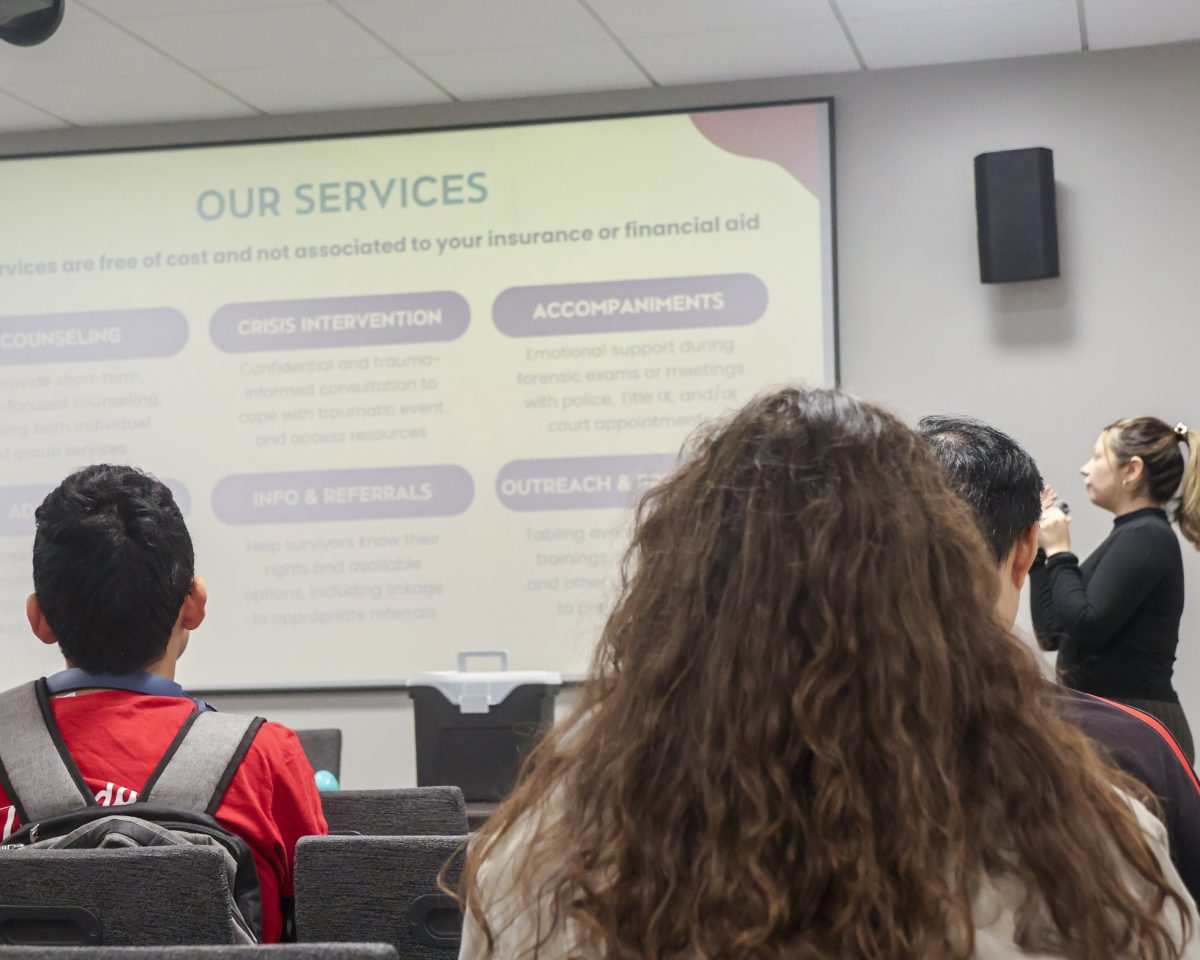
The session featured a presentation by Andrea Ortiz, Campus Care’s program coordinator and lead clinician, who discussed consent, barriers to reporting and strategies students can use when witnessing concerning behavior.
Ortiz outlined four approaches to bystander intervention: direct, delegate, distract and deliver. Depending on the situation, students might address someone directly, seek assistance, create a distraction or help someone reach safety.
“Safety is the most important above anything else,” Ortiz said.
Participants worked through scenarios involving an intoxicated student being urged into someone’s room, unwanted touching during a game night and someone repeatedly demanding entry to another student’s room. The exercises encouraged students to consider alternatives to confrontation.
Ortiz emphasized that intervention does not require using every strategy. Asking someone for help or briefly distracting them can create an opportunity to interrupt a potentially harmful encounter.
Bailey Wukmir, a coordinator for Project D.A.T.E., said the workshop’s focus reflected concern about reports of sexual violence at other universities and the anger students expressed in response.
Wukmir said organizers wanted to explain how education and bystander intervention could help prevent harm. The broader goal was to show students that supporting others does not require extraordinary abilities.
“We can be our own little superheroes,” Wukmir said.
Wukmir identified awareness as a challenge for campus prevention and survivor support efforts. Students who do not know about available services may feel isolated, she said.
She called for stronger connections among professors, clubs, counselors and campus programs so students can find support regardless of where they first ask for help.
Emily Arana, a prevention education specialist with Campus Care Advocates, also emphasized the importance of making resources visible on a large campus.
“I want students to take away that we are an available resource here on campus,” Arana said.
Arana said students’ participation in the practice scenarios stood out to her. She added that the question about ableism also demonstrated the value of creating spaces where students can ask questions and learn.
Both Wukmir and Arana highlighted barriers that extend beyond knowing where to seek assistance. Arana said survivors may fear retaliation or experience shame and embarrassment, even though the violence was not their fault.
Ortiz described Campus Care as a free, confidential resource for students, faculty and staff. Services include counseling, advocacy, crisis intervention, safety planning and accompaniment through reporting or legal processes.
Ortiz said the program’s approach centers on helping survivors understand their options rather than deciding for them.
“We’re not here to tell anybody what to do, how to be, who to be,” Ortiz said.
The presentation also encouraged students to listen without judgment, avoid investigating a survivor’s account and offer support without pressure.
Wukmir said prevention efforts must continue beyond a single workshop through ongoing conversations and better connections across campus.
“We can all be better people together,” Wukmir said.
For Arana, the central message was that students facing difficult experiences should know they are not alone and that help is available.