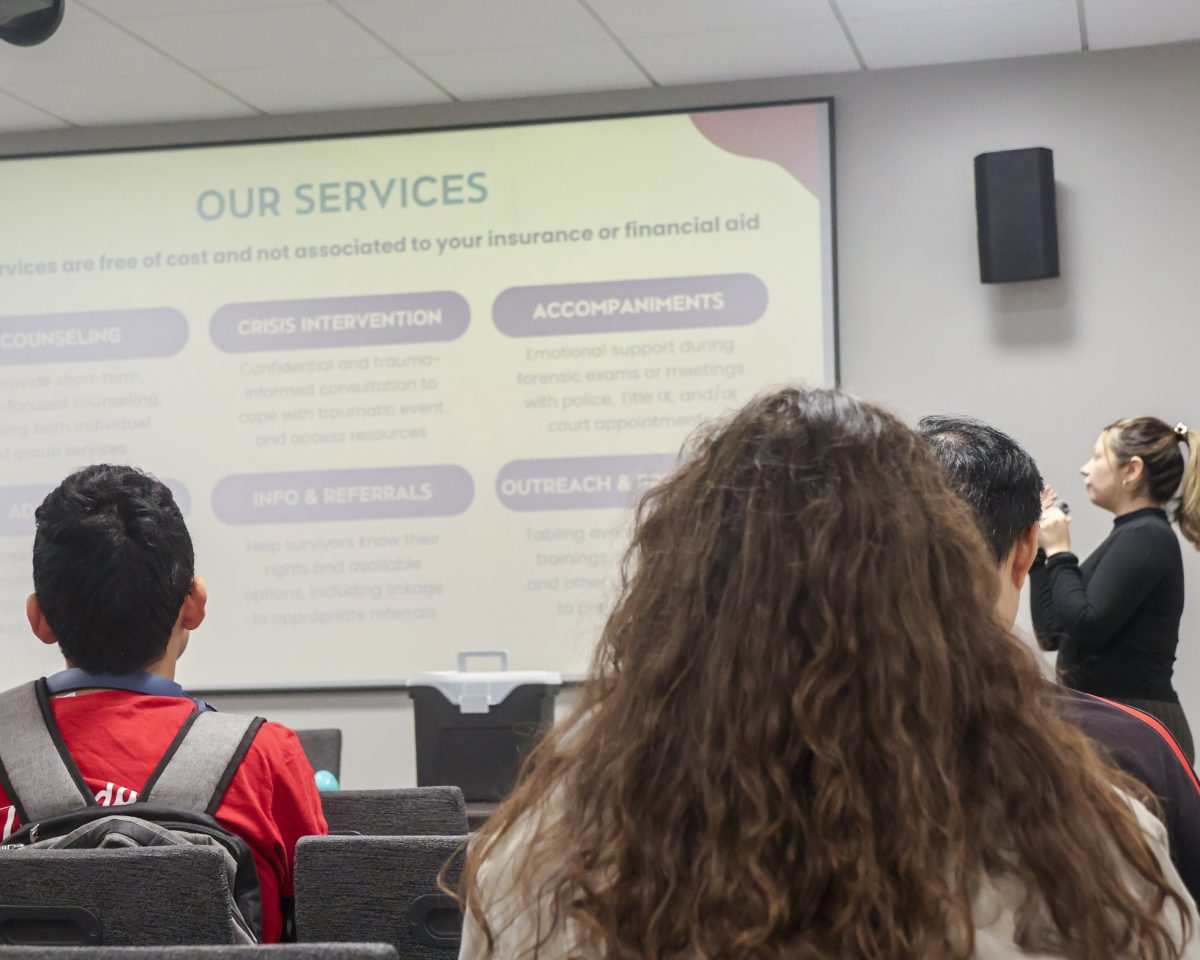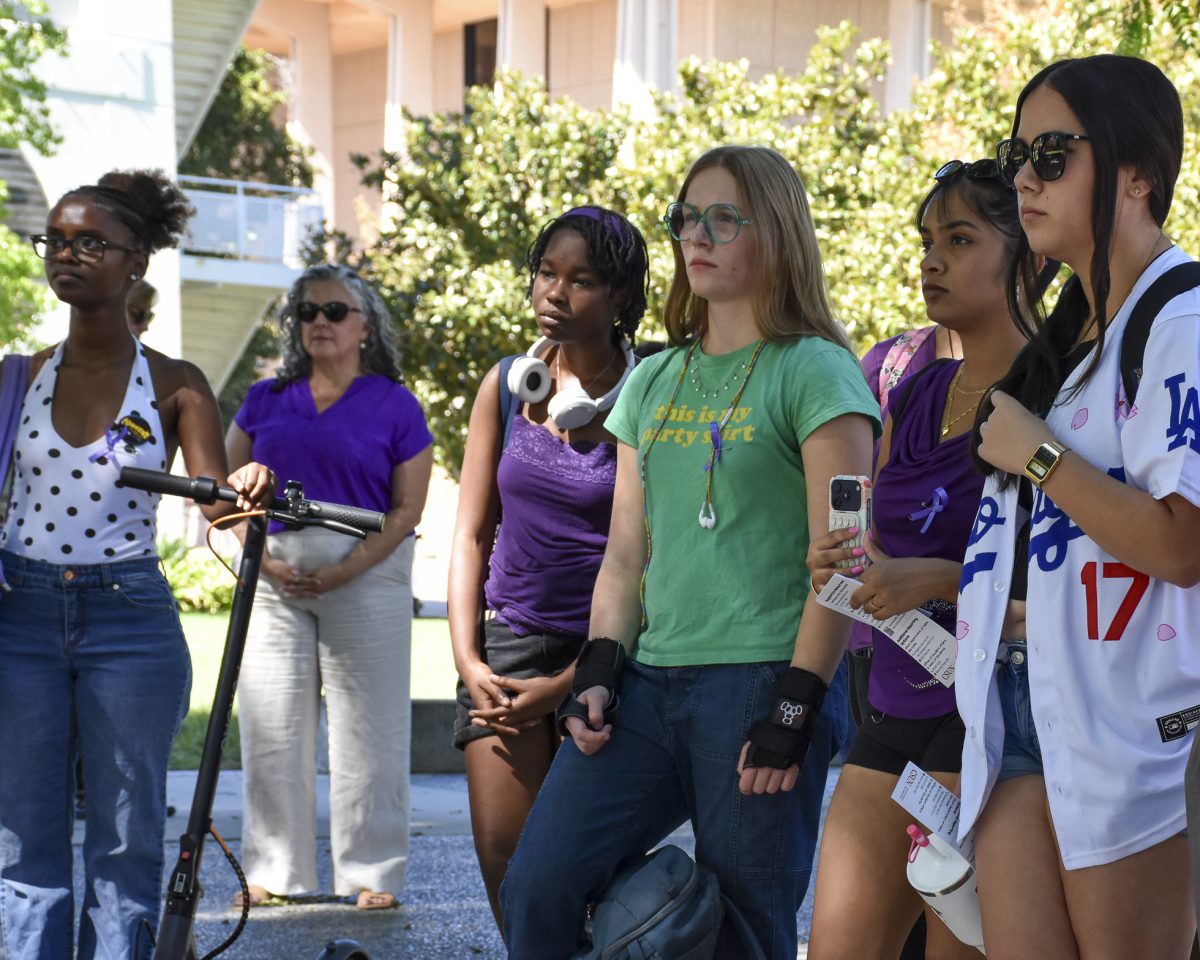
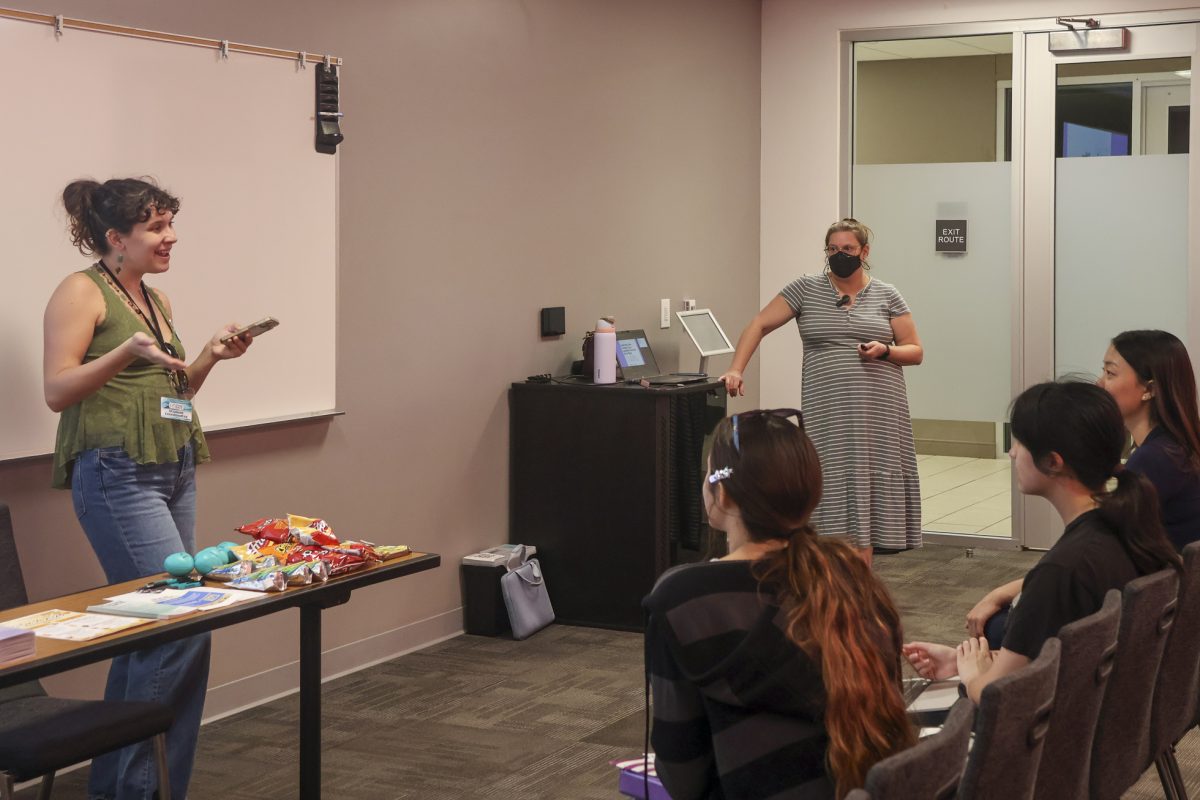
Pop songs became a starting point for conversations about relationship expectations and sexual violence prevention on Tuesday, Oct. 20, as Project D.A.T.E. hosted a workshop encouraging students to examine the love lessons embedded in popular music.
The session, “Learning (the wrong) Love Lessons from the Girly Pops,” was part of the program’s annual “It’s On Us” wellness event. Presenter Suzanna Rogen, of Equity and Compliance, guided participants through discussions about healthy, harmful and abusive relationships before applying those distinctions to song lyrics.
The goal was not to discourage students from enjoying their favorite artists, Rogen said, but to help them consider what messages they absorb.
“It’s not asking you to stop listening, just asking you to listen more critically,” Rogen said.
Bailey Wukmir, Project D.A.T.E.’S coordinator, said the event aimed to build awareness of sexual assault prevention through education and encourage a shift toward community responsibility.
“If we educate ourselves, as well as our children and our adults, we can shift the way society sees these things and change it,” Wukmir said.
During the workshop, participants wrote down relationship behaviors and discussed where they belonged on a spectrum ranging from healthy to harmful to abusive. Examples included making room for different needs, prioritizing others’ comfort over a partner’s and projecting experiences from past relationships onto the current ones.
Rogen described healthy relationships as grounded in equality and respect. She distinguished hurtful conflict from patterns of behavior used to exert power and control, emphasizing that unhealthy behavior does not always fall within the university’s nondiscrimination policy.
“Just because something doesn’t violate the policy doesn’t mean it’s a healthy relationship,” Rogen said.
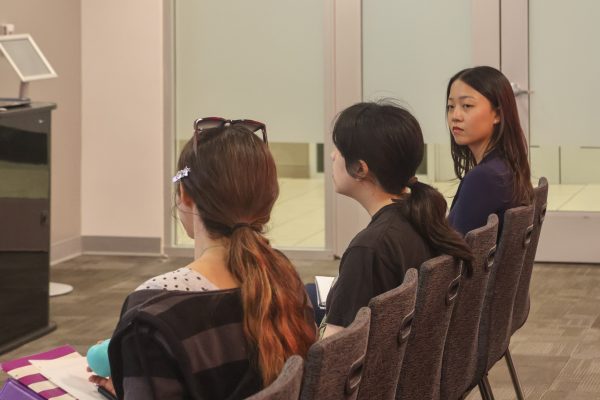
Participants then analyzed songs, including Taylor Swift’s “All Too Well,” discussing communication, trust and expectations. They considered how the relationships described in the lyrics could be rewritten around healthier behaviors.
For attendee Terianna Guerra, a transfer student who discovered the event through Project D.A.T.E.’s tabling, the spectrum offers a useful alternative to rigid categorization.
“I like the reflecting moment as well,” Guerra said.
Guerra said the discussion encouraged her to reconsider the media she consumes without feeling she needed to abandon it. She also valued hearing other participants’ perspectives on experiences they might otherwise discuss only privately.
The workshop’s emphasis on conversation reflected a broader challenge for organizers: reaching students on a commuter campus.
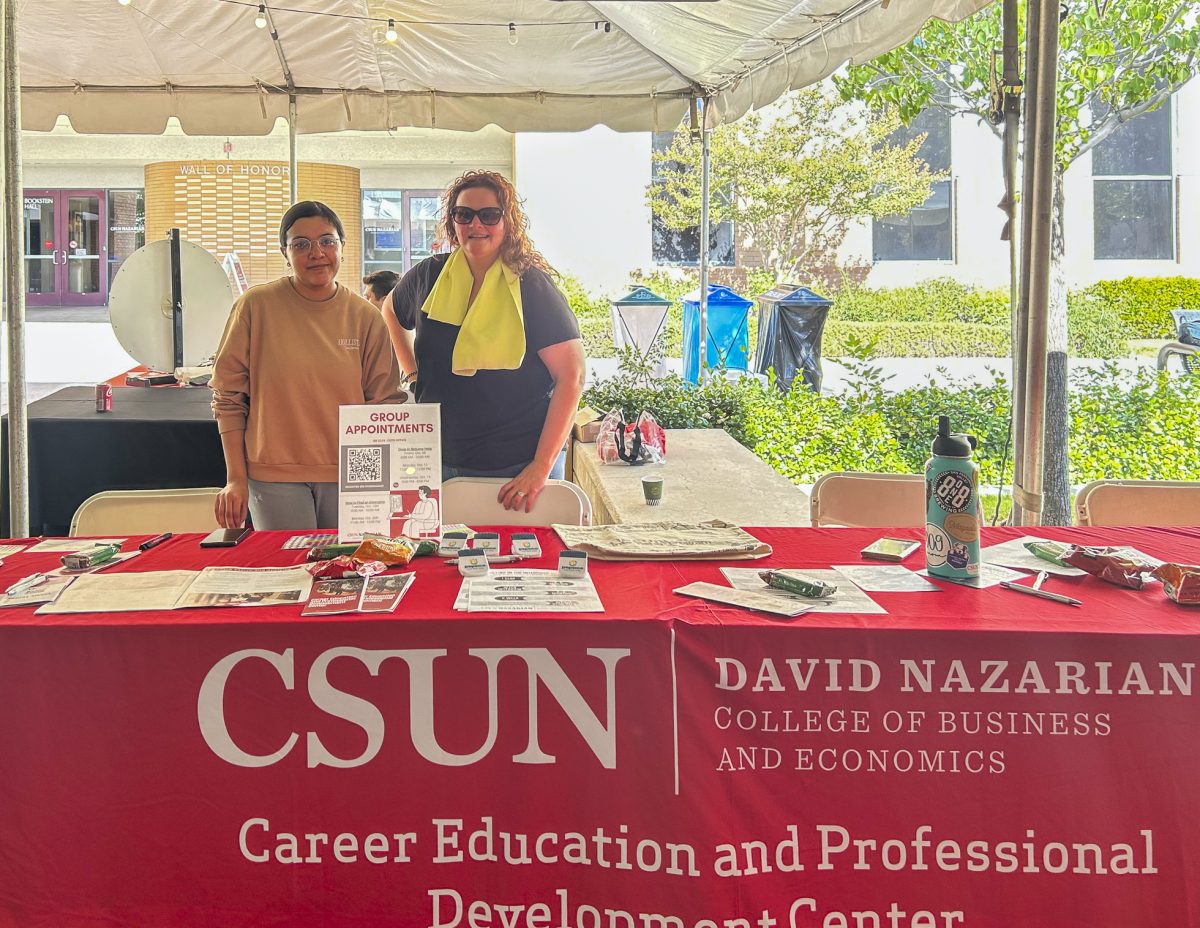
Wukmir and Project D.A.T.E. host two annual wellness events, conduct tabling and collaborate with campus partners. Still, students balancing school, work and responsibilities at home can be difficult to engage.
Wukmir said she would like students to have more opportunities for sustained, discussion-based education about consent, boundaries and relationships rather than relying on an introductory training alone.
Guerra said events that help build can also make it easier to seek support. As a newcomer, she appreciated meeting approachable people and developing a sense of community. She plans to continue the conversation beyond the workshop by sharing lessons with her younger sister.
“It gave me some new ways to talk and I’m excited to have more conversations and learn more,” Guerra said.