The San Fernando Valley, Tongva/Fernandeño Tataviam land, is home to cultural workers whose histories rarely make headlines but shape the everyday fabric of local life. Across neighborhoods, from Pacoima to North Hollywood, artists and entrepreneurs are creating new models of success rooted not in profit but in care, resilience and joy.
Three creatives, an Indigenous Kichwa artisan, an Afro-Peruvian dancer and educator and a Pacoima-born DJ are reimagining what thriving looks like in the Valley today.
Alba Maigua Guerrero: “La palabra vale más que un papel”
(José Luis Cabascango)
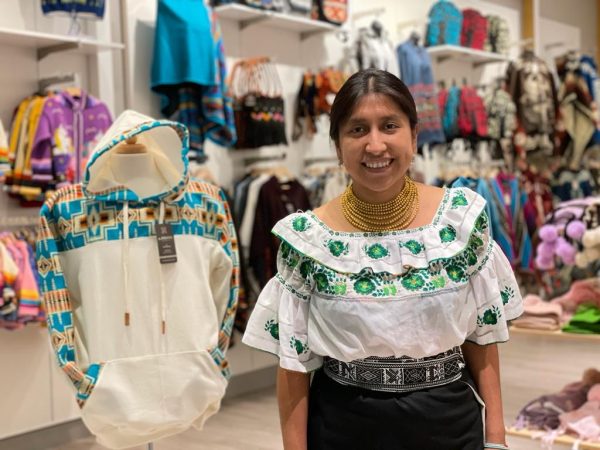
For Alba Maigua Guerrero, thriving means living with dignity, supporting her family and safeguarding the ancestral knowledge she holds.
Guerrero, originally from the Kichwa Otavalo nation in Ecuador, has established a multi-store business in Montebello and Northridge that focuses on Indigenous craftsmanship and fair trade practices. Her approach challenges Western business norms.
“In our culture, a person’s word is worth more than a piece of paper,” Guerrero said. “We work based on trust. If you trust your supplier and they trust you, everyone moves forward.”
She said she never bargains artisans down, a stance that protects workers often harmed by language barriers and racism.
Guerrero’s work goes far beyond sales. By working with Indigenous artisans in Mexico and Ecuador, hiring migrant women and protecting traditional weaving and embroidery techniques, she views her business as both healing and a form of resistance.
“Continuing our traditional crafts is a form of healing,” she said. “Art is also political. To live with dignity from what we create is justice.”
Her dream is simple. Guerrero hopes to return to her homeland one day and wants her daughters to continue creating, dreaming and remembering where they come from.
Nadia Calmet: “La cultura cura”
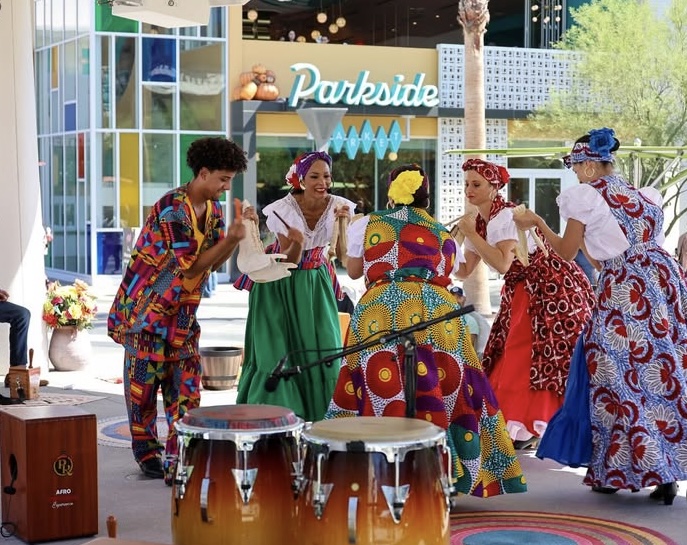
A few miles away, Afro-Peruvian dancer, drummer and educator Nadia Calmet leads students through choreography that blends rhythm, history and healing. For her, art is not entertainment – it is medicine.
“Dance saved my life,” Calmet said. “When you dance, your mind is in the present. You release the pain so it doesn’t stay trapped in the body.”
Calmet has been performing worldwide for over 25 years. Her collective, Afro-Peruvian Experience, now operates in Los Angeles, Salt Lake City and Orlando. Her mission is both cultural and political.
“We dance from a place of dignity,” she said. “I dance for my partner. We heal together.”
Her teaching challenges colonial narratives that once described ancestral practices as superstition. Instead, she presents everyday cultural knowledge, including dance and drumming, as sources of pride and liberation.
Her ensemble performed at Disneyland for the first time this fall. For her, the moment reflects a broader shift in how young audiences see themselves and embrace their heritage.
“Now the princesses celebrate their culture and no longer hide,” she said. “That is success. Dreaming is success.”
Daniel Olea: “From backyard house parties to international stages”
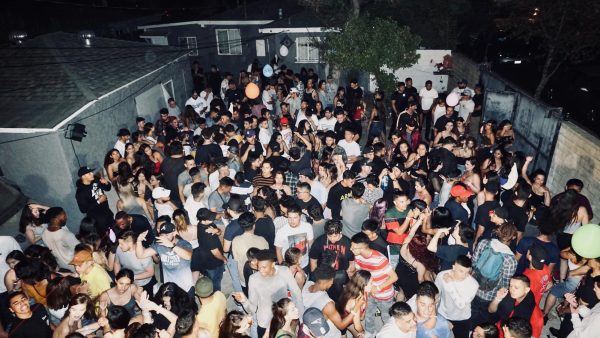
On the northern edge of the Valley, Olea, a sonic tastemaker, academic and community organizer, reflected on how he went from DJing backyard house parties to stages around the world. As a teenager, his backyard in the city of Pacoima once drew hundreds of local kids from all around the San Fernando Valley. The “house party” was a homegrown ecosystem that became the foundation of his creative life and entrepreneurial spirit.
“Being from the Valley is probably the best thing that happened for me; it’s a shame that people refuse to give it its flowers,” Olea said. “I would be nothing without this place, nor the 50 villages it took to raise me.”
Olea blends local pride with global ambition as his admiration for DJing has taken him to Mexico, London, Germany and beyond. Even so, the Pacoima native remains grounded in what he calls “creative survival.” Music helped him navigate grief, instability and self-doubt.
Today, he mentors young artists and reinvests back into the Valley. He even launched a scholarship funded by profits from his “Straight From the Valley” project and actively engages with local schools to connect with the youth.
Olea said his long-term dream is public service. He calls his aspiration to run for mayor his “magnum opus,” a phrase usually reserved for an artist’s greatest work, but one he reframes as civic responsibility.
For him, the metaphor is clear. Art is not separate from social movements, but the tool that builds them. “Art is part of civic life,” he said. “It is all connected.”
Together, Guerero, Calmet and Olea offer different visions of thriving in the Valley. Their work is defined by reciprocity, cultural memory, dignity, joy and the freedom to imagine new futures. Their stories show that art does more than entertain – it builds relationships, heals intergenerational wounds and preserves the traditions that shaped them. To see more of their work, visit their Instagram pages: @beawana.us, @afroperuvian.experience, and @olea_5.