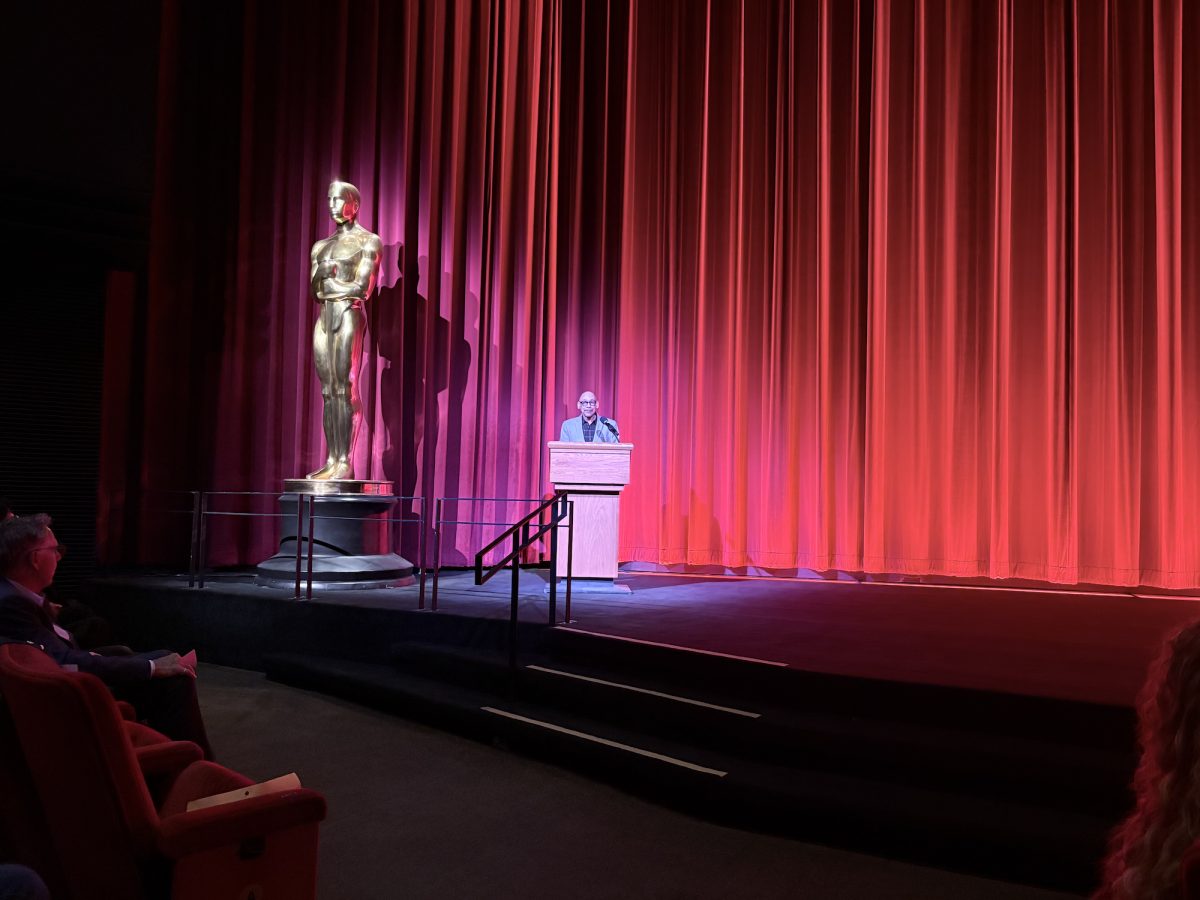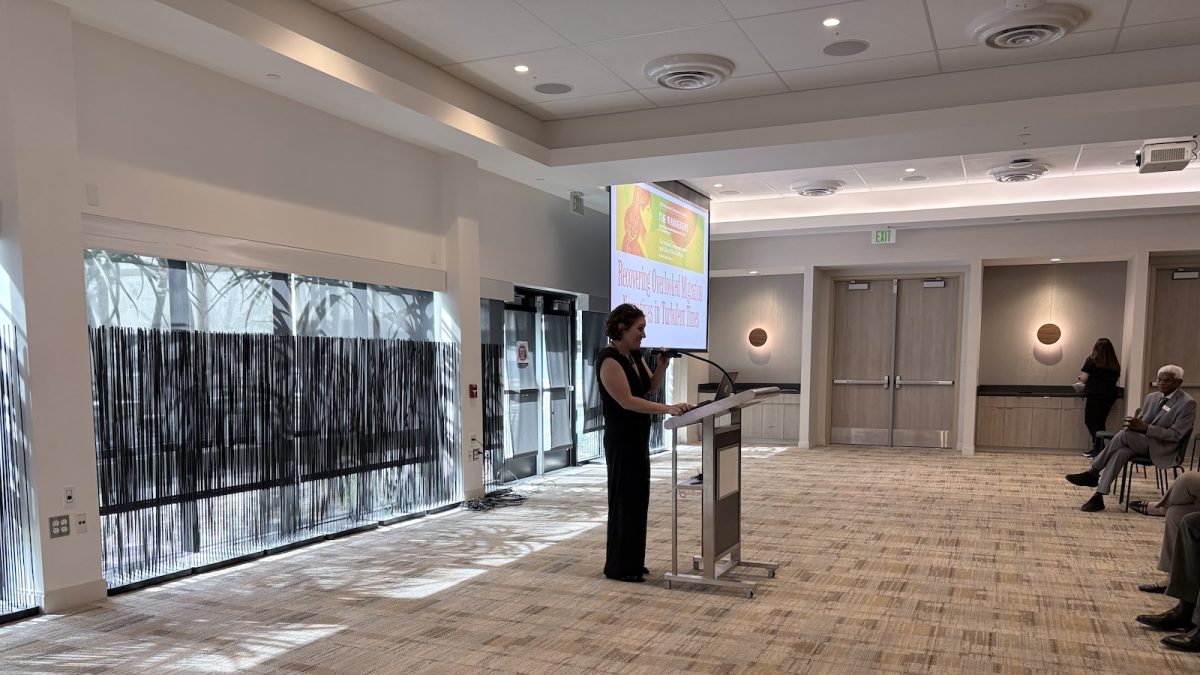
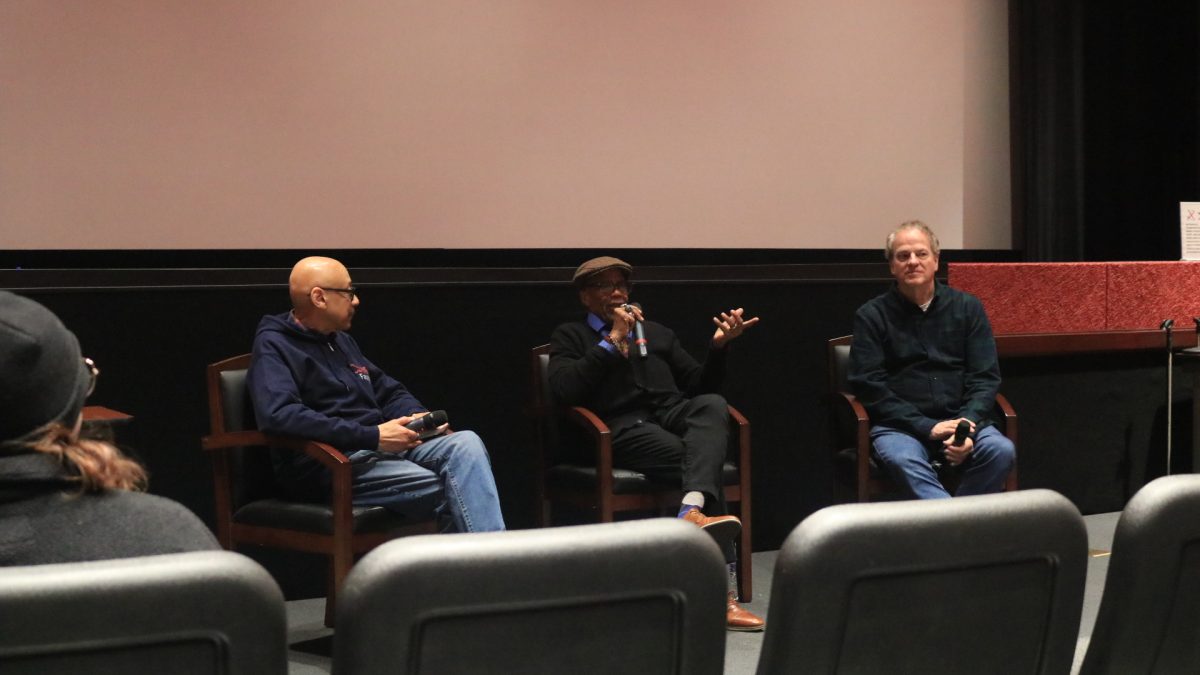
Last Friday evening in the Armer theater in Manzanita Hall, Russell Williams II spoke about professionally working in sound engineering on the set of the civil war reenactment movie “Glory,” directed by Edward Zwick.

A historic Black figure, Williams was the first Black man to attend the Academy Awards, gaining him an exhibit in the Smithsonian Heritage and Culture museum, among many other accolades. Since then, he has worked on notable films such as “Field of Dreams,” “Training Day” and “12 Angry Men,” building himself a repertoire in the film industry.
“Glory” is based on the American Civil War (1861-1865) and highlights the story of 54th Massachusetts Volunteer Infantry Regiment. This was one of the Union Army’s first African American units, where they courageously took on Fort Wagner in July 1863.
In the film, the African American soldiers were portrayed as illiterate slaves fighting for their own liberation. Williams pointed out inaccuracies in the war film that differed from his own research and conversations with those who had lived through the war. Williams explained that most of the African American soldiers were free men and literate, with proof from letters written by these soldiers.
Initially, “Glory” was not nominated for Best Picture in the 62nd Academy Awards. Both Williams and Freddie Francis, a cinematographer and film director, were disappointed that their efforts were not going to receive proper recognition. It was not until Williams received a phone call while working on a McDonald’s commercial that “Glory” was finally nominated for Best Picture.
“At that moment, for some reason, I knew we were going to win,” Williams said.
Williams also spoke about special sound equipment used during production and recalled a time where he received a call from Warner Bros. while in South Dakota. They asked him which exact microphone was used for Academy Award winning actor Denzel Washington. During the film, the African American soldiers were recited stipulations about being a Union soldier and failure to comply would result in death. During this scene, there was artificial rain, where actor Jihmi Kennedy, playing Private Jupiter Sharts, and Washington, playing Private Trip, shared a moment.
Washington said, “You still want that suit?” mocking Kennedy’s character’s hopes of receiving a “blue suit,” referring to the Union soldier uniform.
This was the very scene that made Warner Bros. contact Williams directly so they could use the same microphone for their own productions when they did their Automated Dialogue Replacement (ADR).

In order to be considered in the Academy, filmmakers had to build a certain amount of professionalism, aesthetic and artistic accomplishments. Williams made the comparison that being in the Academy is like being an “All Star” or a “Hall of Famer,” except it is more opaque.
“[The Academy] pretty much exist to keep people out,” Williams said.
At the time, the Academy did not go based on stats, Williams said, it went off reputation – there was no numerical value there. Williams did not know if “Glory” won by one vote or 100 votes.
Voting members in the Academy could only nominate in their craft. Actors could nominate actors and producers could nominate producers. Once nominees were announced, that was the only time board members could vote for those nominated.
Williams took his sound responsibility very seriously, investing in microphones from multiple brands such as Sennheiser or AKG, taking extra precautions to make sure all feedback recorded with these microphones sounded identical. When recording war scenes that involved heavy weaponry and machinery, Williams relied on a dynamic microphone because they could take a lot of damage with sound bending explosions.
“My thing is, you need to have a family of mics [so] that if you have a ‘A, B, C, D, E, F, G’ comparison, you don’t hear any difference between them,” Williams said.
Committed to his craft, the two time Oscar-winning engineer often had to replicate different sounds. For “Glory,” that sound was gunshots.
During his era of film, gunshots were not able to sound real. Because of film production, it was believed that if someone were on a hill with a rifle and there was a puff of smoke, there would also be the sound of a gunshot immediately after.
This was one of the fabrications the film industry sold to their audience up until the film “Saving Private Ryan,” where sound engineers accounted for the laws of physics in regard to the speed of sound.
Following Williams’ talk, moderators Nate Thomas and Joel Krantz opened the room up to questions. Students expressed that they were honored to speak with two prominent Black figures in the film industry. This opportunity gave film students the chance to ask technical questions regarding production on set, giving them invaluable insight.
“Black History is American history,” said CSUN CTVA student Victoria. “So, I think that it’s just so amazing to see Black excellence right in front of me.”