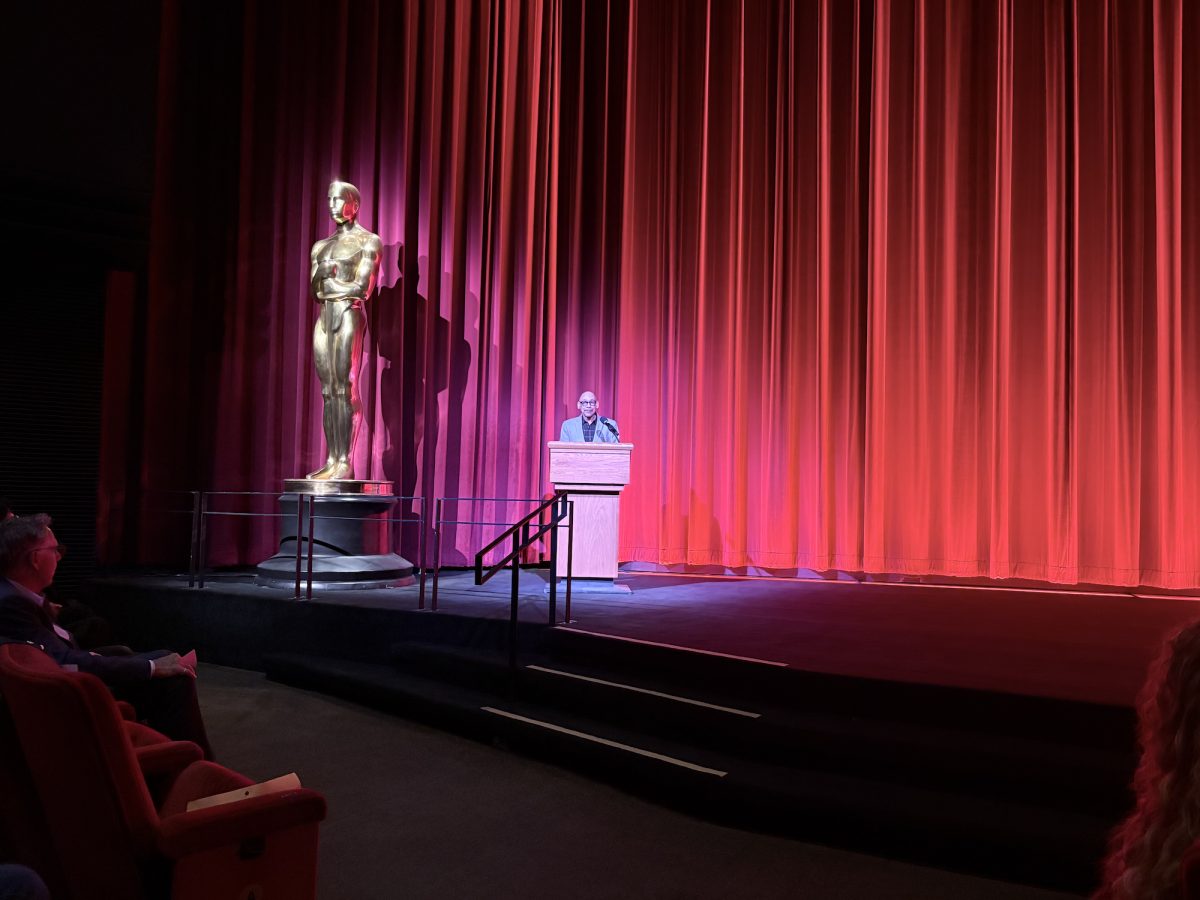
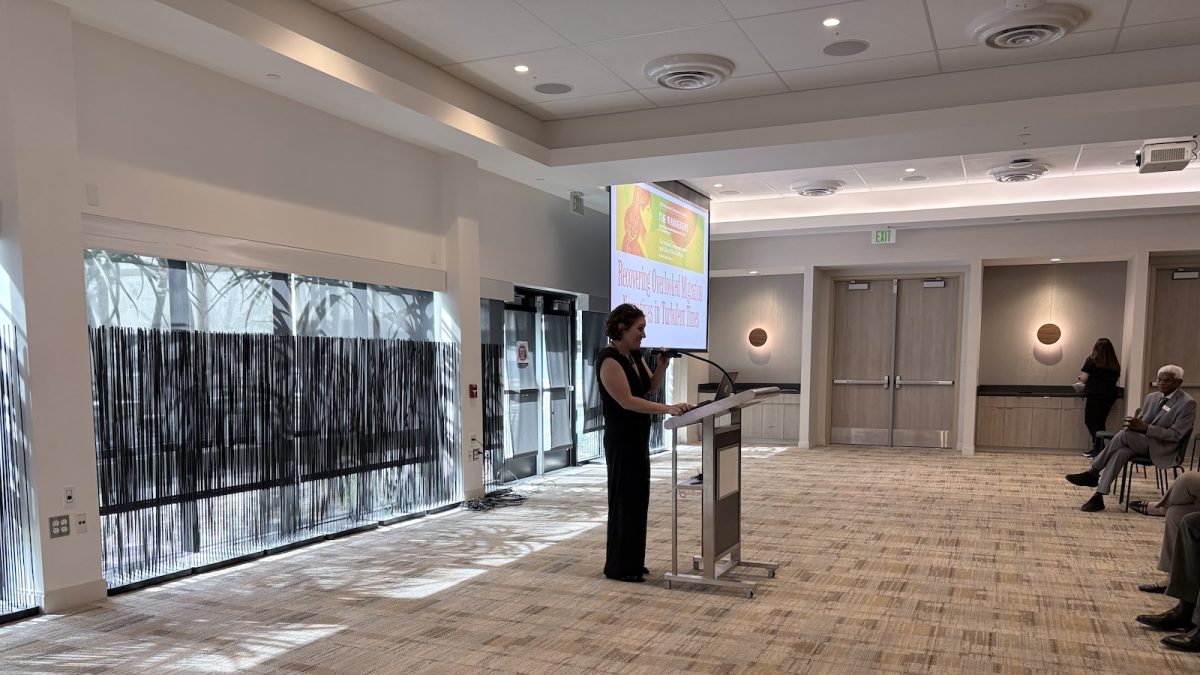
Journalist, author and CSUN professor Daniela Gerson spoke at CSUN on April 22 as part of the 2026 Jerome Richfield Memorial Colloquium, discussing how immigration stories are told and how different communities interpret migration and historical displacement.
Drawing from her book “The Wanderers,” Gerson explored how family history, archival research and journalism intersect to tell overlooked stories of displacement, survival and movement.
“The Wanderers” traces the journey of Gerson and her wife’s families, who fled Nazi-occupied Poland and survived years of displacement across the Soviet Union before rebuilding their lives elsewhere. Through a blend of memoir, investigative reporting and historical research, the book emphasizes that migration stories are passed down across generations.
When introducing Gerson, Associate Vice President for Research and Sponsored Programs Mariappan “Jawa” Jawaharlal emphasized the importance of storytelling in scholarship, describing Gerson’s work as an example of how history is carried through personal narratives.
“History is not confined to books. It lives in people. It lives in families,” Jawaharlal said, highlighting how personal narratives carry historical memory across generations.
His remarks set the tone for the lecture, underscoring the broader significance of storytelling in understanding migration and identity.
During the lecture, Gerson discussed how traditional media coverage often simplifies immigration narratives, focusing on statistics or policy rather than individual experiences. She emphasized the importance of telling stories that reflect the complexity of migration and the people behind it, arguing that these narratives can shape how audiences understand immigration as a whole.
“It’s about what values we hold,” Gerson said. “It’s about human rights. It’s about our economics.”
Gerson’s work on “The Wanderers” draws from both historical and investigative reporting, examining how past refugee experiences connect to modern migration stories. She explained that uncovering these narratives often requires looking beyond official records and traditional sources, instead focusing on personal histories that are frequently overlooked in mainstream coverage.
“How do we tell these stories most effectively?” Gerson said.
During the Q&A portion, one audience member asked how different communities, including Palestinian readers, might interpret the book’s portrayal of displacement. The exchange highlighted the ongoing relevance of Gerson’s work, particularly in how different communities interpret narratives of displacement and migration. Gerson said that she aimed to reflect multiple perspectives, acknowledging the complexities of migration and historical experiences.
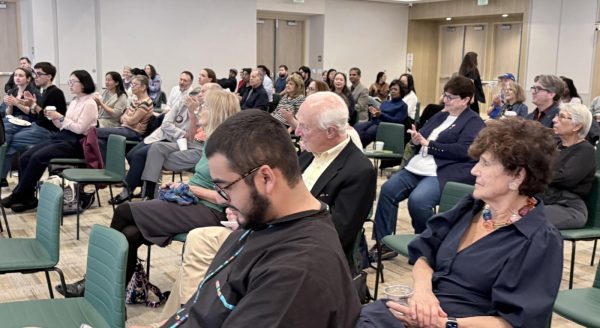
Roberto Suro, professor emeritus at the USC Annenberg School for Communication and Journalism and the Sol Price School of Public Policy, said journalism is necessary in shaping public understanding of immigration, noting that the framing of stories can influence how audiences perceive complex issues.
“Immigrants are the people who sail against the storm … they take initiative and survive,” Suro said.
Suro described Gerson’s work as a significant contribution to both journalism and immigration studies, noting that it combines historical research with personal storytelling to offer new perspectives on migration.
The lecture underscored journalism’s role in bringing overlooked stories to light, encouraging students and attendees to think more critically about how immigration narratives are told and understood, particularly in a time when migration remains a widely debated issue.