
One year after graduating from CSUN’s journalism program, alumni face a competitive job market marked by determination, frustration and cautious optimism as they try to start their careers. Networking and connections proved essential.
For some, the transition has been slower and more uncertain.
Edward Hakobjanyan, who graduated in May 2025 with his bachelors in journalism and an emphasis in public relations, entered the job market with high expectations. He hoped for a “bigger career” after graduation, but instead, he spent months applying to jobs with little success. Nearly nine months later, in February, he secured a marketing internship.
“I wish I would’ve knocked on every professor’s door and asked for more connections to see if they knew of any jobs,” Hakobjanyan said.
Reflecting on his time at CSUN, he said the program provided a strong academic foundation but lacked practical preparation for the realities of the job search.
“I think CSUN does help us with knowledge, but there is so much more that they could have taught us to prepare,” he said.
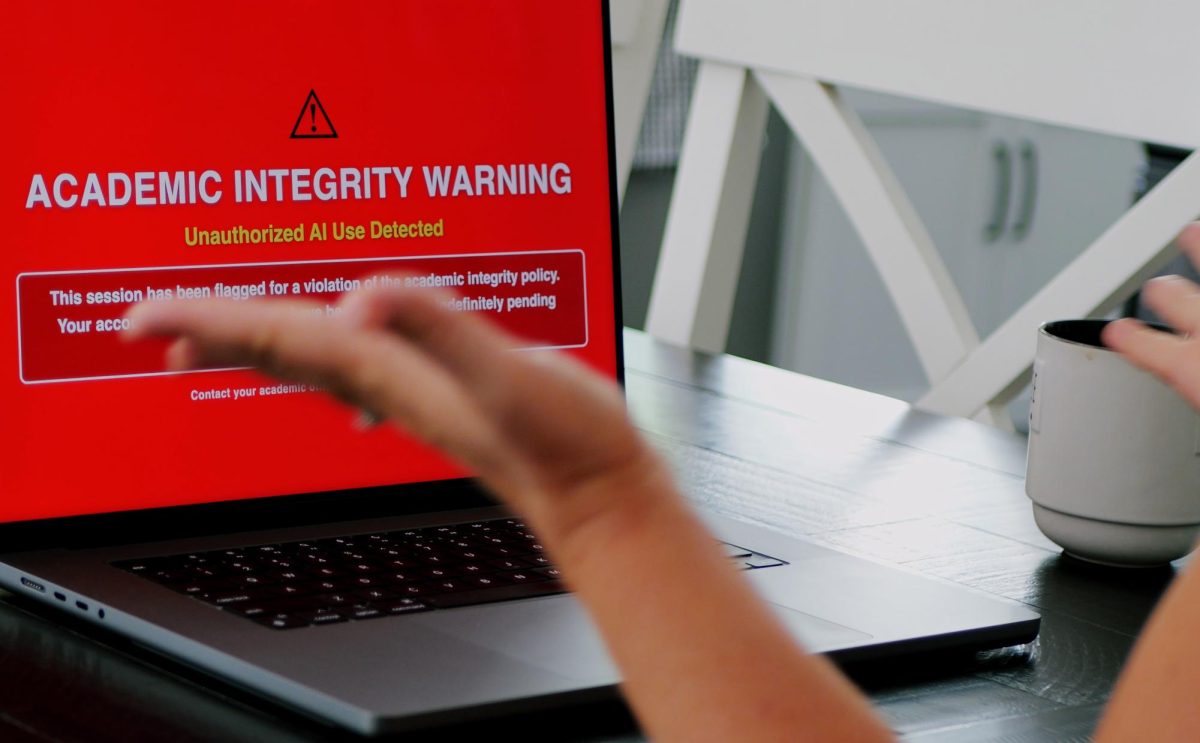
Hakobjanyan described the job application process as discouraging, noting how difficult it can be to even receive a response.
“You could apply to a thousand jobs, and it’s likely that not even one will respond,” he said.
Others, however, found opportunities more quickly, often through the very connections Hakobjanyan said he wished he had pursued more.
Ryan Romero, also a May 2025 journalism graduate, had a completely different experience. About six months after graduation, he secured a full-time position as a sports reporter for a local media outlet, covering high school and college sports. He found the opportunity on JournalismJobs.com and said a key connection helped him stand out.
“I found a job for my current workplace, and I thought it was perfect,” Romero said. “The person who reached out was the editor-in-chief, who used to be my professor at CSUN. So, we already kind of had that connection, that mutual understanding of who I was, who he was.”
Romero credited CSUN, particularly his work with The Daily Sundial, for preparing him for the newsroom environment.
“It did give me an idea of the rundown of how to do a lot of different recaps, feature writing, breaking news,” he said. “I got to know how the environment of a newsroom felt like.”
Now working full-time, Romero said the biggest adjustment has been managing the demands of a 40-hour workweek, balancing writing, event coverage and commuting.
“You gotta make sure you are able to tackle everything so you’re not overwhelmed,” he said. “At the same time, I feel like I’ve done pretty good at managing my schedule and all that.”
He described post-graduate life as both demanding and rewarding, encouraging current students to stay patient and continue building connections.
Like Romero, Teagan Davidge also benefited from professional relationships formed during her time at CSUN.
Davidge, a May 2025 journalism graduate with a minor in gender and women’s studies, found success through networking. In early 2026, she landed a job at Southern California News Group after a former guest speaker at the Sundial recommended her.
“I connected with her on LinkedIn, saw the job posting and reached out,” Davidge said. “She put in a good word for me.”
Davidge said transitioning from college into an internship helped ease her into the professional world, allowing her to continue learning while gaining hands-on experience.
“An internship is basically another education opportunity,” she said, recommending that path as a way to ease into the expectations of full-time work.
She added that one of the biggest challenges has been adapting to being the youngest person in a professional setting and learning from more experienced colleagues.
Still, not all graduates have secured stable positions, highlighting the uneven nature of the current job market.
Zipporah Pruitt, a May 2026 graduate, is still navigating the job search and described the process as emotionally draining. While contributing film coverage to an outlet, she is not being paid and continues to look for stable employment.
“It’s pretty harsh,” Pruitt said. “I try to repress it, and I don’t really apply for things actively every day.”
Pruitt said the prevalence of unpaid or underpaid work in the industry has made the transition especially difficult.
Despite their different experiences, all four graduates pointed to uncertainty as a defining part of life after college. Still, they emphasized the importance of building relationships, applying early and continuing to produce work.
For many, graduation is not the end but the beginning of a new, less predictable phase of learning. Pruitt encouraged current students to remain persistent and not internalize rejection.
“Apply to internships as much as you can,” she said. “And if you do land a big opportunity and you don’t get it, don’t let that affect your self-worth. Keep going.”