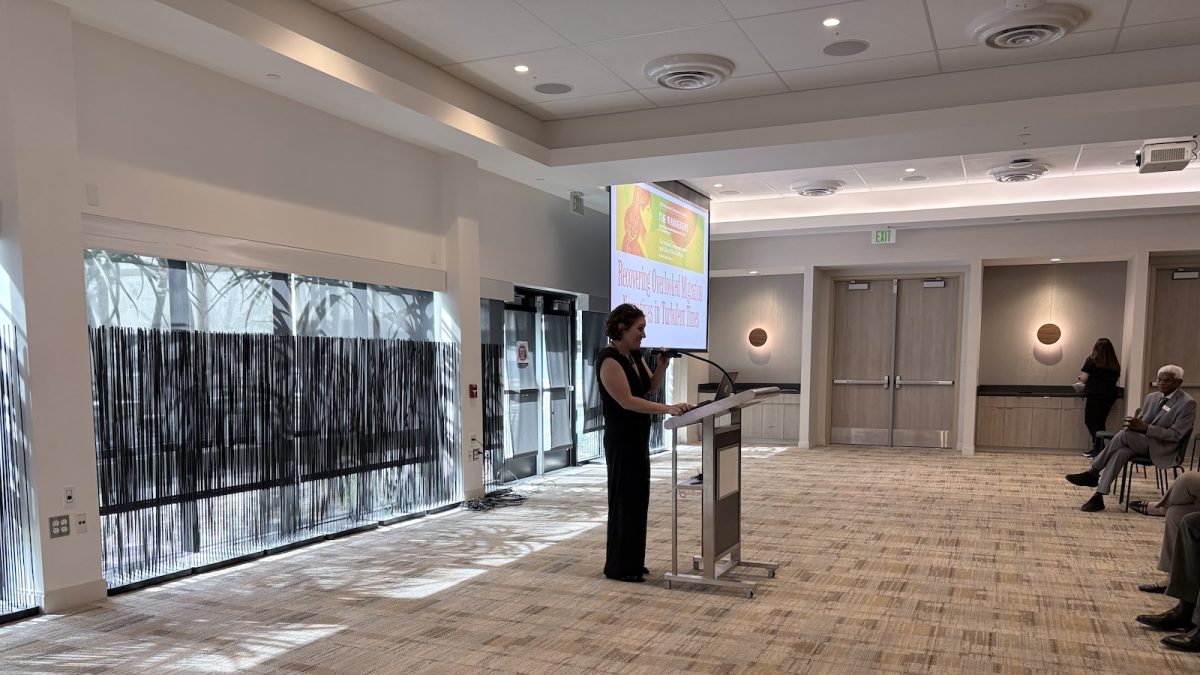

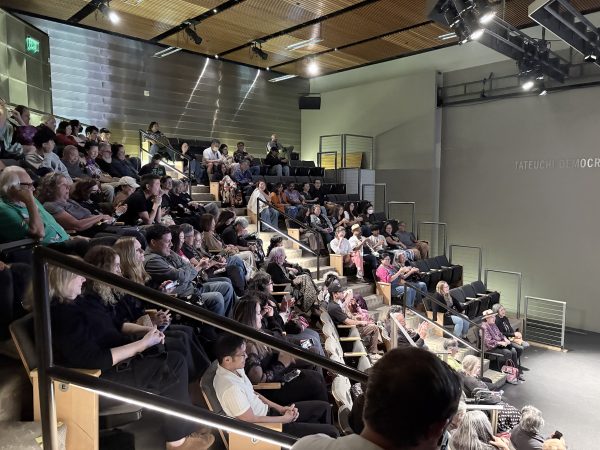
A crowd gathered in Little Tokyo as attendees filled the Tateuchi Democracy Forum for a screening of “The Auntie Sewing Squad Resistance Playbook,” part of the Los Angeles Asian Pacific Film Festival. The documentary, directed by Valerie Soe, highlights a grassroots mutual aid network that emerged during the COVID-19 pandemic to provide masks to vulnerable communities.
The film was presented as part of the festival’s focus on community resilience and activism.
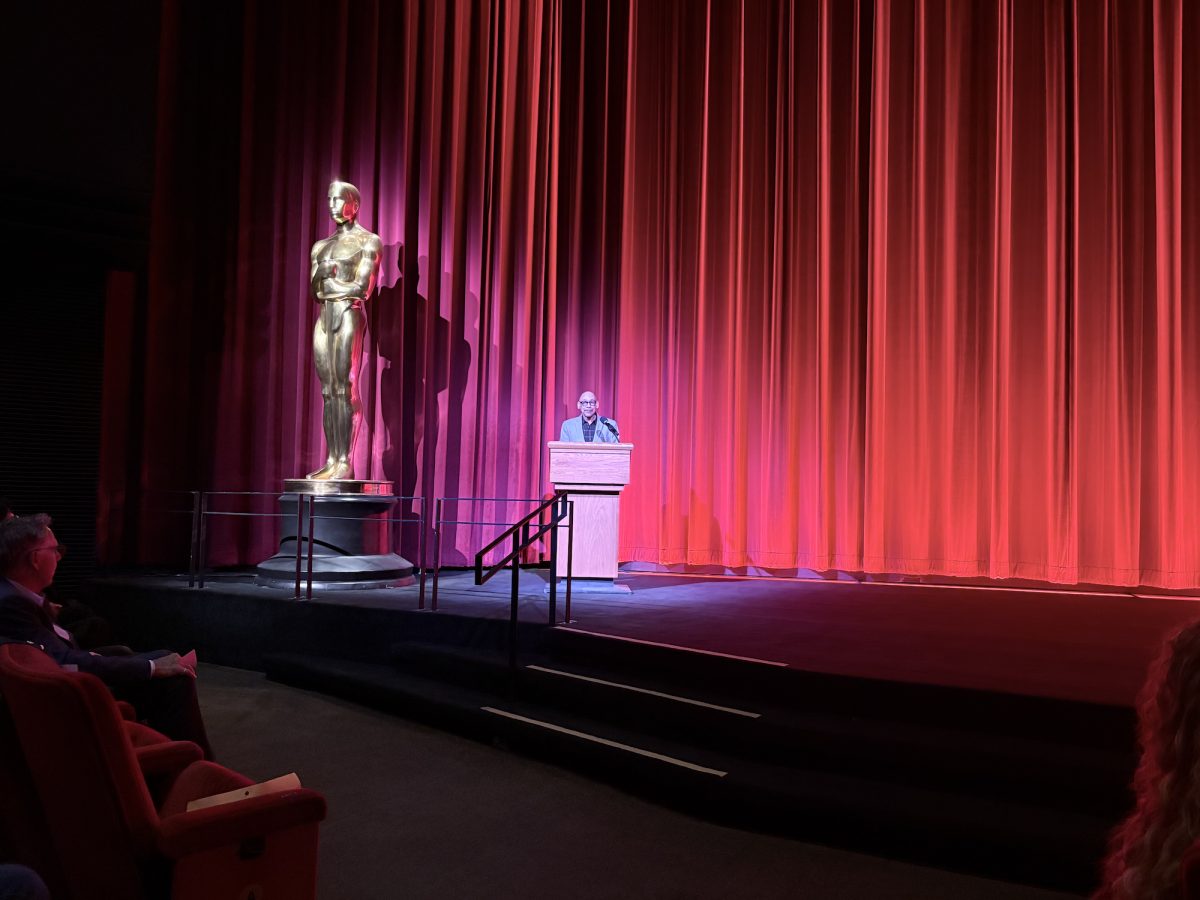
The screening was part of the 42nd Los Angeles Asian Pacific Film Festival, which highlighted Asian American and Pacific Islander stories through film and cultural programming, and took place at the Tateuchi Democracy Forum inside the Japanese American National Museum, a space that frequently hosts cultural events in Little Tokyo.
Before the screening, Visual Communications Executive Director Francis Cullado introduced host Janet Chen, who then took the stage to introduce the film to a packed audience.
The film documented the Auntie Sewing Squad, a volunteer collective that formed in response to widespread shortages of personal protective equipment during the early months of the COVID-19 pandemic. What began as a small effort grew into a nationwide mutual aid network focused on supporting marginalized communities.
The group, a diverse network of volunteers across the country, mobilized quickly to address gaps left by institutional responses, producing and distributing thousands of masks to essential workers and underserved communities.
“I feel like that is the way forward,” Kristina Wong, a performance artist featured in the film and founder of the Auntie Sewing Squad, said. “How can you just find direct ways to help and support people?”
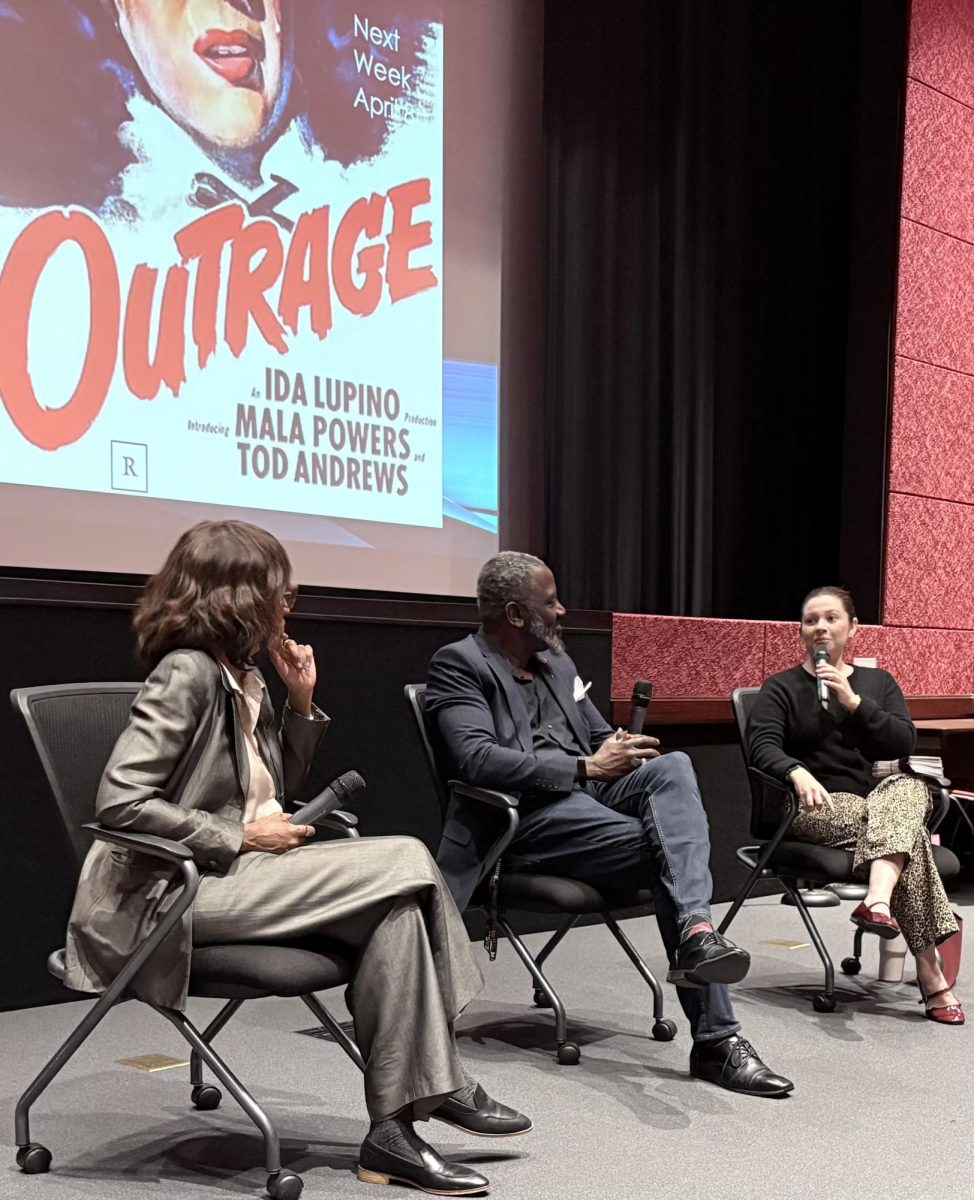
Following the screening, Soe joined Chen, producer Lila Yomtoob, writer and editor Corey Ohama and members of the Auntie Sewing Squad for a panel discussion.
“This is a model that people can follow,” Ohama said. “This is what we need to do.”
During the discussion, panelists reflected on how the group’s grassroots structure allowed volunteers to respond quickly to community needs, emphasizing the continued relevance of mutual aid beyond the pandemic.
Panelists also discussed the origins of the documentary, noting that the film began during the pandemic as Squad members recorded and shared footage of their work while isolated at home. The project later expanded into a feature-length film, drawing from those early recordings and reflecting the group’s collaborative nature.
Organizers said the decentralized structure allowed volunteers to coordinate across regions and quickly direct resources to communities most in need.
“It is your movie,” Soe said, addressing members of the Auntie Sewing Squad in attendance. “I’m just the conduit.”
Audience members, including several Auntie Sewing Squad volunteers, stood and were recognized following the screening, reinforcing the film’s connection to real community members and those directly involved in the effort.
The film ultimately positions mutual aid not as a temporary response to crisis, but as an ongoing model for community support, one that panelists suggested remains necessary in the face of continuing social and political challenges.