
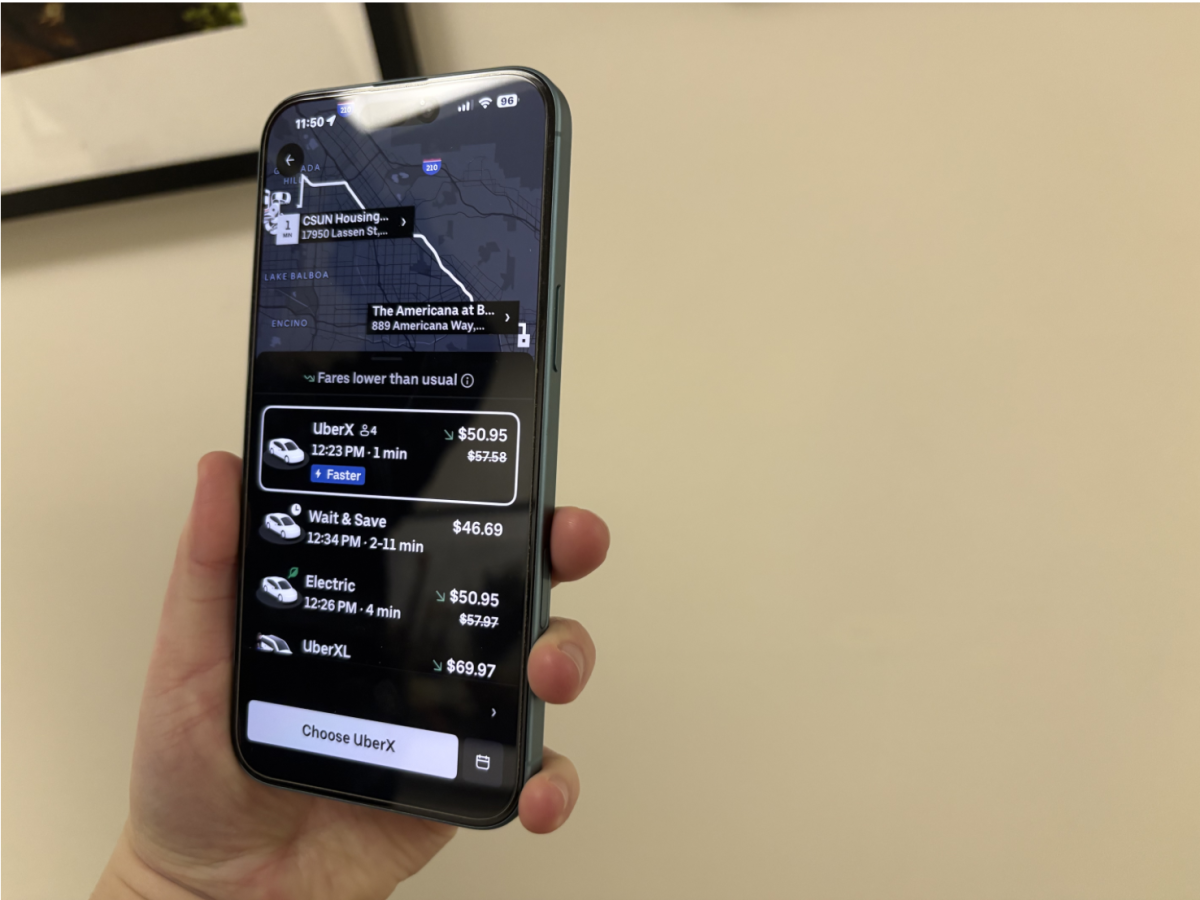
In October 2025, Governor Gavin Newsom signed the “California Senate Bill CA SB371,” which went into effect on Jan. 1. The bill aims to lower passenger fares and reduce insurance-related costs that can impact driver earnings and trip pricing by lowering expensive insurance requirements that account for a significant portion of ride fees in California.
According to Uber Newsroom, Uber claims that government-mandated insurance expenses currently account for almost one-third of a typical rider fee statewide and over half in Los Angeles. SB 371 lowers required uninsured and underinsured motorist insurance coverage for Uber, Lyft and other rideshare services from $1 million per person and $300,000 per incident.
Limiting these requirements under SB 371 is intended to help reduce those costs while maintaining protection for drivers and riders.
Students who occasionally use Uber or Lyft may like the lower ride fare, but are at risk of sacrificing their safety. However, for Isaiah Clark, an emerging media student who lives near campus and uses Uber at times, this is not a concern.
“I don’t believe that this bill will incentivize less-than-safe driving practices from already safe drivers on these rideshare apps, so I feel about as safe now as I did before the bill passed,” Clark said.
Due to SB 371’s reduction in overall insurance coverage, drivers and riders are less protected financially in the case of an accident. Lower insurance limits create concerns about passenger safety and financial stability because they could end up in significantly less compensation for injured passengers after a major accident.
“I feel relief because of the new affordability for uber customers, especially as a non-driver relies on uber services,” said Mari-Al Igama, a student majoring in communication studies. “However, it can be concerning looking at the potential risks of car accidents for both the driver and the rider.”
As Igama learned about SB 371, her feeling of security in shared rides changed, especially as a student who dorms without a car and uses Uber.
“I [became] more selective with where I order services. If I’m ubering in a busy city, I want to be more cautious about riding in a very car-populated area due to potential accidents,” Igama said.
Outside of CSUN, Uber and Lyft users in the San Fernando Valley also have concerns after learning about SB 371. BJ’s Restaurant server Jennifer Salinas uses Uber as her main transportation.
“For a while, I’ve been using Uber in order to get home when I get off late from work. I didn’t know about the bill ‘till now, since I use the ride share app all the time and never had a problem,” Salinas said.
Salinas, who travels to Woodland Hills for work, became very worried about her safety during the commute. If she were to get injured in an accident caused by an uninsured driver, the reduced insurance protections under SB 371 would make her both physically and financially at risk.
“It makes me feel unsafe to know that I’ll be risking my life in a way when I’m taking an Uber because I’ve experienced unsafe situations where an accident could’ve occurred,” Salinas said. “It makes me think, is it even worth taking an uber even if I do save money?”