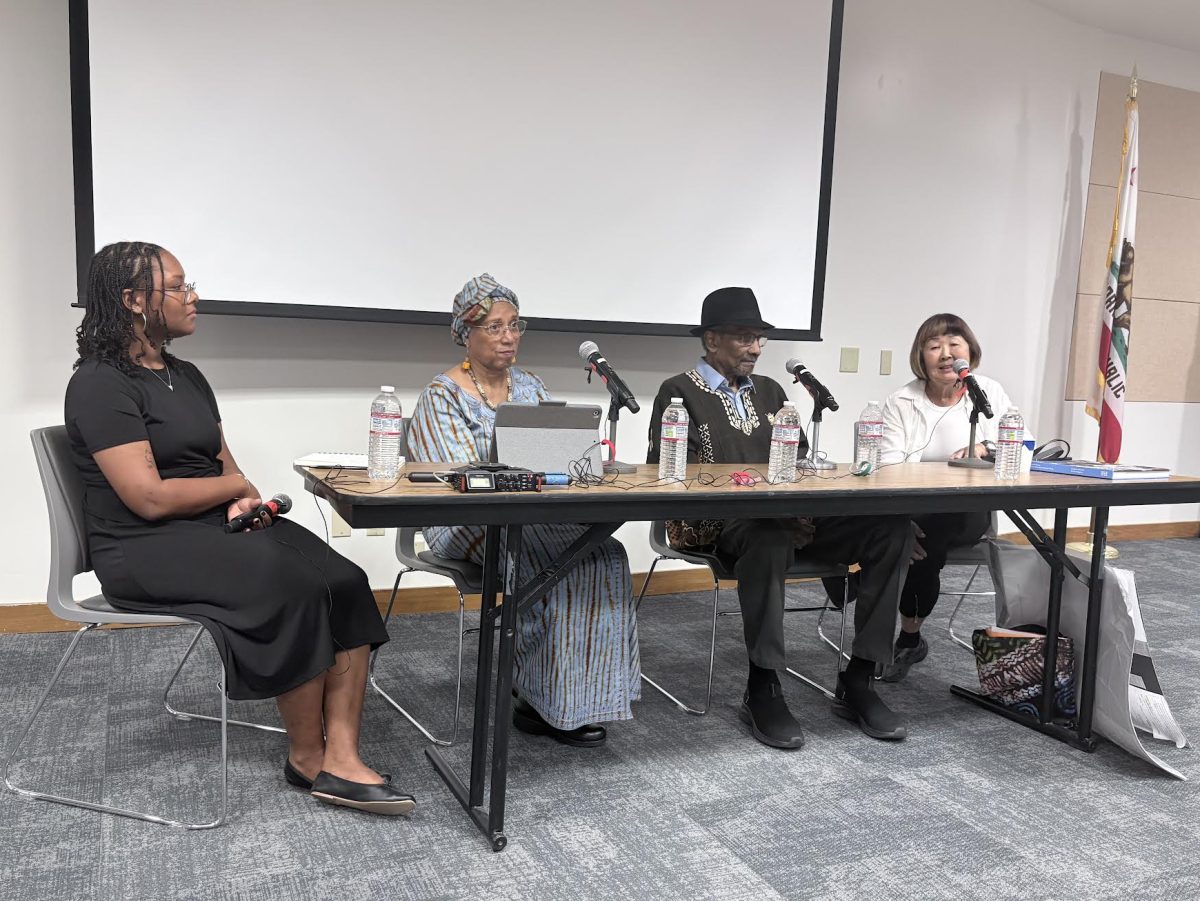
60 years after the founding of the Black Panther Party, former members gathered at CSUN on Wednesday to reflect on the movement’s origins, survival programs, lasting political impact and the personal moments that pushed them into activism.
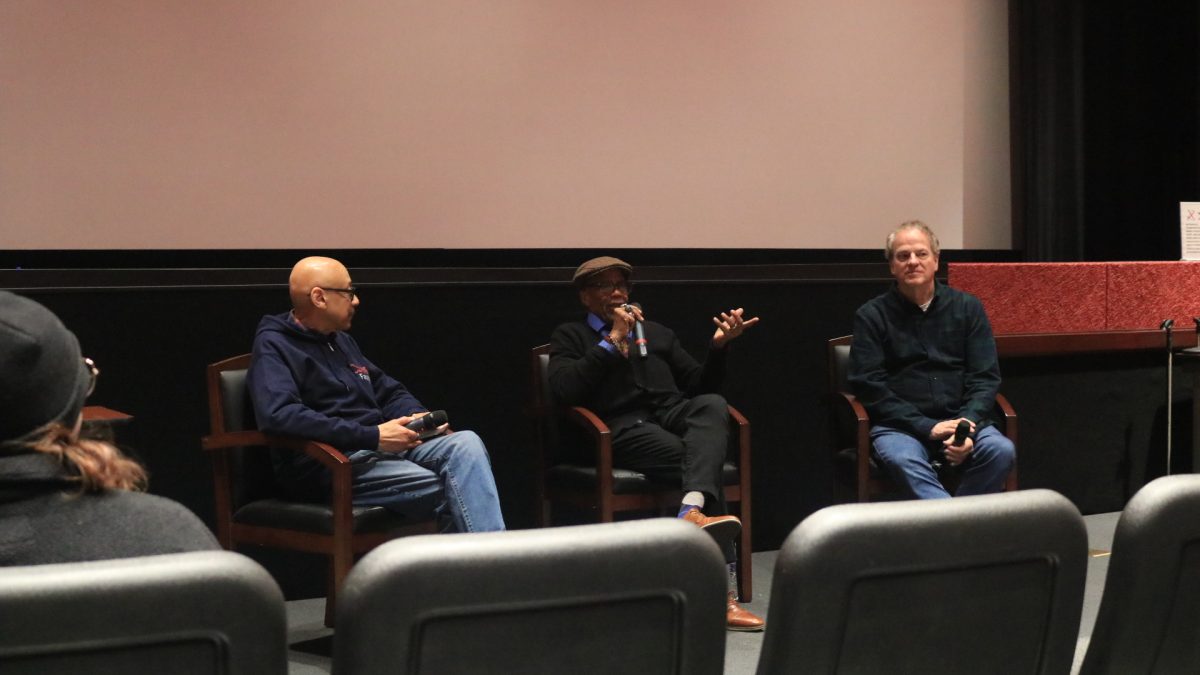
The Black History Month event, hosted in the University Library’s Jack and Florence Ferman Presentation Room, featured former Black Panther’s Hank Jones, Norma Armour Mtume and Ruth Wakabayashi. The discussion explored the Party’s founding in the late 1960s, community-based survival programs and how its legacy continues to shape social justice movements today.
Jones, who joined the Black Panther Party in 1967 after previously working with the Student Nonviolent Coordinating Committee, traced his political awakening back to the 1955 lynching of 14-year-old Emmett Till in Mississippi, a killing that galvanized the civil rights movement.
“The murder of Emmett Till … changed my whole life,” Jones said.
Jones described the late 1960s as a period of widespread racial violence and political repression, which fueled the Party’s formation and rapid growth. For him, activism was not symbolic – it was urgent.
“We were willing to die for what we believed in,” he said.
Mtume, who served as the Party’s Minister of Health and later co-founded SHIELDS for Families, emphasized that the Black Panther Party was not solely defined by confrontation, but by community programs. She pointed to the Party’s free breakfast initiatives, health clinics and services for women and children as examples of “survival programs” designed to meet immediate needs in underserved neighborhoods.
“When we started the clinics, we operated by volunteers,” Mtume said, describing how volunteers learned to draw blood, give injections and run basic lab tests to fill gaps left by the health system. “We learned how to do pap smears and physical exams – those skills saved lives.”
Those initiatives, she said, addressed gaps in public services and laid the groundwork for programs that later became institutionalized.
Wakabayashi, who joined the Party after graduating from California State University, Los Angeles (CSULA) in 1969, reflected on the movement’s cross-racial alliances. Born to a Japanese-American family after internment, Wakabayashi described how her own community’s history of incarceration shaped her understanding of state power and racial injustice.
“I was inspired to see people willing to do that,” Wakabayashi said of the Panthers’ commitment. “When you see them tirelessly giving everything, you don’t want to let each other down.”
Wakabayashi also spoke about the Oakland Community School, an alternative education model rooted in political awareness and self-determination, saying teaching there shaped her view of coalition-building and grassroots organizing.
Jones and the other panelists repeatedly drew connections between the Party’s survival programs and modern policy debates. Mtume argued that the Party anticipated contemporary public-health conversations.
“We were addressing structural drivers of health before those terms – the Free Clinic movement happened during that time,” Mtume said, citing the Party’s early role in establishing free clinics and raising awareness of conditions such as sickle cell disease.
“My advice is … be wise in what you’re doing,” Mtume said. “Think about those things, because what you’re doing doesn’t just impact you.”
Throughout the discussion, panelists connected the Party’s past work, like food programs and community health initiatives, to today’s ongoing struggles around policing, incarceration and economic inequality. They urged students to combine solidarity with strategy and to plan carefully when organizing.
For students and faculty in attendance, the Black Panther Party’s 60th anniversary was a reminder that movements evolve and practical community work can leave behind durable policy, along with cultural legacies.