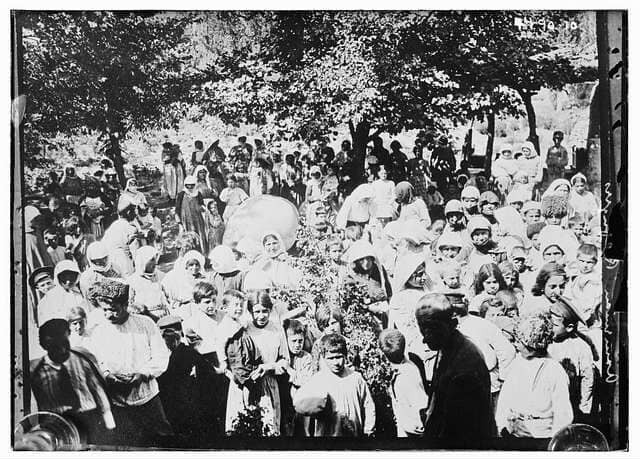
History marks 1915 as the beginning of the Armenian Genocide, but my ancestors knew its shadow long before the world gave it a date.
My great-grandparents were originally settled in Bayazet. Even though the Turkish government has since changed the name of it, for me, it will always stay the way my grandparents told me.
Bayazet is a city in western Armenia – modern day eastern Turkey. Before 1920, it was part of the vilayet of Erzurum and later became part of the province of Agra, located 25 km south-west of Ararat and 35 km from the Iranian border with a population of 56,000 (2002). Until the 14th century, it had the Armenian name Daroink.
Even though it has the Armenian name, as much as I remember the stories that always circulated in the family, they have always referred to it as Bayazet or Gavar.
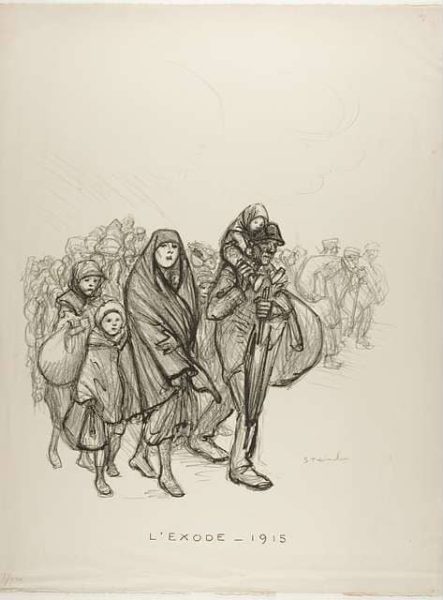
In the 19th century, during the Kurdish inter-tribal conflicts, the Turkish-Persian war and the Russian-Turkish wars, Bayazet was the city which suffered most of all during the horrors of Genocide. The Armenian population was particularly affected during the attack of the Turkish troops in the summer of 1877.
Only through the heroic resistance organized by General A. Ter-Gukasov and the subsequent retreat of thousands of refugees was it possible to save Bayazet inhabitants from mass extermination.
In January/February 1907, Turkish troops organized new pogroms in Artsap. In 1909, only three Armenian villages were left in the Bayazet region, with the Armenian population of the town amounting to only 2,000.
According to Russian vice consul Girs, authorities had armed the criminal elements in October 1914, and many local Armenians had to emigrate in order to avoid being persecuted. In November 1914, Russian forces took Bayazet — though it was given back to the Turks soon afterwards, and in November-December, a large number of Bayazet inhabitants had to move to Eastern Armenia. In April 1915, the Muslim population of Bayazet had carried out pogroms against the Armenians, taking advantage of the fact that the Russian offensive had been suspended. In 1916, General Yudenich’s order forbade the Armenian refugees to return to their native lands – by that time, the first Russian settlers had already appeared.
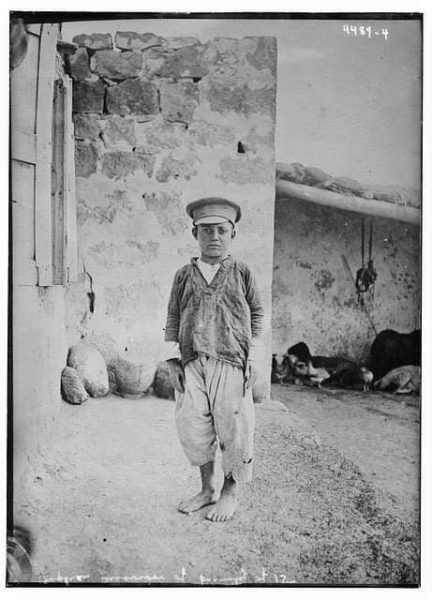
In the summer of 1917, the ban on return was lifted, and by the spring of 1918, Bayazet was recaptured by the Turks. The last Bayazet inhabitants moved to the Ararat Plain regions.
My father’s ancestors from his mother’s side escaped to Novorossiysk and continued shoe-making. Eventually, they left it after the revolution in Russia in 1917.
My father’s dad’s side – as well as my mother’s ancestors from both sides – settled in Gavar, which was founded as Novo-Bayazet (New Bayazit) in 1830, 8 km west of Lake Sevan, by the Armenian migrants from the town of Bayazet of the Ottoman Empire.
Unfortunately, my grandparents do not remember exact dates when their parents and grandparents left Bayazet, but I guess if New-Bayazet was founded in 1830, then they eventually left Bayazet around that time.
My ancestors survived the genocide before the officially recorded one in 1915, and I do not recall any stories my grandparents told me about that one, because much or less their ancestors settled in Gavar, and for them, it was not that troubled as for those who escaped Genocide in 1915 if we can compare it.