As a die-hard Lakers fan, the 2010s will always stand out to me as the time when I began to love basketball. I watched because I actually cared about the teams, players and action on the floor. From watching the Lakers and Celtics rivalry to Kobe Bryant’s prime performances, my desire to watch solely stemmed from the love of the game at a time when betting apps weren’t even remotely prevalent.
As I got a little older and entered the early 2020s, I began feeling like some things in basketball were becoming more questionable. Between 2019 and 2026, the league had eight different champions without a repeat winner.
Starting around the 2023-24 NBA season, I also noticed how sports shows on ESPN and TNT were constantly displaying FanDuel betting odds and team ratings. That dramatically altered the entire viewing experience because betting eventually became ingrained in the game rather than remaining an external activity.
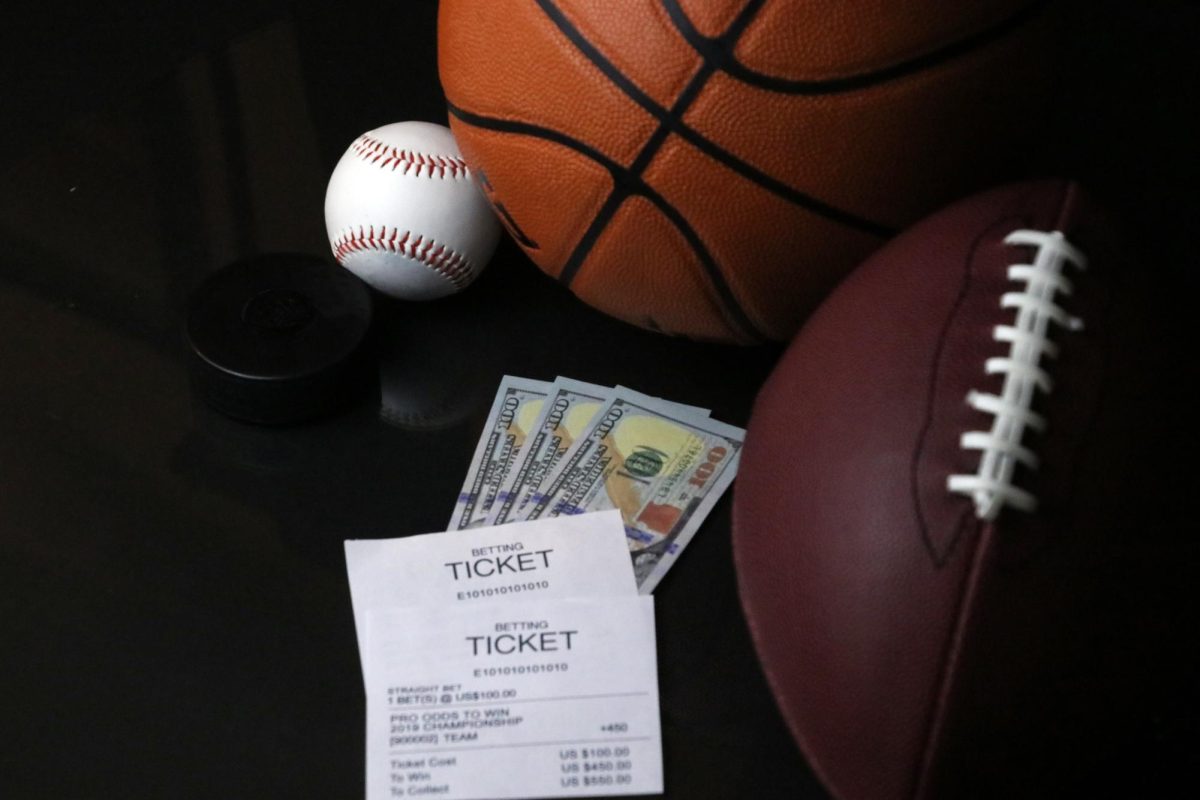
With the 2026-27 NBA season approaching, betting is already part of the conversation before the first game has even been played. CBS Sports published the opening-night betting odds in August, listing the Philadelphia 76ers as 3.5-point underdogs against the New York Knicks and the San Antonio Spurs at a 1.5-point advantage against the Oklahoma City Thunder.
By the 2024-25 season, I felt like sports betting had spread beyond the NBA. Whether I was watching the NFL, MLB, NHL or any other sport, betting odds, parlays and player props seemed to be everywhere.
Daniel Lahmanchuk, a CSUN business financial analysis major and soccer fan, said the impact of betting on sports consumption.
“Sports betting has definitely changed the way that people have been thinking about sports because it has really increased the amount of people watching certain sports,” Lahmanchuk said. “Some people who were interested in it before have gotten more interested because they see a financial incentive to watch these games.”
Lahmanchuk also noted that betting has also shifted what some fans pay attention to during games.
“I believe that people have stopped watching just the games just to see who wins, “ Lahmanchuk said. “They’ve been watching different statistics about it, like who can make the most points or who can run the most yards.”
Another international sporting event where betting was prevalent was the 2026 FIFA World Cup. Spain was considered one of the favorites to win going into the tournament, but I predicted Argentina would repeat as champions. Even then, I was surrounded by betting chatter regarding the team odds and predictions, showing me how prominent gambling has become in sports.
Zion Cail, a CSUN communication studies major and Lakers and Packers fan, said sports betting can hurt the fan experience by changing how new fans connect with teams.
“If I am new to sports and I find a team that I like and then I am betting on them with no knowledge of their background, their players and everything, it could be difficult,” Cail said.
Cail added that losing money on a team could make a new fan lose interest in supporting that team altogether.
6ABC/ESPN reported that federal lawmakers urged MLB and the MLB Players Association to limit certain betting incentives after FanDuel sent a customized Bryce Harper video to a VIP gambler. The bettor filed a lawsuit against FanDuel afterward, saying the sportsbook targeted him for his gambling addiction. Harper stated he was unaware of how the video would be utilized.
The larger problem is that it begins to alter the incentives behind sports. Rather than appreciating the game for just what it is, having money or a prediction on the line feels like a must now.
Noli Ortega, a CSUN journalism student, said he noticed sports betting among incoming students while attending orientation.
“I remember seeing at New Student Orientation that some fellow students, soon-to-be CSUN students, were sports betting and not paying attention to the orientation, like they were presenting us the Take 38, which is very important,” Ortega said. “They were focusing on something else, which the university needs to do something about it or maybe their parents.”
Mahyar Hashemi-Alavi, a graduate student, said sports betting can add even more financial pressure to the expenses students already face, such as with food and gas.
“To factor in sports gambling on top of that, it can definitely be like a whole, rut that you fall into,” Alavi said.
While some CSUN students regularly follow sports, others are still exposed to sports betting even if they are not sports fans.
Max Amendolara, a CSUN emerging media production major, said that although he is not a regular sports watcher, he understands betting could reduce watching the game purely for fun.
“It has sort of developed a culture now of almost needing to sports bet, where it is like, what is the point of watching a sport if you can’t put money on it?”Amendolara said.
At the end of the day, sports betting and gambling are not going away anytime soon, but it should not become the sole reason people watch sports in the first place. The memories I have as a Lakers fan came from the games, the rivalries and the players, not from the results of a bet. I hope that spark of being a sports fan solely for the love of the game never disappears, regardless of the sport.