
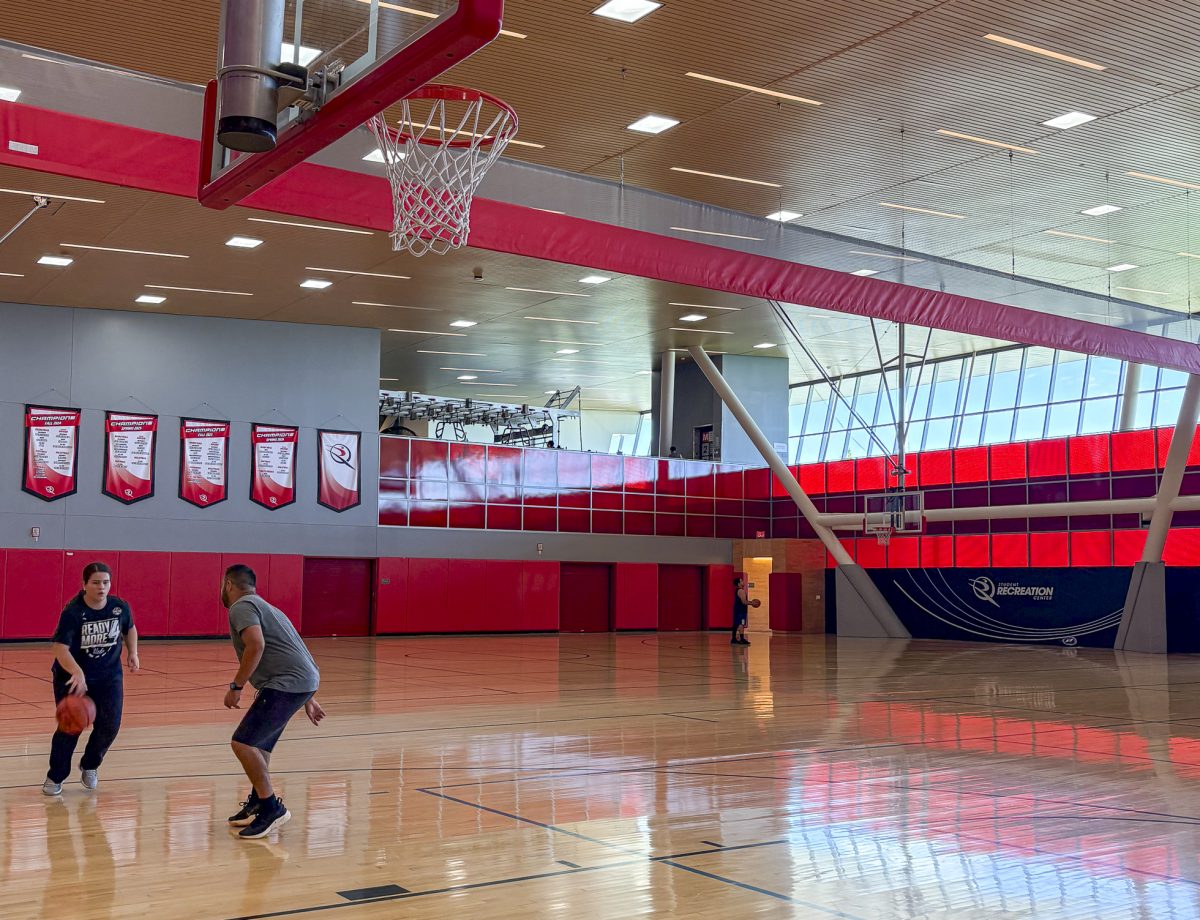
For decades, women have been told they’re not strong enough, bold enough or smart enough on a general level, and when it comes to sports, it’s a whole other level. Women in sports have had to prove that their athletic ability deserves the same attention and respect as their male counterparts.
We’ve been told “girls aren’t physically capable to do that,” or to “leave that to the men,” or that “you need to try harder.” We’ve heard it all. The truth is, we do have to try hard; harder than any man to be seen, to be heard—to be equal.
So, when an advertisement featuring a controversial actress uses sports imagery while placing excessive attention on her appearance, it is worth asking what message audiences are actually receiving.
Sydney Sweeney’s recent sports ad portrays females, specifically female athletes in sports, as objects rather than human beings. I believe the disrespect and carelessness of Sweeney on how this makes females in sports feel is beyond belief.
The ad shows Sweeney with little to no clothing as parts of her body are covered with various sports equipment and apparel. ESPN Sports reported the major backlash from female athletes who argue and say “the ad hyper-sexualizes women and reduces athletes to their physical appearance rather than their athletic achievements.”
Emma Suehiro, a female student athlete at CSUN, expressed how despite doing as much as men in sports, women are overlooked.
“We’re not doing it so that we can show off our curves on our body. We do it because we love the sport, because we want to go out there,” Suehiro said. “We want to participate, and we want to compete. So I think just kind of her being out here, showing off her entire body and saying ‘sports’ the way she does puts a bad light on women.”
Suehiro also mentioned how it’s degrading to everything that we as women have been working toward for years. Women have had to prove themselves to the world that we are just as good as men and that we can do anything we put our minds to. Male athletes are frequently marketed through their strength, competitiveness and accomplishments whereas women are often expected to balance athletic ability with attractiveness.
This also takes away the attention from female athletes who dedicate hours every week to train, compete and improve their athletic abilities. I believe this is also sending the wrong message to young women that advertising does more than sell a product; it’s communicating ideas about what society considers valuable.
“[Sweeney] is signaling to girls or women that this is your place in sports, which I don’t like because I feel like women and men equally have a place and role to play in sports rather than being an item or object to look at,” Jericah Abad, a CSUN student, said.
While much of the controversy surrounding the sports ad has focused on Sydney Sweeney, another important question remains: How much responsibility should be placed on the brand Novig, the company behind the campaign? Although Sweeney chose to accept the role, she was not the only person involved in bringing the advertisement to life. The script, creative direction and overall message were shaped by the team responsible for producing the campaign. In my opinion, focusing solely on Sweeney overlooks the larger organization that developed and approved the advertisement before it reached the public.
The controversy also raised questions about accountability in advertising. When a campaign relies on stereotypes or sends a message that audiences perceive as disrespectful toward women in sports, I believe responsibility should extend beyond the celebrity appearing on screen. Sweeney’s decision to participate can be examined alongside the choices made by the writers, producers and brand executives who helped shape the final product.
Rather than placing all the blame on one person, examining the brand’s role encourages a broader conversation about how companies represent women athletes and the responsibility they have when creating campaigns that influence public perceptions of women in sports.
Young women may receive the message that being attractive is just as–or more–important than being strong, skilled and competitive. We as women have worked so hard to not be seen as just a body. In my opinion, it feels as if we are now walking backwards from all the progress we’ve made over the years.
I know firsthand how frustrating it is being a female in sports. I ate, slept and breathed sports my entire childhood while getting dismissed, overlooked and invalidated.
The sports I played were considered the “girly sports,” such as dance, and specifically, ballet. I also did competitive cheerleading, which men have always deemed to not be considered a sport. However, we spent as many hours as the football team training in and out of the gym.
This treatment is equivalent to the feeling of being underestimated, minimized and unrecognized for a sport that takes strength, endurance, flexibility, coordination and trust to perform.
Women in sports aren’t doing it to wear “cute uniforms” or to get applause for our appearance. We do it for the early mornings, the sore muscles and the love we have for our sport, just like everybody else. Most of all, we do it because we are athletes; we work, sweat and sacrifice just like anyone else who steps onto the field, court or mat.
At the end of the day, I believe women in sports deserve to be seen for more than how they look. We deserve the same respect as athletes. Women don’t need to look like athletes to be athletes. We just need to be recognized as them.