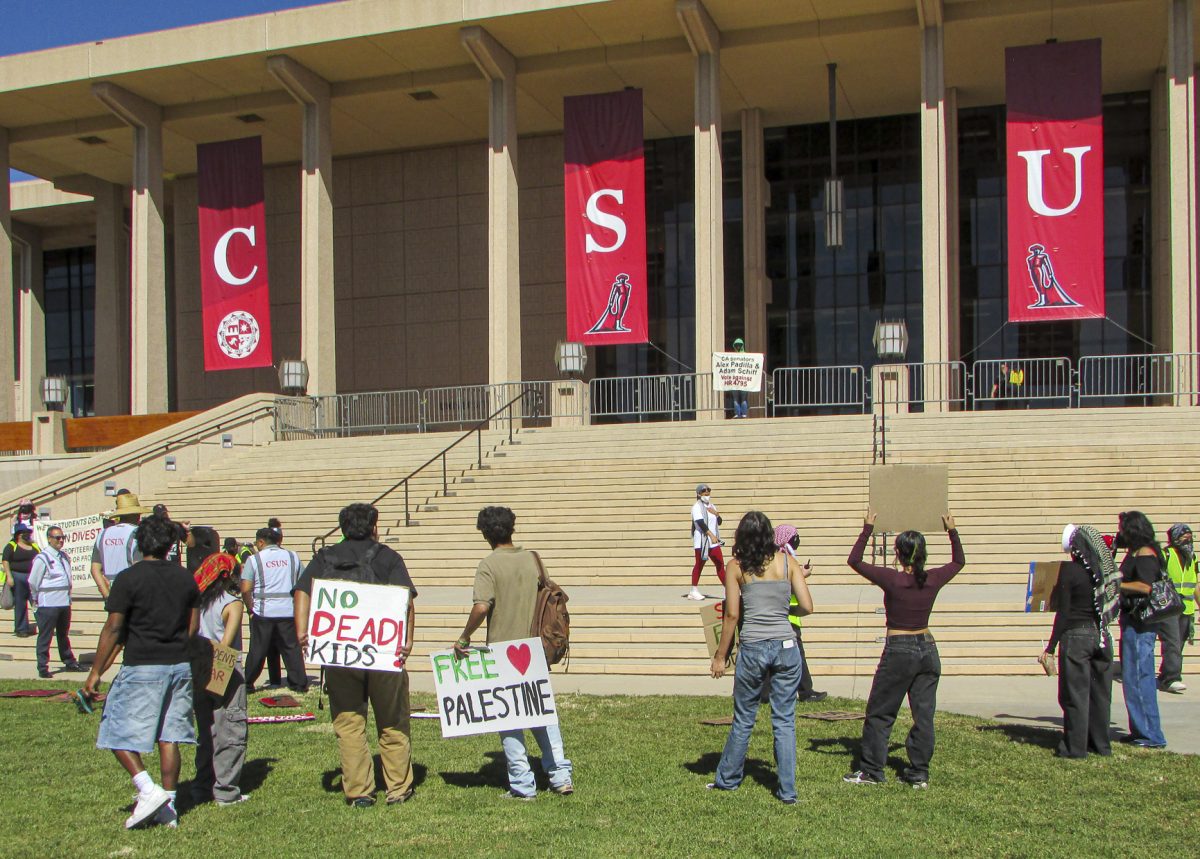
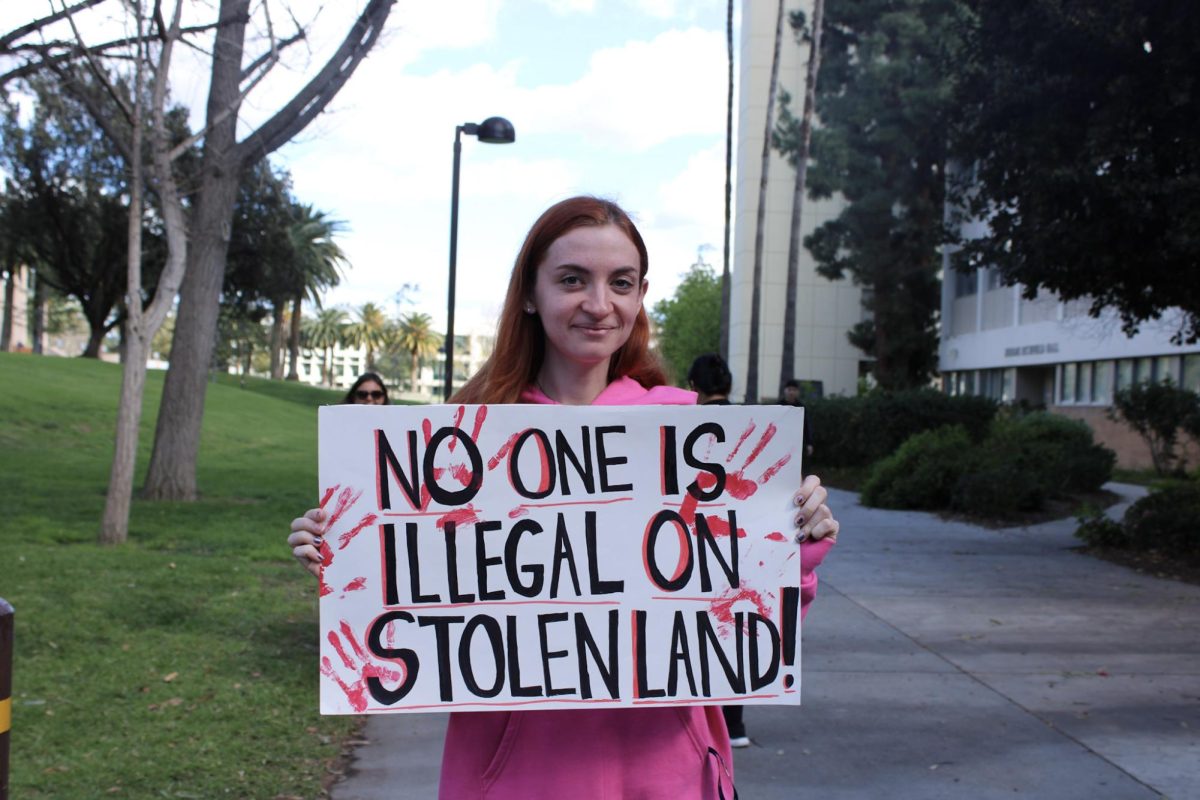
Professors of the College of Humanities at CSUN came together to host an outside teach-in session discussing Immigration and Customs Enforcement (ICE) for students on Feb. 18.

According to Daniel Olmos, a sociology professor at CSUN, the event took place after a call to action was made via email within the College of Humanities Department, requesting more resources regarding ICE response training and community input.
“Some of us are starting to get on board, saying we’ll bring our class,” said Olmos. “That’s the purpose of it.”
Olmos mentioned that the teach-ins are connected to the larger struggle against ICE and defending immigrant communities amid worsening immigration raids. This comes a year after President Donald Trump increased the budget of the DHS and reports from local officials saying their communities are being terrorized by ICE.
“I feel like it would behoove us as faculty if we didn’t respond to it in some way,” said Olmos. “It’s not revolutionary, but it’s part of creating a culture on campus where we can connect learning to our political aspirations.”

CSUN lecturer Nicole Aboud was invited to the teach-in and said teach-ins offered a different way to absorb information about issues and community resources.
“We’re getting a lot of [resources] through social media. So, it’s good to do something different and still be in the community the same way,” Aboud said.
Aboud talked about language discrimination, language profiling and the history of the English-only movement during the class. She connected these ideas to current ICE tactics by analyzing who they deport and who they see as immigrants.
“Language profiling is definitely related to their tactics,” said Aboud. “The fact that language accessibility, and this doesn’t go for the non-English speakers, but also the signers, the deaf and the hard of hearing community, as well as children, who don’t have the same amount of language knowledge as an adult does, is completely disregarded by the immigration system, by DHS and by ICE. That’s how they are deeply related.”
A publicity major and sociology minor student who requested to go by the alias Andrea Hernandez shared her feelings as a newcomer to this nation.
“This means a lot because it means that there are people that care about what is happening,” she said. “I think it’s very easy to feel invisible and to feel forgotten in times like this and to feel guilty of your identity.”
During the teach-in, one student heckled, repeating the r-word and saying “ICE is good!” The student then swiftly walked away – but that didn’t stop the teach-in.
“The heckling will always be a part of engaging in knowledge production in a democracy,” Olmos said. “We shouldn’t shy away from our knowledge being contested. Knowledge will always be contested. I see the heckler as a reminder that learning is always something we struggle with in terms of finding the truth.”
According to Olmos, the teach-in’s hope is to show that professors are in solidarity with the school’s immigrant community and craft a learning culture outside the classroom. He added that after Minneapolis, ICE has clearly expressed itself as a rogue federal agency, with no limits in terms of what they can do to immigrants and citizens.
“We want to take a stand,” Olmos said.