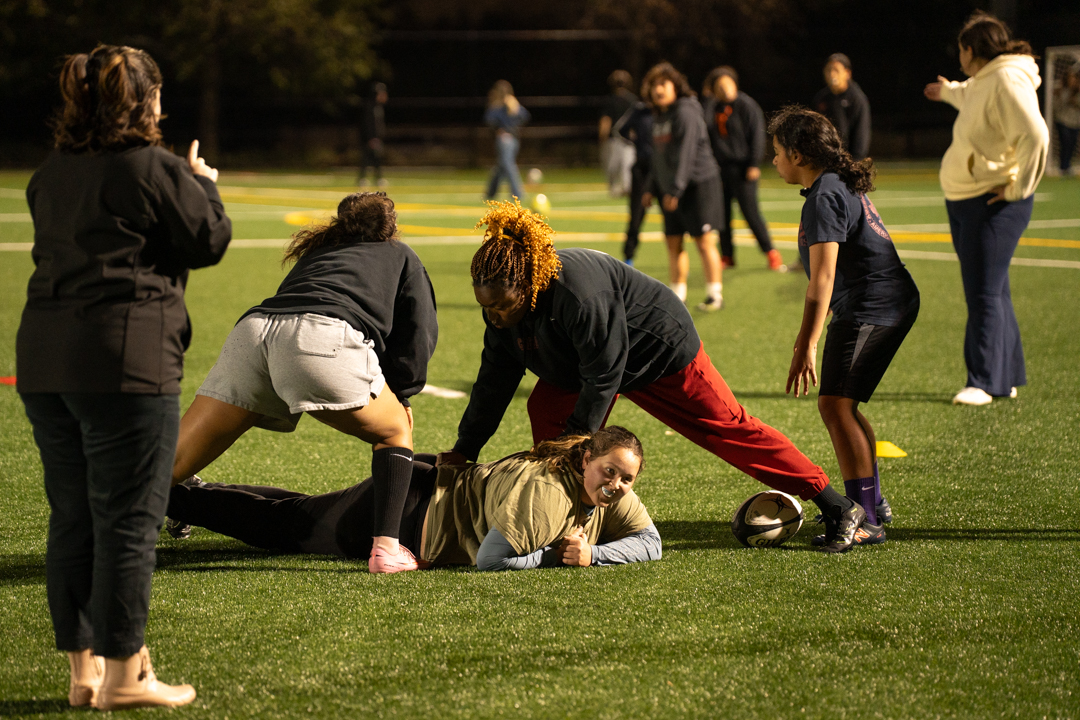
There are roughly 350 active women’s rugby D1 and D2 clubs in the U.S., according to the NCAA. In California, there are 15 of these clubs – one being CSUN’s very own.
Officially recognized as a club in 2011, the team has had some solid success and were two-time D2 national champion runner-ups in 2014 and 2015.
There are comparisons made between American football and rugby, and to those who do not understand the sport, it is due to the similarities in field and number of players on the field – but this is not the case.
Rugby is a high-contact sport with two teams of 15 players. The main objective is to carry the ball past the other team’s side of the pitch and ensure it touches the ground to score a try, worth 5 points.
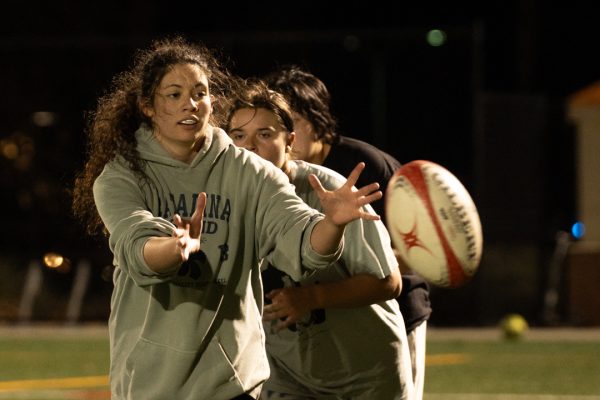
The ball can only be passed forward or backward. Unlike American football, the players are constantly switching positions of defense and offense, whichever serves the team best at that moment.
Tackles do not stop the game; it continues. When an infringement is committed, that is when the scrum happens, where both teams hook themselves together, and the non-offending team throws the ball in the middle. Both teams’ hookers, a forward but with a much more important purpose, then use their feet to move the ball in their team’s favor.
The game is as physical as American football, if not more, using the arms and shoulders for contact. This prevents major damage being done to the head, creating a safer game altogether.
Emily Teret has been the president of the club for the past two years after previously serving as its vice president. She took on the leadership role following the COVID-19 pandemic.
“It was nerve-wracking. In my freshman year, we only had three vets returning, and they did not return the next year,” Teret said. “It was kind of left to the rookies that joined the team that year, including myself, to keep the team afloat.”
She worked closely with her friend Julia Marinho, who is in charge of the equipment and team members, in making the club grow more every semester. Teret explained it is important to create a space where everyone is welcome.
There is a constant reminder of the culture of inclusion in the club, with the team’s ASL interpreter always in attendance at practices. No matter what the size or ability of the person, all are invited to play.
“We will never attack you for a simple mistake; we’re very forgiving, flexible.” Teret said.
A member must pay club fees, but Teret made it clear that the club does not want to deter anyone from joining, so they help other members when they need it most.
“We have a saying – money should never be the reason you don’t play rugby,” Teret said.
The team also hosts fundraisers from time to time, which fund a portion of the costs.
“We have wonderful alumni who love donating, and whenever we’re doing [fundraisers], they’re the first ones there,” Teret said.
Assistant coach Joanna Wu, former member of the club, later returned to rebuild the team.
“We built the program back up from the pandemic. So it was kind of tough,” Wu said. “It’s nice to see that it’s still growing here in the season.”
The club observed a growth from 15 members in 2023 to now, doubling in size with 30 members. She attributes this to their inviting demeanor at club events, which makes people interested and brings in a diverse group of people.
Jamie Fender said that finding their footing in a club was important to them.
“As someone with a background in wrestling and track, I was glad to find a place to continue my athleticism, and as a queer person,” Fender said. “It was so important that the group was so welcoming to me.”
Many of the other athletes who were on the sidelines also have former experience with other sports. The team hangs out frequently, which helps team building to secure them wins like their most recent one against UC Irvine.
“Rugby is really empowering,” Wu said, encouraging more women to play rugby. “I think the idea of tackling and being full contact and facing other women whether they’re big or small, that you can take down anybody, regardless of your size.”
Correction issued Feb. 24, 2026: A previous version of this articles featured incorrect pronouns for a player.