At the end of the Fall 2025 semester, it was announced that CSUN was officially designated a California Black-serving Institution (BSI), with one of the largest Black student populations in the state.
CSUN is also a Hispanic Serving Institution (HSI) and, according to the Deaf Studies department, has the largest deaf and hard-of-hearing population of most mainstream universities.
Because of the diverse student body that this campus serves, CSUN’s student leadership felt it necessary to bring to light an issue currently facing universities across the country.
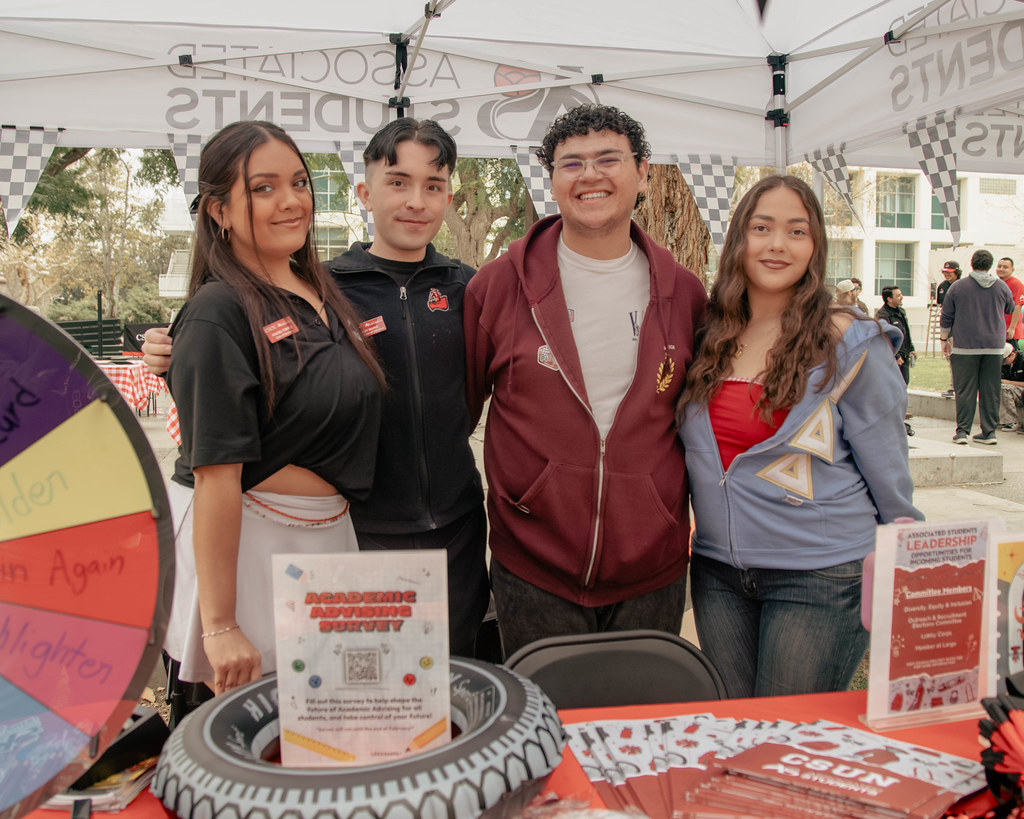
The Associated Students (AS) Senate passed a bill to oppose budget cuts imposed on Minority Serving Institutions (MSI) on Sept. 26.
This bill was created in response to the U.S. Department of Education cutting discretionary funding to MSIs in early September. According to the press release by the White House, the grants were cut for programs they believe “discriminate by conferring government benefits exclusively to institutions that meet racial or ethnic quotas.”
Bill SB-2025-26-001, titled Condemning Anti-HSI Practices from the Department of Education, is intended to speak out against budget cuts and communicate with the federal government that these are essential services that empower all students. It took approximately three weeks to draft the bill, which was unanimously passed in an 18-00 vote.
“The basis of the bill is to call out and to speak against these cuts that are currently facing our institution, as well as work in collaboration with the university as a whole and the rest of the CSU to communicate with the federal government that these are essential parts of how our university operates,” said Cesar Rosales, chair of legislative affairs in the president’s cabinet.
The bill was written by Presidential Cabinet members Rosales and Hermann Douglas, as well as Senator Marcelo Cabrera Figueroa.
Douglas, who is the chair of diversity, equity and inclusion (DEI) for the president’s Cabinet, said that MSI status is crucial because CSUN has one of the largest Hispanic populations of the CSUs.
“A lot of time with white serving institutions or predominantly white serving institutions, we can’t see ourselves or see or get the help that we really need,” she said.
Rosales noted that the bill was created to raise awareness. Although he feels there is a perception that students cannot create change, he points to prior change on campus orchestrated by student voices – such as the creation of the Chicano studies department or the Africana studies department.
With this bill, he wants to remind students that they have a voice.
Douglas added to this sentiment with a message to students who may hear about AS’s efforts to support MSI.
“Students have the power,” Douglas said. “We outnumber a lot of these elected I will say, so our voice really does matter.”
Figueroa related the CSUN funding to his own life, sharing that his sister graduated and made a “generational change” that would not have been possible without MSI institutions. He believes taking away this funding would “not only be a disservice to several thousands of students every year, but would disproportionately impact our communities.”
Although CSUN has not lost any major funding, several CSUs have already been impacted by the cuts. Rosales mentioned that the lack of news can be unsettling.
“To our knowledge … nothing has happened yet, which makes it even scarier, because we’re just sitting here waiting for the bear trap to go off,” he said. “Most of the CSUs, us included, are just waiting at the hip, right? All we can do right now is prepare for what’s going to happen, if something is going to happen.”
One way student voices can be heard is through elections. Assistant Chair of Elections Tommy Nuno said many students on campus are not aware of AS and its importance.
Nuno, who is completing his first semester on AS, said many positions are available and do not require as much effort as students may think, creating a “sense of intimidation.”
“I think transparency is a better way to assure students that they should be involved in this organization, even if it isn’t running for elections, but just joining,” Nuno said.
As of Feb. 10, filing is open for any students interested in running for a position on AS and will close on Feb. 27.
AS has already begun an array of events for candidates to participate in. Among the positions available are AS president, vice president, two senator seats for each college on campus and two senators for each lower-division and upper-division student group.
For students who are not yet interested in running for office, AS offers a paid position on the Street Team, a group of student volunteers at voting stations around campus, providing information about elections and how to cast their vote. This is one step in AS’s plan to increase voter turnout.
CSUN is the fourth-largest CSU by student population, standing at 38,000 students. However, during the last AS election, they had a total of 2,200 votes, or around an 8-9% student turnout, in comparison to Cal State Fullerton, which had a 17-18% turnout. Voter turnout has not gone above 10% in recent years.
In response, AS has decided to change its programming for this year’s elections.
Such changes include a debate on Apr. 24, which will be followed by a mixer where candidates and students will have an opportunity to interact.
According to the AS elections committee, their goals include having more candidates run and for more students to get involved and run for the position they think would be best for them.
“I just want people to be more, I guess, empathetic about elections and join the process and see why people are doing this and why they’re so passionate about it,” said Nuno.
One major concern for low turnout is that CSUN is largely a commuter campus, leading AS to plan annual events like Meet the Candidates, which, according to Nuno, are very beneficial to increasing voter turnout. Since it would happen during peak school hours, the event will give candidates a better chance to speak with students before they leave campus at the end of the day.
“We just want to boost candidates’ platform and boost potential voters and voters’ awareness of what AS is, what our purpose is and why we’re doing all this in the first place,” Nuno said.
The AS elections committee is also using Instagram as their main platform for outreach, increasing their number of posts and stories for commuter students who don’t get to see the physical forms of advertisements on campus.
Rosales, who serves as the chair of legislative affairs in the president’s Cabinet, said election packets are another step in AS’s plan.
“A lot of the intention of our programming is to make sure that students know everything that’s happening and understand the full scope and rules,” Rosales said. “The elections packet that we send out is also incredibly detailed and really does provide all the info they need on how to run, so we try to keep very fair to how we win our elections.”
Voting will happen over Gmail. CSUN students will receive a personalized link to where the ballot is listed. Voting stations will be open from Apr. 7 to Apr. 9, where informational graphics, voter packets containing information on senator responsibilities and benefits, along with QR codes will be available.