Branded Content by Cosmic Press
A tuition-free, evening course at Grand Canyon University offers Arizona residents a fast route into chip manufacturing. The next group enters this summer, and the application step closes at the end of June 2026.
A summer application window now sits in front of Arizona residents who want a way into semiconductor manufacturing without a four-year degree. Grand Canyon University’s Manufacturing Specialist Intensive, funded by TSMC Arizona, runs its next cohort during the June 2026 summer session, and applicants clear a vetting and interview step before they register. The timing is narrow. The entry process for this summer’s group closes at the end of June.
What the Program Is
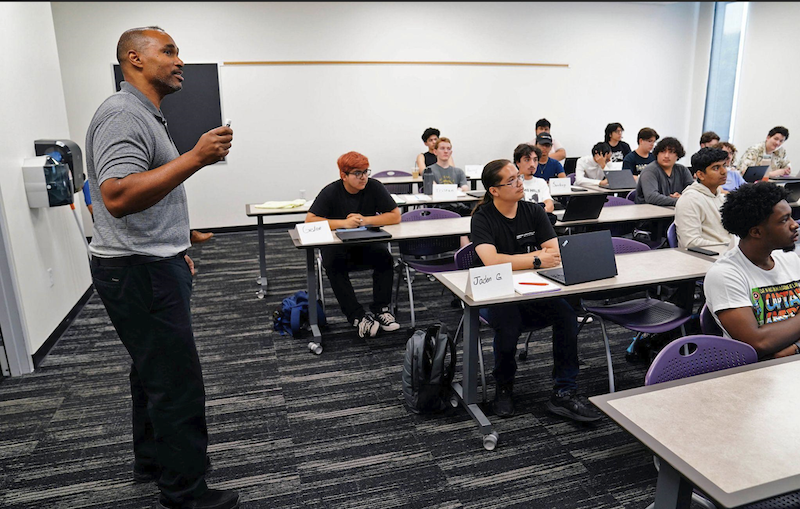
The Manufacturing Specialist Intensive, offered through Grand Canyon University, condenses foundational semiconductor instruction into an 11-week course. Participants meet in the evening, Monday through Thursday, a schedule built around people who hold daytime jobs. TSMC covers the full cost, so tuition is not a barrier. Coursework moves through semiconductor fundamentals, wafer fabrication, standard operating procedures, and the workflow systems used on a fab floor. Graduates leave with three credentials: a certificate of completion and 16 transferable college credits from GCU, plus a digital badge from the Institute of Electrical and Electronics Engineers. Those credentials carry weight with other chip employers across the state, not solely inside TSMC’s Phoenix campus.
Paul Lambertson, dean of the College of Engineering and Technology at GCU, described the partnership’s purpose: “Grand Canyon University is thrilled to partner with TSMC to provide TSMC with a highly skilled Manufacturing Specialist workforce. Listening attentively to industry needs is one of the strengths that propel GCU’s mission for advancing human flourishing.”
Who It Is Meant For
Eligibility runs wider than a typical engineering classroom. The course opens to high school juniors and seniors, to career starters, and to working adults weighing an occupational change. A high school diploma clears the bar for technician work; the four-year degree requirement belongs to engineering roles, not technician roles.
That breadth is part of the appeal for anyone reconsidering their work. GCU has folded the route into broader guidance on building a career in the semiconductor industry, a sign of how many entry points have opened for Arizonans who never pictured a technology job.
Will Crosby, previously in sales roles, became a Manufacturing Technician after successfully completing GCU’s course. On the process, he noted, “GCU’s MSI program helped me better understand the various processes involved in semiconductor manufacturing. This had a direct impact in helping me get up to speed on the job faster than I would have had I not gone through the program.”
How to Apply
The application carries a screening step. Candidates complete TSMC’s vetting and an interview before they enroll, and the company asks applicants to show reliability, enthusiasm, and fit with its four core values: integrity, commitment, innovation, and customer trust. Details on each route, along with the application links, sit on TSMC Arizona’s Technician Pathways programs page. The next group convenes during the June 2026 summer session at GCU’s campus, which puts the application deadline at the end of this month.
What Graduates Take With Them
Completion does not hand anyone a job. It does guarantee an interview with TSMC Arizona, and the company has said the majority of graduates have been hired. Pay is a concrete draw. Arizona leads the nation in semiconductor technician wages, at roughly $30 an hour, or about $62,370 a year, according to U.S. Bureau of Labor Statistics figures.
A Wider Menu of Routes
The summer intensive is one door among several. TSMC Arizona has built a set of technician routes with Arizona schools, packaged together in a recent overview of its free intensive technician training programs. Arizona State University runs a Foundations for Equipment Technician Program in three formats: a five-week weekday accelerator, a 16-week Monday-through-Thursday intensive, and an 18-week Saturday-only option, a setup meant to fit around full-time work or a career switch.
ASU framed that flexibility when it launched the accelerated technician program with TSMC Arizona. A separate process technician intensive, offered through Northern Arizona University, points toward computer-based roles. For people who want a paycheck from day one, the registered Technician Apprenticeship hires participants as full-time TSMC employees before formal training starts, then layers classroom instruction through Rio Salado College and Northern Arizona University across roughly 18 to 24 months. The 2026 apprenticeship cohort begins in August.
Where the Local Opportunity Sits
The throughline across these routes is access. Technician work asks for a high school diploma, is open to residents from outside the technology field, and pays near the top of the national range for the role. Maricopa Community Colleges has trained more than 900 people through its Semiconductor Quick Start program since 2022, with about 4,000 more who cleared pre-assessment and joined a waitlist, a rough measure of local demand for these seats.
The hiring math behind the programs is steep. TSMC Arizona employs more than 3,500 people and is staffing toward a 6,000-member workforce across its first three Phoenix fabs, and it expects to hire more than 100 equipment technicians by the end of 2026. Arizona now ranks first in the nation for semiconductors, drawing more than $210 billion in announced semiconductor investment since 2020. Company leaders cast the training spend as a local commitment. Rose Castanares, president of TSMC Arizona, put it directly when the state expanded its apprenticeship effort: “We are deeply committed to creating job opportunities for local Arizonans.”
For this summer’s manufacturing specialist group, the practical step is narrow and time-bound: clear the vetting and interview, then register for the June 2026 session before the month ends. The other pathways stay open on their own timelines, but the one that closes first is this one.
Many individuals, including Will Crosby, have successfully completed these programs and have found a meaningful career path where they can continue to grow. As Crosby points out, “The work I do as a technician at TSMC is very fulfilling because I am constantly being challenged and learning new things every day. I enjoy using technology and working as a team to solve problems, which is a big part of the job.”
Branded content furnished by our promotional partners. The Daily Sundial editorial staff is not involved in its production. Content does not reflect the views or opinions of the editorial staff.