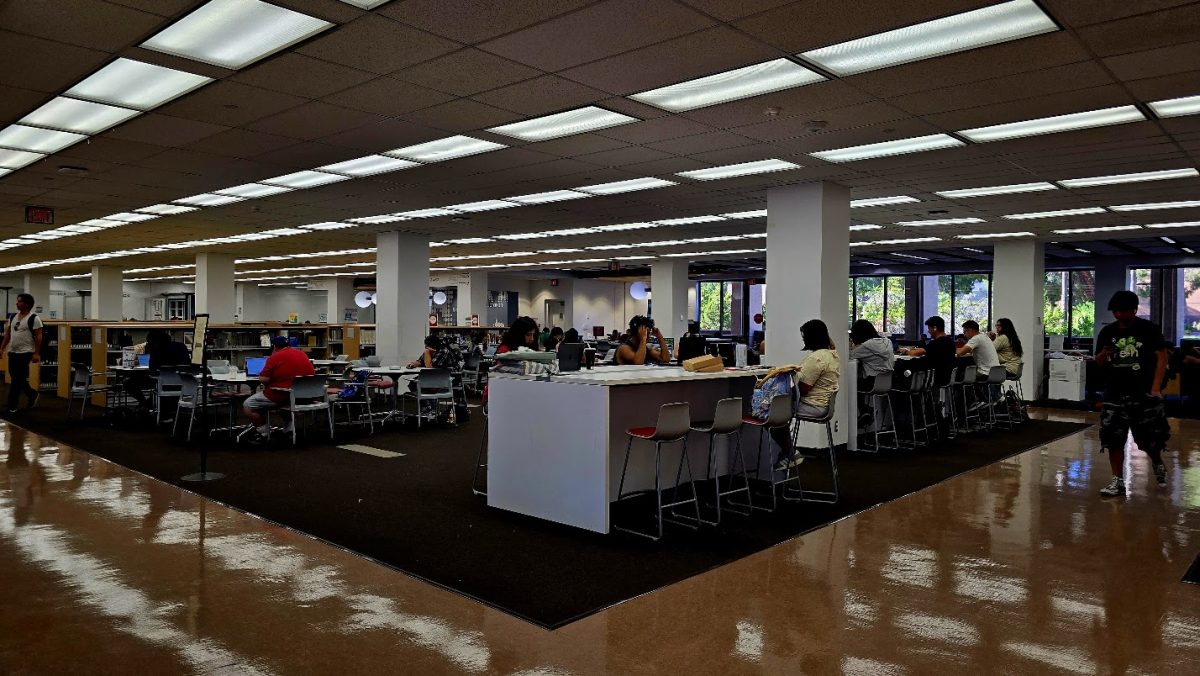
Students trekked across Northridge in sweltering heat on the way to their classes, desperately seeking shade and water in air-conditioned buildings. The 2026-27 school year at CSUN officially began Monday, Aug. 24.
The National Weather Service Los Angeles/Oxnard office placed the western San Fernando Valley under an extreme heat warning through 8 p.m. Friday, Aug. 28. The agency forecasted a high near 110 degrees on Wednesday, with temperatures remaining in the triple digits for the days to follow.
Freshman psychology major Emily Rodelo said walking around campus in the heat has been physically draining.
“I do have to walk, and I am sweating most of the time and you just kind of get really annoyed in the heat you don’t really want to talk to anybody,” Rodelo said. “I find any chance just to go back into a library or to a classroom because of how hot it is.”
Finding relief is not always immediate. Rodelo said shaded seating can be difficult to find during busy mornings because seats are occupied, leaving students to continue walking to the library, classroom or another air-conditioned building.
Freshman political science major Angela Heleria described a small experience while navigating campus during her first semester. Heleria said the heat has made the adjustment to campus more frustrating, however, she has been able to find resources such as water, shade and air-conditioned buildings easily.
“Honestly, it has made it more annoying and frustrating cause , everywhere you go here, just sweating and you just wanna go back to the dorms,” Heleria said.

CSUN maintains a Heat Illness Prevention Program for employees exposed to occupational heat. The university program identifies temperatures of 95 degrees or higher as high-heat conditions and outlines procedures involving drinking water, shade and preventive cool-down periods.
Illy Vermeiren, a senior psychology major with a minor in child and adolescent development, is a student building manager at the Sol Center at the University Student Union here at CSUN. Vermeiren said students have been spending more time in indoor USU spaces during the extreme heat.
Vermeiren said the Sol Center, Valera Nest and conference areas provide air-conditioned places for students to spend time between classes, but many of them seem to be unaware of the spaces available.
“A lot of CSUN students don’t know that we have a TV lounge in the Sol Center, that the East Conference Center is also available for hanging out,” Vermeiren said. “There are spaces in the Northridge Center as well. You just really have to know where to look.”
The Los Angeles County Department of Public Health tracks the effects of extreme heat through its Heat-Related Illness and Mortality Dashboard and Heat-Related Illness Data Brief.
Extreme heat is considered a significant public health challenge because of its effects on health, livelihoods and infrastructure, according to the Global Heat Health Information Network. The international network brings together research and resources focused on reducing health risks associated with extreme heat.
As this week continues under the extreme heat warning, students have changed their campus movement patterns to include more indoor time, water stations and shaded or air-conditioned areas in between classes.