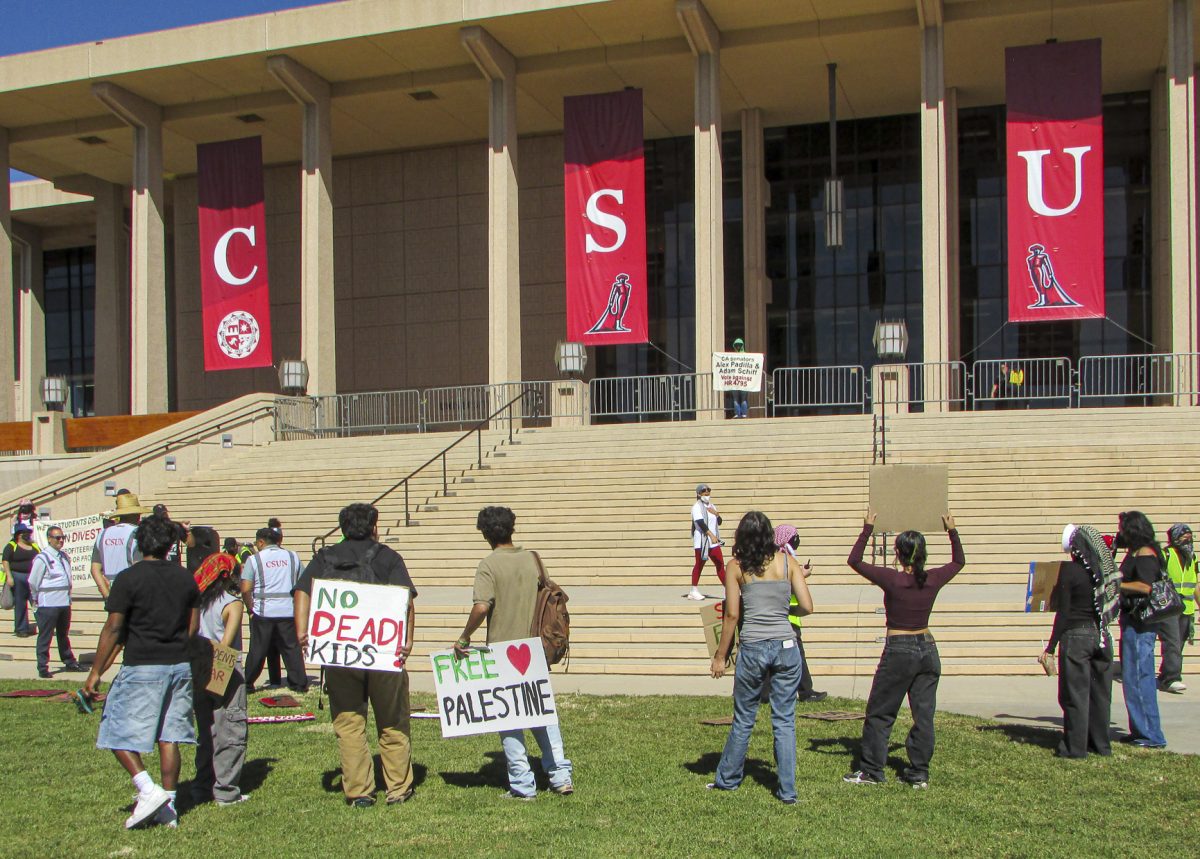
Students gathered on the CSUN Library Lawn on Wednesday, Oct. 7, calling on the university to change its investment policies and stop supporting industries they associate with war, policing and surveillance.
The event, organized by Students for Justice in Palestine (SJP) at CSUN, combined a remembrance of Palestinians killed over the past three years with demands for greater student input into university financial decisions.
“CSUN has the power to divest. They are choosing not to,” Zaineb Valles, an organizer with the group, said. “We as students deserve a say in what happens with our tuition money.”
Valles said the group wants changes to the university’s investment policy, rather than only removal of individual companies from its holdings. Organizers want ethical investment guidelines that would prevent university money from supporting war profiteering or surveillance.
“It’s not about divesting from particular companies,” Valles said. “It’s about changing the way that they invest.”
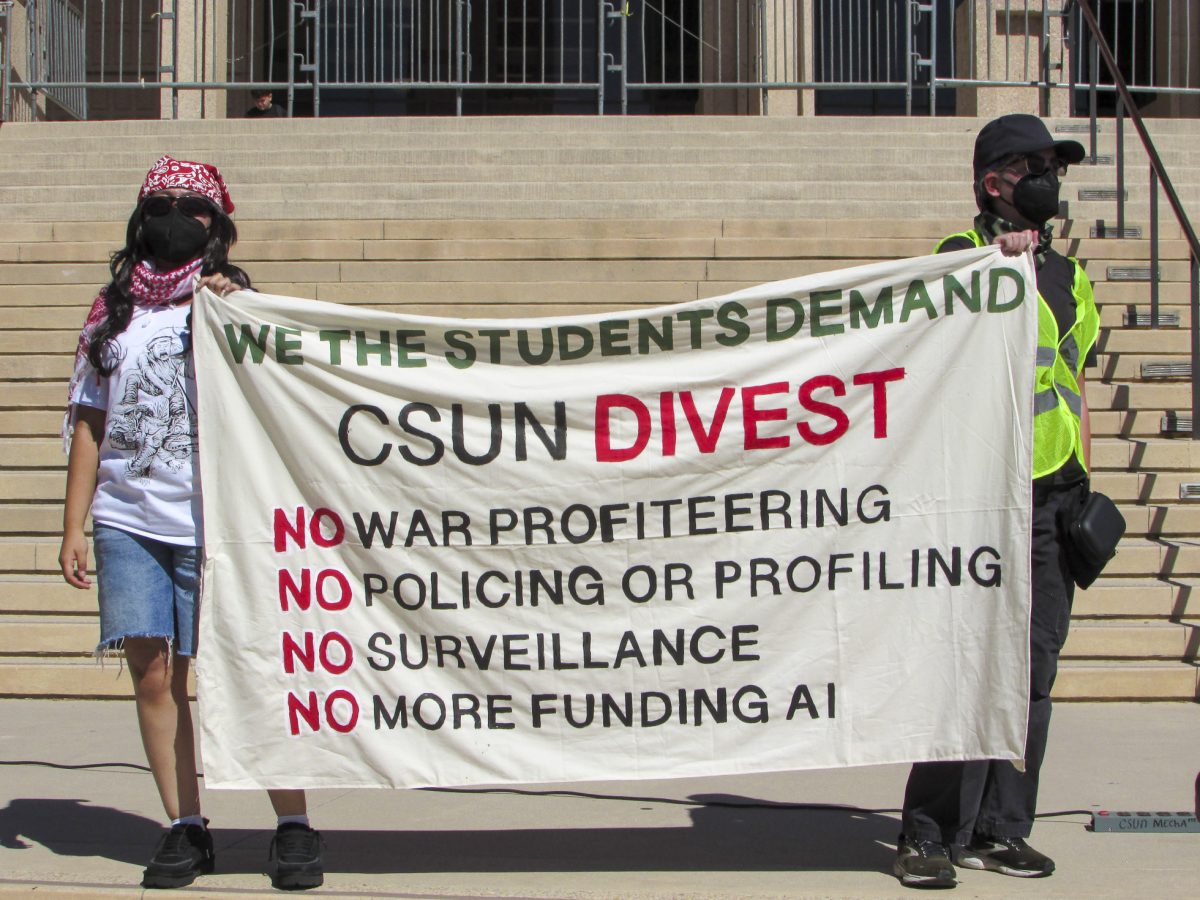
Valles described university investments as pooled holdings managed through Goldman Sachs and said students have struggled to identify the companies receiving those funds. They want clearer information about where university money goes.
The group also wants CSUN to cut ties with OpenAI. Valles linked that demand to concerns about artificial intelligence (AI) being used for surveillance and targeting Palestinians, as well as immigration enforcement in the United States.
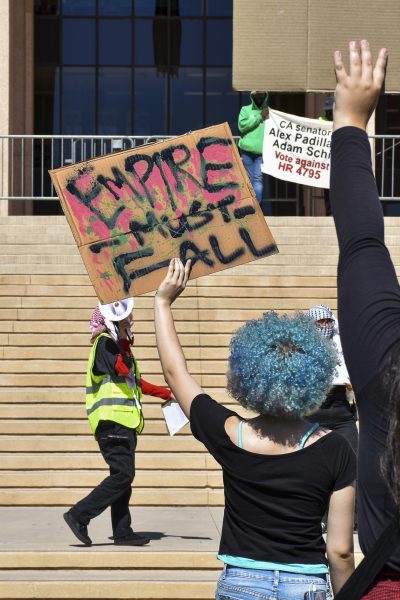
Organizers also called on California Senators Alex Padilla and Alan Schiff to oppose H.R. 4795.
H.R. 4795 is a bill that, if passed, would cut federal funding to universities that choose to divest from Israel. Valles opposes the bill because she says losing that funding would make it extremely difficult for CSUN to divest and would limit students’ ability to influence how the university invests its money.
Valles said students have met with university administrators and financial foundation board members for months without securing the changes they want. She described the meetings as repetitive and frustrating, saying students encountered shifting requirements.
“There were a lot of skirting answers to direct questions and not letting us meet with the people who actually had the power to make divestment happen,” Valles said. “Instead, they made us talk to middlemen who don’t actually have power and are just there to take up our time, keep us busy and burnt out, so we don’t have time to focus on our real work.”
University representatives said they would contact organizers when they were ready to follow up, Valles said, but months have passed without that response.
For attendee Anahi Garcia, a transfer student, the protest was also about how university resources could better serve students and employees.
“I’m here to demand CSUN to divest,” Garcia said. “And to free Palestine”
Garcia said resources should support students, teachers and professors rather than AI programs. Garcia also pointed to faculty organizing as another reason to reconsider spending priorities.
“I think putting that resource into the students, impacting students’ lives, is more important than AI,” Garcia said.
As a newcomer to CSUN, Garcia said connecting with campus clubs that share students’ values can help them learn about the issue and become involved.
Garcia encouraged students to talk with one another, organize in their communities and make their concerns visible.
Valles directed students to the Instagram accounts for SJP at CSUN and the CSUN SOAR Coalition for updates, meeting information and opportunities to join campaigns.
For organizers, the next step is hearing back from university leaders about their demands for investment in police changes.