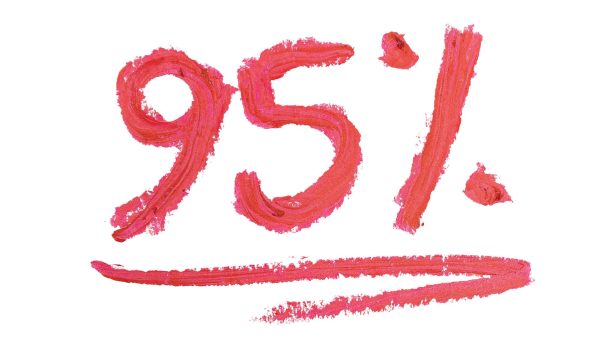
The United States beauty and cosmetics industry created more than 7.9 billion units of waste in 2018, as reported by The New York Times. The British Beauty Council estimated that close to 95% of all cosmetic packaging ends up in landfills. Social media platforms like TikTok and their encompassing virality pair with a growing landscape of “influencer culture” to spring forward a different form of hoarding — beauty overconsumption.
Influencer marketing is a billion-dollar industry focused around companies gifting their products to popular social media personalities in exchange for content and promotion. Influencer marketing functions similarly to public relations, in which a liaison sends press releases to a journalist, which is not a new concept.
The new issue arises as popular social media personalities talk up every new release for their own monetary gain, reinforcing a constant need for consumption in their audiences.
Influencer marketing, specifically in the form of product gifting, works. More than 165k videos have been posted under the hashtag “#PRUnboxing” on TikTok, and many of those videos have millions of views and hundreds of thousands of likes and comments.
TikTok’s algorithm is a content recommendation algorithm, which means that as people view and interact with PR hauls and unboxing videos, they will be recommended more and more beauty influencers who make similar content.
As more companies jump into a saturated and successful market, corporations become more extravagant to draw as much attention to their companies as possible in order to stand out amongst competition. Leading up to the Super Bowl in 2025, Poppi, a prebiotic soda brand, invested in 32 branded vending machines which were stocked with product and delivered to influencers’ homes.
A competing soda brand, Olipop, commented on viral videos alleging that each machine costs $25,000. The company disputed these claims, and while the actual cost of the campaign wasn’t released, the backlash was substantial.
Criticism ultimately targeted the extravagant and, as many comments claimed, “out of touch” campaign, raising concerns about sustainability and waste associated with influencer marketing.
Abby Chatfield, an influencer with a following of more than 695,000, made a TikTok post in 2024 asking brands to stop sending her extravagant boxes due to her environmental concerns.
“I’m left with piles of rubbish every single week. I got a P.O. box to avoid this, and all that’s happened is these things keep coming in,” Chatfield said. “I’m grateful for them, but if you’re going to send me things, please send me just the item with minimal packaging. It’s so bad for the environment.”
Various movements have gained traction on social media in hopes to combat overconsumption in the beauty industry. Among campaigns like “no-spend challenges” and viral “declutter with me” videos, one movement stood out.
Project Pan gained traction around 2017, proposing goals to use beauty products until they are completely finished — referring to “hitting pan” on products like eyeshadows or blushes packaged in metal pans — before buying any new products.
Similarly, “no-spend” challenges have gone viral on TikTok, urging participants to go a set amount of time without buying any unnecessary products. These campaigns ultimately aim to popularize sustainable and environmentally conscious spending decisions.
Mikayla Nogueira, a beauty influencer with more than 17 million followers on TikTok, detailed the process of decluttering and paring her makeup collection down by half in a series of “declutter with me” videos in April.
“I have a confession. I may be a lipstick hoarder, and the issue with that is that I wear, like, the same three lipsticks every day,” Nogueira said. “The issue is, I look at this, and I just think it’s so pretty, and I get attached. Like, there’s literally dust on these.”
Noguiera cleared out items she claimed were expired, that she never used and even items she forgot she owned, creating what she referred to as a donation pile consisting of “thousands” of products.
Between the eight videos documenting her product purge, Nogueria amassed more than 76.5 million views. However, the following day, Nogueria posted a video holding up a large box of products, saying that she spent “thousands of dollars” during a sale at beauty chain Sephora – making viewers question her previous videos.
A 2025 article by Fortune assessed the effectiveness of movements, such as Project Pan, that formed in resistance to a growing landscape of consumerism.
“The beauty industry, with its constant stream of new releases and “must-have” products, is particularly ripe for this reassessment,” Fortune said. “Instead of showcasing elaborate unboxing videos, people proudly celebrate the achievement of finishing an item rather than acquiring a new one.”