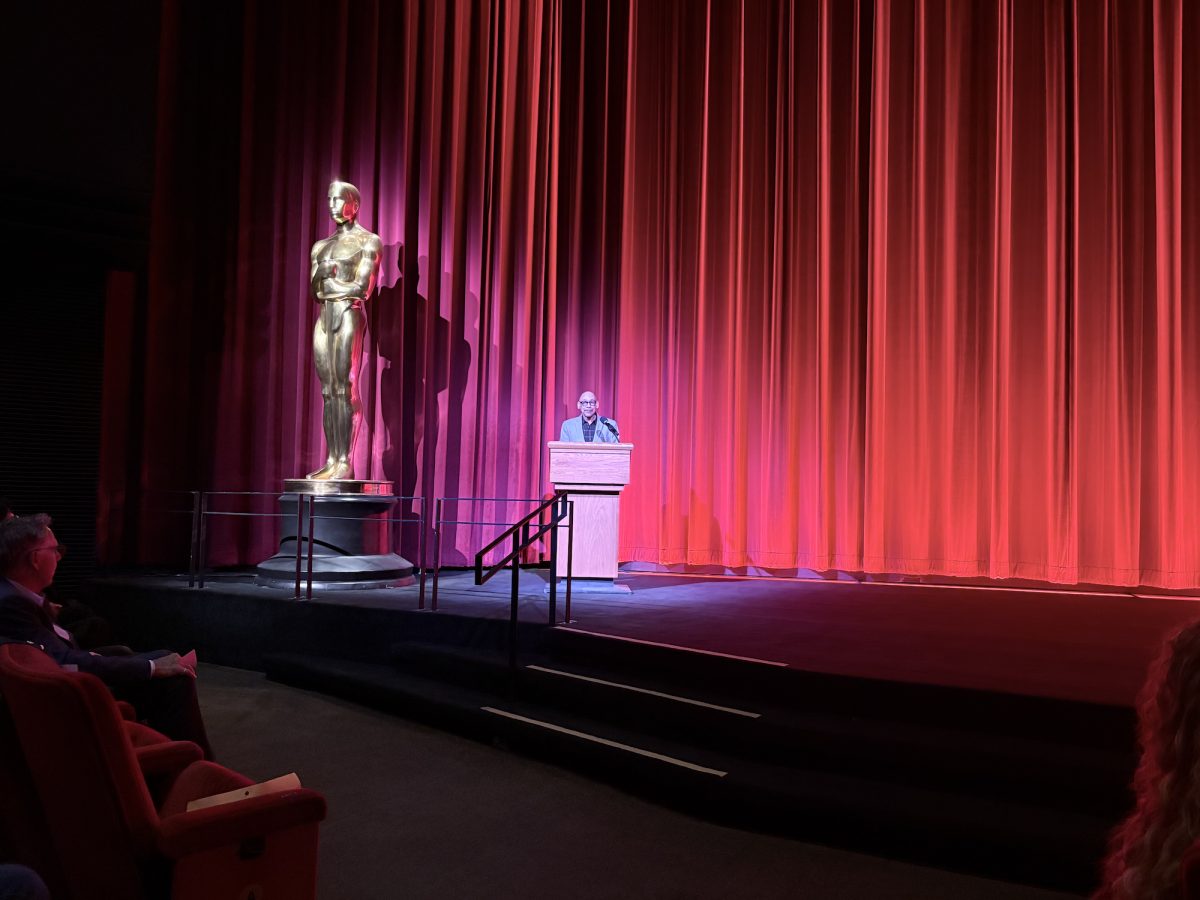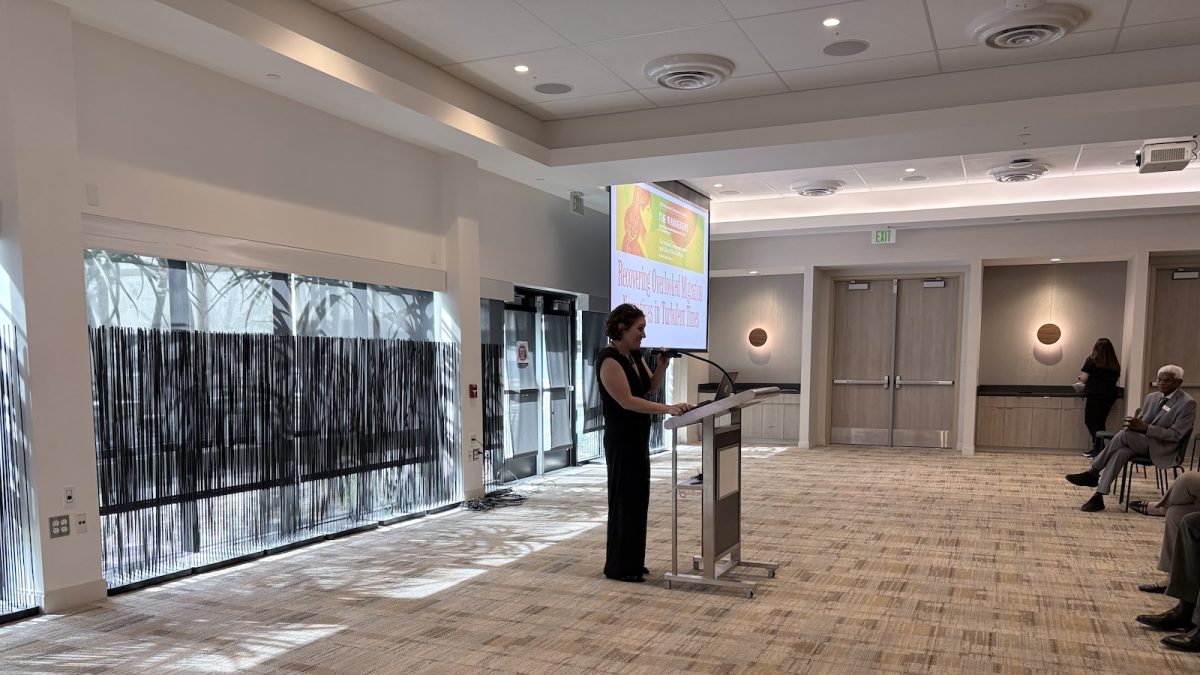
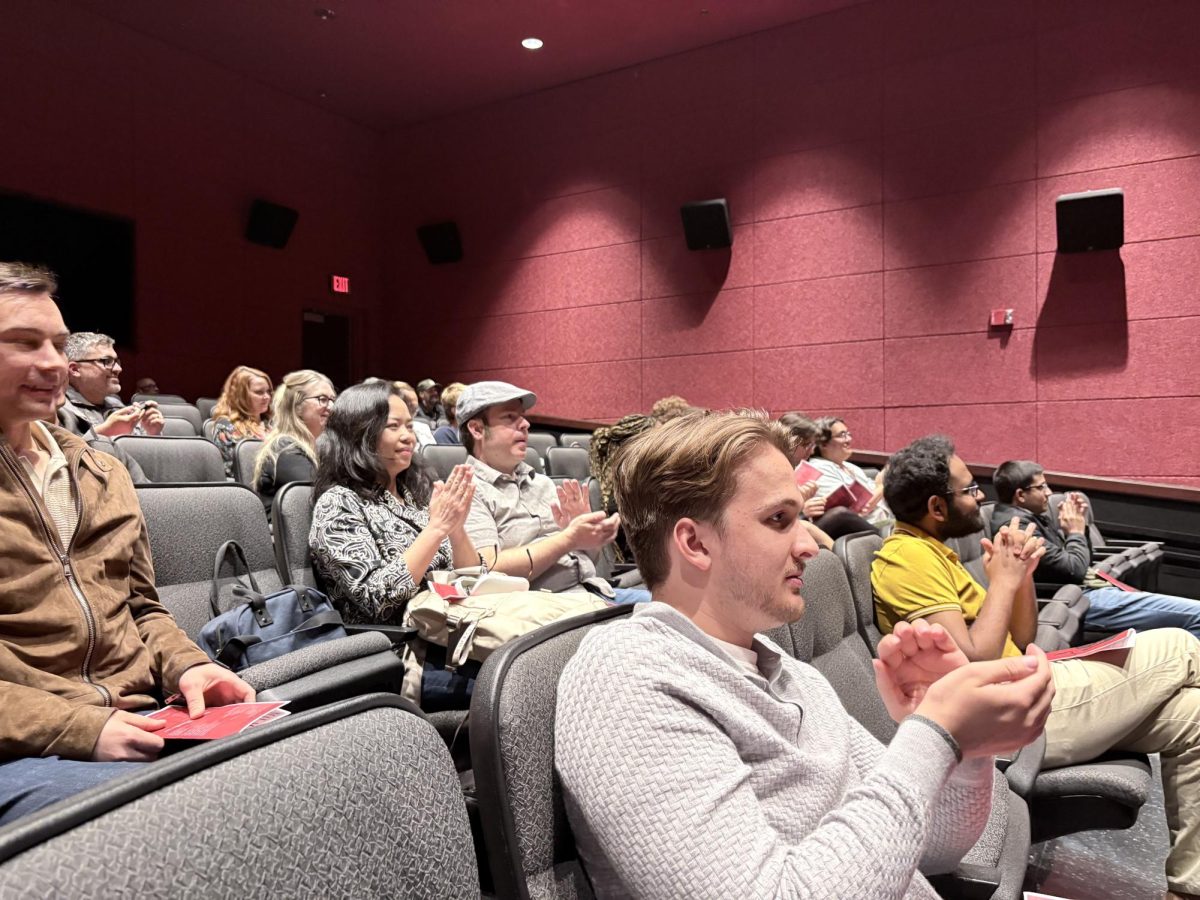
Students gathered Monday evening in the Elaine & Alan Armer Screening Room for a preview screening of “Malacoda,” a short horror film written and directed by Guillermo Rodriguez. The film draws from Dante’s “Divine Comedy,” and was followed by a behind-the-scenes look at its creation and a Q&A with the creative team.
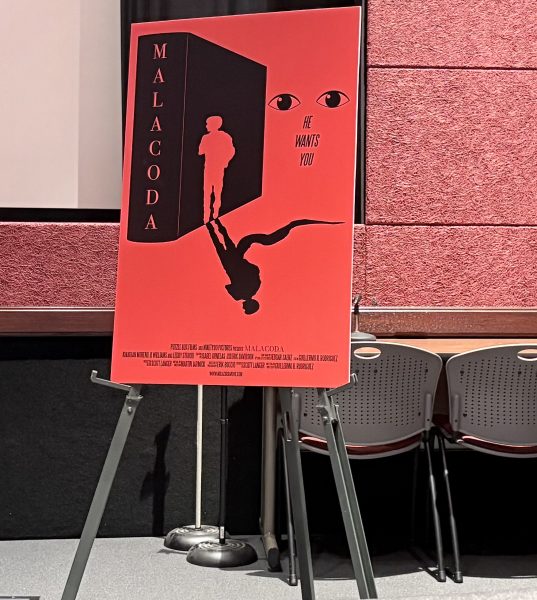
The audience watched what Rodriguez described as the first 10 minutes of the story “with a kind of ending,” before he was joined by director of photography Erik Boccio and virtual art director Martin Jarmick for a discussion.
Together, the panel broke down how the film’s psychological horror centered on insomnia. They also explained how the demon in the film, inspired by “Inferno,” was built using CSUN’s LED wall and a crew that included student collaborators.
Introducing the project, Rodriguez said the idea has lived with him for decades.
“This movie has been in my head for 30 years,” he said to attendees, explaining that the demon Malacoda stayed with him as both a literary reference and a personal image that resurfaced during a period when he struggled with sleep.
What drew him to “Malacoda” was the character’s unusual origin in “Inferno”, describing it as “the only demon that Dante made up,” which helped signal the work as literary invention rather than scripture.
After the screening, the discussion turned quickly to production, especially the role of CSUN students and the film’s use of virtual production. Boccio said working with the LED wall allowed the team to build convincing environments while giving students professional experience in a real set context. He noted that many crew members had previously trained with the technology in class and later returned for the summer shoot.
The LED wall also shaped the film’s look and movement, which was essential to selling the illusion of space.
“If you’re going to use the wall, you pretty much need movement to sell it,” Boccio said, explaining how movement creates depth and a parallax effect that makes the environment feel real rather than static.
Jarmick described his role as building and adjusting digital environments before and during production, including the film’s library setting. Much of the work, he said, involved creating visuals that could integrate seamlessly with physical set pieces.
Rodriguez said the LED wall changed the way he planned the film’s visual language. He initially imagined a more static style, but after seeing the range of camera movement possible, he revised the shot list to include more motion and coverage. He said that by cutting between multiple angles and camera moves, the team could create the impression of a larger space and “make the wall kind of disappear.”
During the Q&A, Rodriguez addressed how “Malacoda” translates Dante’s influence into a modern setting. When asked how he reinterpreted the literary figure for a college narrative, he said the demon emerges through the protagonist, Gabriel’s studies, and his deteriorating mental state.
“This demon that comes from what he’s studying haunts him, but it is also him,” Rodriguez said.
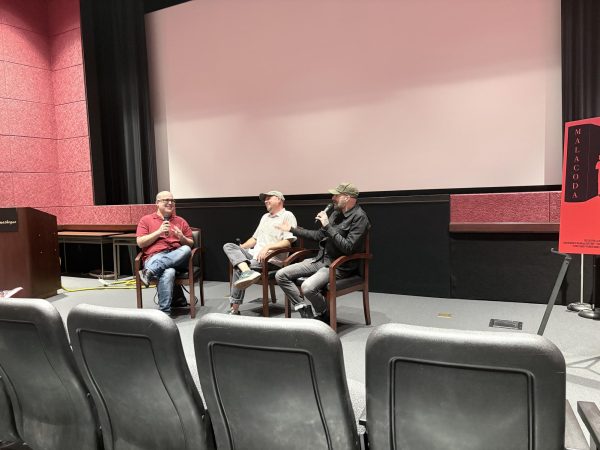
He described the film’s horror as a confrontation with the self – a story where the line between external threat and internal turmoil becomes increasingly blurred.
Rodriguez connected the threat to insomnia, saying Gabriel’s inability to sleep becomes a gateway into a more destabilized psychological space. He added that the film’s tension is heightened by sound and atmosphere, including the decision not to use a traditional musical score.
“One of the things that I decided was not to use music during the movie itself,” Rodriguez said. He described this decision as a way to immerse the audience in the sounds of the environment and Gabriel’s growing unease.
While the budget for “Malacoda” was $20,000, Rodriguez encouraged students interested in filmmaking to pursue projects with the resources available to them. He emphasized that horror stories in particular can succeed without large budgets if the concept and execution are strong.
Rodriguez also shared that the screening was only an early look at a larger story. He announced that the team has secured additional funding to complete the script and film more of the project, with plans to continue production later this year. The next portion will be shot in late May or early June, according to the team, with plans to return to the screen with an expanded version.
For Rodriguez, the screening marked a rare opportunity to share a long-held story with a student and faculty audience and to show how classical literature, modern technology and personal experience can intersect in psychological horror.