
Locker room talk – something the majority of women in sports have heard at least once throughout their life, if not for the entirety of it. Although women’s sports are growing daily, they still remain under-looked, underrepresented and dismissed.
CSUN athletics currently has 70 members on its coaching staff, including head coaches, assistant coaches and other support staff. Out of those 70, only 15 women are accounted for, which is approximately 21%.

Even though there are more female sports (10) than male ones (7) offered at CSUN, there are only four female head coaches, which accounts for 23.5% and eight female assistant coaches, which accounts for 19.5%.
According to a handbook published in 2023 by United Nations Educational, Scientific and Cultural Organizations (UNESCO), about 40% of women’s college teams and 3% of men’s college teams in the United States are coached by women.
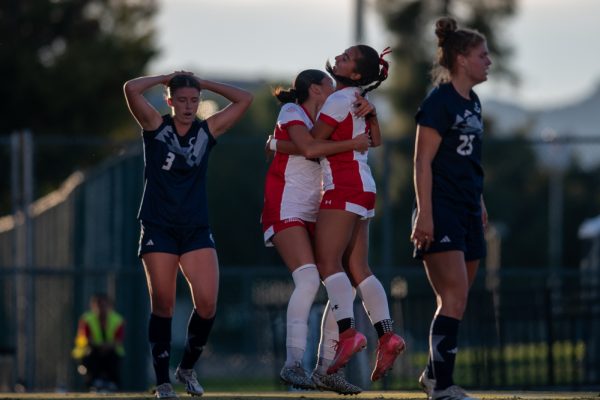
Gina Brewer, head coach of CSUN’s women’s soccer team, said she did not have much representation for herself growing up playing soccer, however she was fortunate enough to have female coaches who demonstrated strong leadership skills during her collegiate career.
“There’s kind of a saying of, ‘If you see her, you can be her,’ in kind of women’s leadership world, and I do think that’s true,” Brewer said. “You know, once young girls or women see other women in leadership roles, then they feel like they can also be in a position like that.”
Along with coaching at the D1 level, Brewer also instructs coaching licenses for U.S. Soccer. She said sometimes in a leadership role she’s been given a lot of respect from folks in the room, while other times it’s the opposite.
“It can be challenging,” Brewer said, “[to] show your competence and … how you can help all, you know, coaches and all students or student athletes regardless of gender.”
CSUN senior softball player Raegan Jackson has been playing softball since she was about five years old and said most of her coaches growing up were males. At times, she recalled former female players coming back to help the younger girls, but their presence wasn’t constant.
“They would be around us a lot but it wasn’t, like, consistent really,” Jackson said, explaining that the older female athletes in her life often left for college and only returned occasionally.
The female representation Jackson did receive came from looking up to her older sister.
CSUN women’s volleyball assistant coach Haley Vejar mentioned she felt represented playing in high school and club level volleyball, but thinks the numbers for female coaches drop when girls enter the college level. Despite this, Vejar said she was lucky enough to have had encouraging female leaders and is excited to display the same support for the next generation of players.
“I think just the confidence in reminding the kids that you’re role models for, that it’s okay that you’re in the room and you should be in the room,” Vejar said. “It’s an honor to be there and don’t feel afraid just because you’re less represented.”
Jackson mentioned that her motivation for the sport is bigger than any disrespect she may face and acknowledged that sometimes unnecessary comments come with playing the game.
“For me, being [an] African American woman, I understood that my responses to things would have to be – not have to be – but they’d be taken differently,” Jackson said.

Other than sarcastic and disrespectful comments disguised as jokes women deal with, sexual assault, harassment and backlash are serious issues they are susceptible to face.
According to UNESCO, 21% of females experienced a form of sexual abuse in sports at least once as a child, and approximately one in three women become a victim of violence in sport. It is also reported that women with disabilities, in the LGBTQIA+ community, living with HIV/AIDS, living in areas of conflict or extreme poverty, women of color and indigenous women are at higher risk.
ESPN has made new changes to their network and has decided to create Women’s Sports Sundays, which will broadcast an entire slate of women’s sports including the WNBA, college basketball, softball, the NWSL and other primetime games happening on Sundays.
While some efforts are being made to showcase women’s sports and provide them with the same recognition as men, there is still work to be done.
Forbes reported that women’s sports received an average of 15% of media coverage in 2022 and was projected to reach 20% in 2025, which is still a huge disparity compared to the attention men’s sports receive.
Brewer said working hard at the craft, having confidence and knowing women deserve to be in the room is the key to showing that women are enough to be in leadership roles.
“Believing in yourself, be willing to break down some of those glass ceilings and you know, sometimes you have to, even if you’re in uncomfortable situations, you have to be willing to stay there and stick there, you know, to kind of keep moving the needle in the right direction,” Brewer said.