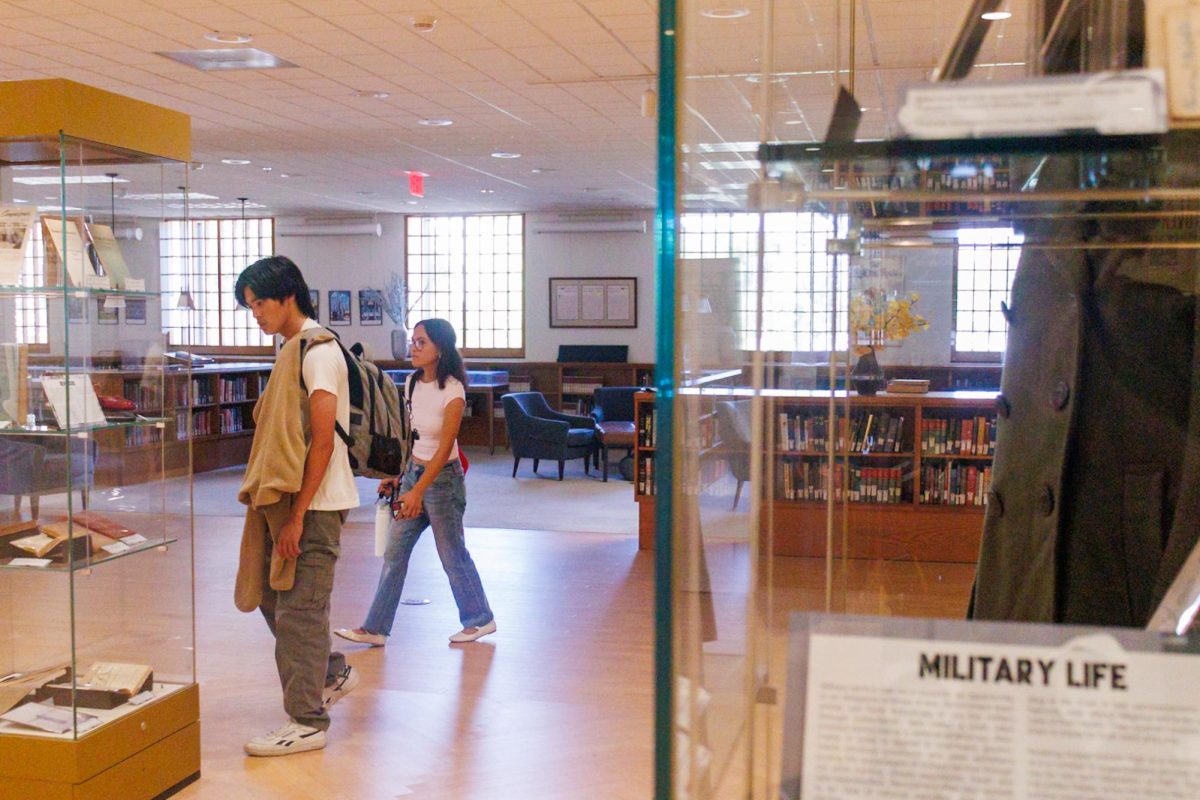
Inside the University Library, a capsule of human conflict and the remnants of individuals affected by war are preserved. A birthday card featuring a smiling dog, a pair of red leather shoes and a soldier’s handwritten letter back home anchor “Words of War: Personal Experiences of Conflict.” CSUN’s latest yearlong exhibit is running from Aug. 1 to July 15, 2026.
The exhibit, located on the second floor, was curated by the Special Collections and Archives (SC&A) and took a deeply personal perspective on how war has shaped human lives. Rather than focusing on the frontlines, the display showcases the lives of civilians, refugees and soldiers whose ordeals reveal the harsh realities of conflict.
Mallory Furnier, SC&A curator, said the museum is a reflection of years of planning and the extensive collection of material in CSUN’s library.
“The SC&A creates a new exhibit each academic year, with the themes being planned out several years in advance,” said Furnier. “They are chosen to showcase some of the strengths of our existing rare book and archival collections.” The purpose of the museum is to ask visitors to see conflict not only through the lens of strategy and politics, but through the human experience. The exhibit invites reflection on the many ways war has shaped lives across the world.
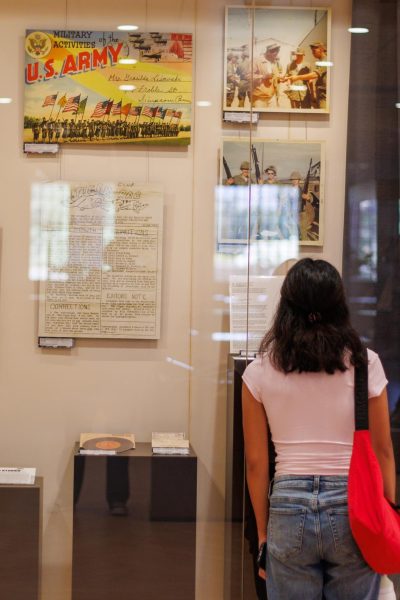
The theme of the gallery emerged from CSUN’s assembly of letters, photographs and publications that documented wartime experiences. The items selected were heavily influenced by Head of Special Collections and Archives Ellen Jarosz and archivist Gayle O’Hara, in which both had written the accompanying text. There was also crucial help from archivist Julieta Garcia and a substantial team of student assistants.
The exhibit features numerous sections that highlight different dimensions of war. The civilians display documents of the devastating effects of the Japanese Army aggression in China during the ‘30s and ‘40s. The opposite side of the exhibit notes how the Black Lives Matter Movement displays the ongoing violence against marginalized communities.
The Genocide section is equally sobering. Artifacts and books demonstrate the Armenian genocide, systemic violence against native people in North America and the Holocaust, reminding museum goers and students that genocide is layered with the larger shadows of war.
The exhibit also pays tribute to James Sefton, a World War II veteran and longtime CSUN professor whose personal collection is featured. His legacy lives on not only in the archives but also in the community he helped shape on campus.
For Furnier, the strength of the gallery comes from the ability to connect the past to the present.
“What’s on display is only a fraction of our collections,” Furnier said. Those seeking to learn more about the gallery can explore more in the SC&A reading room on the library’s second floor.