When sophomore Tarnessey Sherman joined the Vietnamese Student Association (VSA) at CSUN, she believed she would be immersed in a friendly, inclusive community. While everyone was welcoming at first, Sherman said false rumors, racial slurs and bullying destroyed her image of a welcoming club and damaged her mental health.
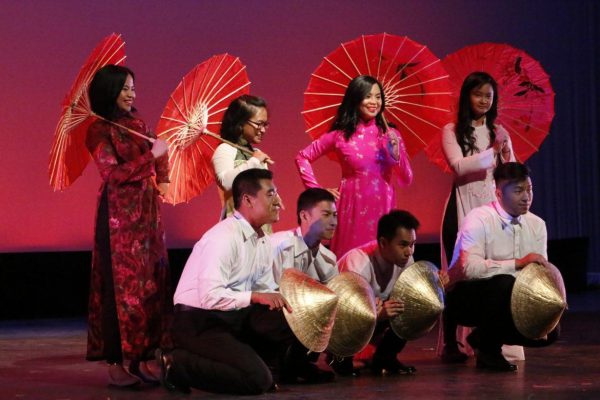
VSA describes itself as an “organization that aims to provide a safe space for individuals to create a network of support, friendships, and leaderships,” according to their official MataSync page. They celebrate and embrace Vietnamese culture through activities, campus events and plays, claiming that anyone, Vietnamese or not, is invited to participate. However, the club has been subject to recent backlash due to alleged wrongdoings, such as racism, harassment and endangerment of its members and other CSUN students.
Sherman joined the club in 2024 as a freshman and immediately received warnings from her “big,” or mentor, about who to avoid. Nevertheless, she thought she created valuable friendships in the association.
Sherman also alleged that the club was not what they advertised to be. She said that rather than a culture club, it was “more of a party club that the unions would put on,” which according to Sherman, included underage drinking and excessive partying on the CSUN campus.
After a year of being involved with the club, Sherman said she saw no involvement in Asian culture. In the second meeting she attended, Sherman said she heard a non-Black member of the club “saying the N-word” multiple times without being stopped by any other members of the club.
Sherman remembered how the individual who said the slur would make racially-charged comments towards her. After initially reporting her discomfort with this member to a VSA board member, Sherman said her claims were essentially ignored. The slur was allegedly used again at a VSA karaoke event by a different member of the club.
During her second semester of being in the club, Sherman was studying under the vice president to take over the position. According to Sherman, the vice president gave her no counsel, leaving her to take the lead while still learning as the associate vice president.
While trying to find new members, Sherman was made aware of some comments made by a student about how they were “glad it’s not Brown people or Black people around in the club.” That member was then allegedly excluded from the club, being ignored by prominent members, rather than being educated about their comments by the board. This member would eventually leave.
“The presidents told them to ignore ‘it’ ‘till ‘it’ goes away, implying he is an ‘it’ and we should ignore him in the club,” Sherman said. “And I was like, that’s not good at all. That’s not an appropriate way to handle these things.”
According to Sherman, during a presentation for the vice president role, she wrote a slide stating that the club would be a safe space for immigrants and undocumented students during ICE raids in LA. She said she was immediately met with backlash from the board, who allegedly argued that the club does not have any immigrants, so they do not “need a safe space for them.” Following this incident, Sherman began to feel unwelcome in the club, claiming no one in the club would speak to her.
Sherman then went to the Matador Involvement Center (MIC), who is in charge of all clubs and student organizations on campus, as well as the Office of Equity and Compliance (OEC) to make a formal complaint about VSA.
False rumors from the club were posted on social media, according to Sherman, specifically about her having “an Asian fetish” and “talking to minors,” as well as her being an “angry black girl.”
According to Sherman, when she told the OEC about the multiple uses of the N-word, they responded by saying it was “freedom of speech.” The OEC declined to give an explanation of their reasoning.
Sherman took to social media to speak out about her experiences with VSA, and was messaged by former members about their stories as well. Students who were in the club at that time had asked Sherman to name specific members to stay away from in fears of retaliation.
VSA did release a statement following negative reactions on their Instagram, though the comment section was flooded with claims of it being an AI-generated response. August Tram, the current VSA president, asserts that he and several other members wrote the apology together.
Sherman alleged that the slide she made about giving a safe space to immigrants was stolen by the club and posted on social media during the summer of 2025.
Pearl, a former member of the club who requested to go by an alias, joined the club because of the initial sense of camaraderie. In her first meeting, however, she allegedly faced unwarranted sexual comments from another member.
Pearl continued to stay in the club after that incident, but claimed she was then met with a more dangerous situation. Pearl said that in November 2023, while at a pie fundraiser on campus with about 20 VSA members, a photographer from the Union of Vietnamese Student Associations (UVSA), pulled out a knife and directed it towards her. She then claims that other members of the club, specifically board members, told her to be quiet and not make a scene.
“I remember him holding it in his right hand,” Pearl said. “I was like, ‘Dude, he has a knife,’ and then I was processing it.? He has a f—ing knife, and I was saying that, and I was screaming that.”
The board tried to excuse the photographer’s behavior, arguing that it was a joke, according to an email sent by Pearl to the MIC. According to Pearl, after the VSA board tried to turn the blame on her, she took this issue to the MIC, who only directed her to inform the police.
“If a victim were to come and report something to MIC, I’d at least expect MIC to offer proper resources for me to navigate with whatever I’m doing,” Pearl said. “Because, in that moment, I was not even in the right mindset to do anything. I was still so shaken up. I get terrified showing up to campus and seeing those peers again after what they had done to me.”
Pearl, like Sherman, started to feel excluded from the club. She was later removed from the organization and lost Discord access, which she brought up to the MIC as well. Pearl said the MIC simply advised the club to review their constitution and update it to fit VSA goals, as well as create “an inclusive environment for all members and being mindful of the needs and concerns of all individuals within the group,” according to an email sent by the MIC to Pearl.
Annabella, who also requested to go by an alias, joined the association after seeing them at the bi-annual Meet the Clubs event. When they went to their first meeting, however, they noted that something felt off.
As a student with autism, Annabella said the club did not accommodate their needs, such as lowering loud noises. They were then told by a former vice president that if they did not like the volume, they should not come back to the club.
Annabella would end up leaving the club after hearing about a knife being present at a VSA event, describing how toxic they believe the club proved itself to be. They also believe the MIC and the OEC do not foster an inviting environment for students.
“I feel like with this failure, they should learn from these, like, for the future to actually care about the students and protect the students rather than just diminishing, like, anything that they say,” she said.
Gina Masequesmay, club advisor for the VSA, confirmed she has heard of most situations regarding mistreatment. When asked about Annabella’s experiences, Masequesmay explained the cultural connections to fireworks and drumming, saying they have been used to ward off evil spirits for thousands of years.
“It’s going to be loud,” Masequesmay said. “And so, if they cannot stand that, then they shouldn’t participate in those activities as well.”
Masequesmay stated the VSA is supposed to bring a sense of belonging on campus, but believes the last few years have given it a bad reputation.
“The club needs a lot of help,” Masequesmay said. “The members are willing to fix the problem, like, have better practices, have a better constitution, but they can’t be working on that when the attacks keep coming.”
In the spring 2025 semester, Sherman urged Tram, the new board president, to reach out to past members who felt wronged by the club. She alleges that Tram ignored her and told her to speak with Masequesmay, who insisted that Sherman should create peace and not discontentment.
In the fall of 2023, there were approximately 40 to 50 members. According to Tram, there are currently 15 to 20 active members.
The MIC and the OEC had required the board to go through anti-discriminatory and Title IX training sessions because of complaints submitted. Tram has expressed interest in bringing an uplifting mood back to the club, which he stated could make a positive impact for years to come.
“The club is in a regenerative state where we’re trying to right the wrongs and set up next year’s board to not repeat the same mistakes of last year’s board,” Tram said.
Even through the anti-discriminatory training and public apologies, Sherman affirms her belief that the club is still a harm to students on campus. For her, the only way to solve the issues within VSA is to start fresh with a new club and improved policies.
“This club should be shut down,” Sherman said. “I even made a petition on what training they need and community service and working with other cultural community clubs besides their own [in order] to come back more educated and built with knowledge to be able to bring the club back and to be more educated with that.”