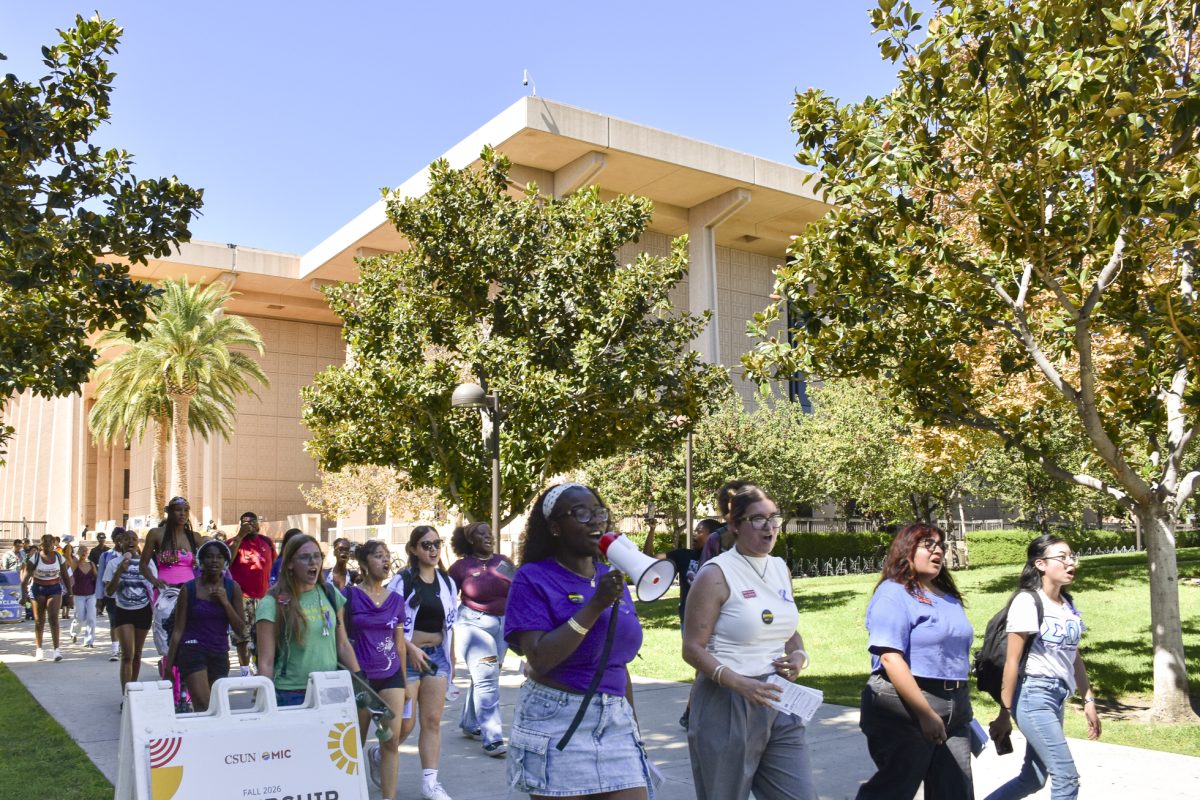

According to CSUN Institutional Research, CSUN is considered a commuter campus, where thousands of students take night classes, work overnight shifts or stay late on campus for classes or club meetings. Campus dining serves as a convenient option for many of these students. However, several dining locations do not stay open late enough to accommodate students who have evening classes.
For these students, it can still be difficult to find food on campus after hours. Many have stated that they are forced to go off campus in the middle of the night to find food options. Others choose to use vending machines or pack food from home.
Diogo Pimentel, a psychology major, only gets food on campus when he is unable to make food at home. When he does buy food, it costs approximately $10 to $20.
Art major Maitha Alrmeithi said high prices sometimes affect whether she eats while on campus.
“Some days I genuinely don’t eat because the costs are too high to justify it,” Alrmeithi said.

The dining hours listed on the university dining website show that many on-campus dining options close early. Panda Express, Halal Shack and El Pollo Loco close at 6 p.m., while Baba Pizza, Fry Shack and Wild Blue close at 5 p.m., leaving few options for students with evening classes.
Freudian Sip, located inside the University Student Union (USU), closes at 3 p.m., limiting options both during the day and in the evening. Arbor Grill closes at 7 p.m., but many late classes, such as Masters Program courses, still do not let out by this time. Shake Smart is open until 10 p.m.
First-year mechanical engineering major Eduardo Escamilla stated that limited dining hours have left him unable to grab something to eat after class. Escamilla explained that most days, his last class lets out around 5 p.m.
“By the time I’m done with classes, places like Mercado or Subway close, and I don’t want to drive home hungry,” Escamilla said. “If places remained open later, it would benefit commuting students.”
Meal plan options are listed on the Matador Eats Website. Students typically pay for meals themselves during the week, but food costs can become expensive on top of school-related expenses.
For Maya Mascorro, a junior journalism major, late-night options are scarce, particularly for commuters who remain on campus after evening classes. Mascorro said there are only one or two options that stay open late.
“Sometimes I have to drive, like, 10 to 15 minutes to get food, and that’s far, especially at night,” Mascorro said. “Sometimes, grabbing from a vending machine is not an option.”
Freshman Jayden Membreno explained that since he normally stays on campus until after most food services have closed, he finds himself leaving campus to grab a drink or a quick bite to eat.

Hours were only one part of the problem for some students. Emily Atias, a senior majoring in business real estate, stated that dietary needs play a factor in where she eats on campus. Atias follows kosher dietary rules and has few options available to her at CSUN.
“There’s not a variety of kosher food, so I try not to eat on campus,” Atias said. Limited kosher-certified meals are available, including options from Emuna Heat & Serve at Arbor Grill, according to the Boost ordering app and website.
“Just today I bought a meal, realized I was allergic to some of the ingredients and ate it anyway because I couldn’t afford to buy a new meal,” psychology major Kristin Schrage said.
CSUN provides dietary information through its Matador Eats special diets, which lists ingredients and options for students with dietary restrictions.
“Our goal is to provide reliable access to dining while ensuring operations remain sustainable,” Samantha Thuotte, director of operations at Chartwells Higher Education, said. “We regularly review student feedback, traffic patterns, and student demand to determine whether adjustments to hours or services are needed to better support students, including those on campus later in the day.”
Though some students say a lack of late-night dining options creates challenges, university food providers said operating hours are regularly assessed based on student demand and campus needs. As CSUN works to balance sustainability with accessibility, affordable and available food remains an important part of the campus experience.