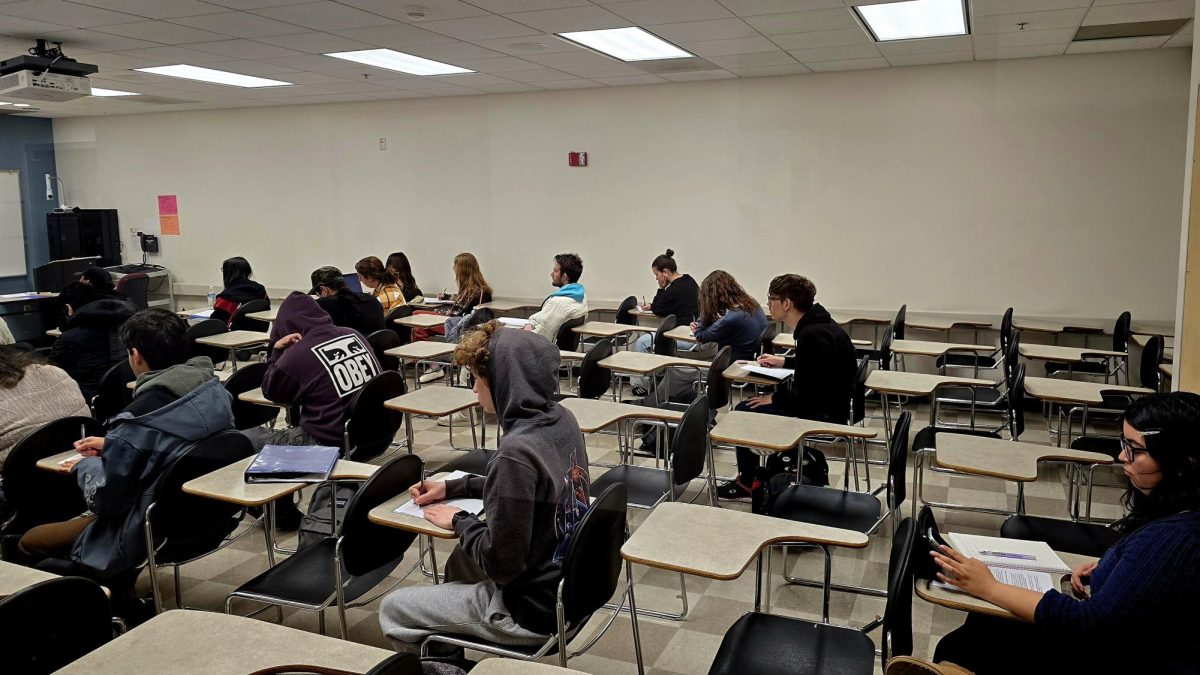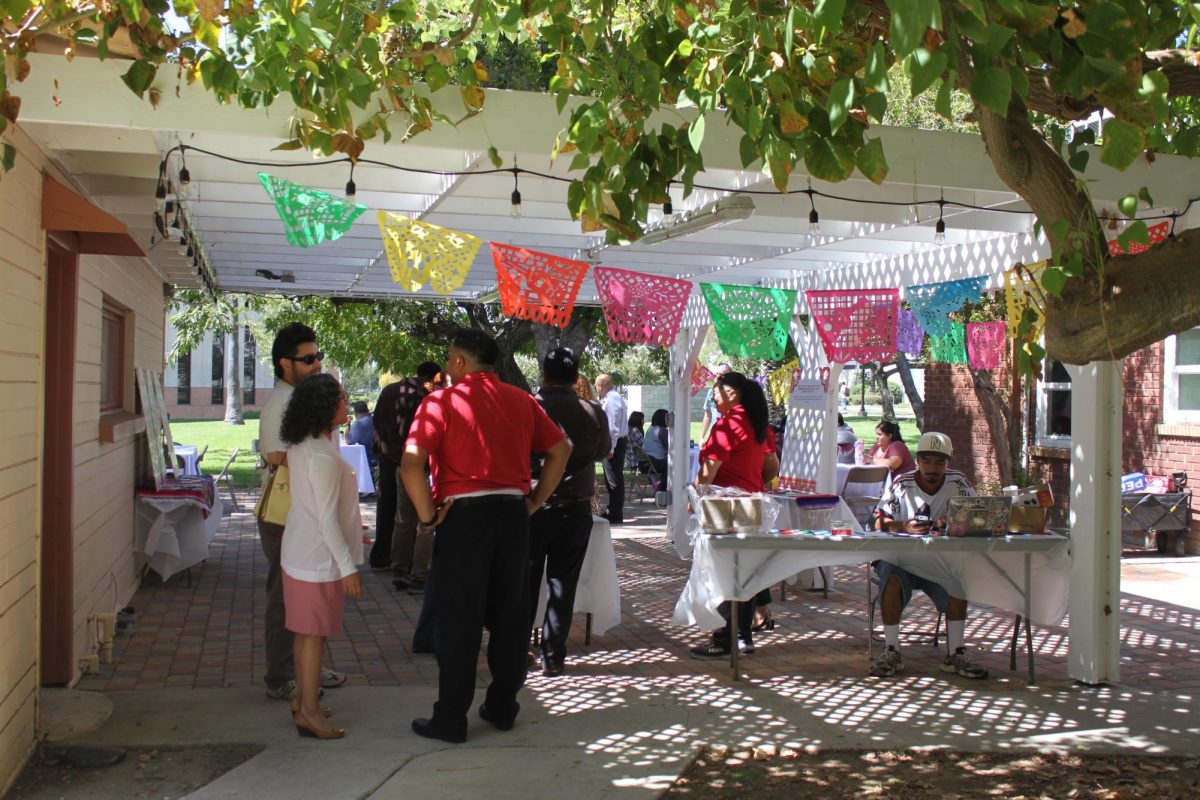
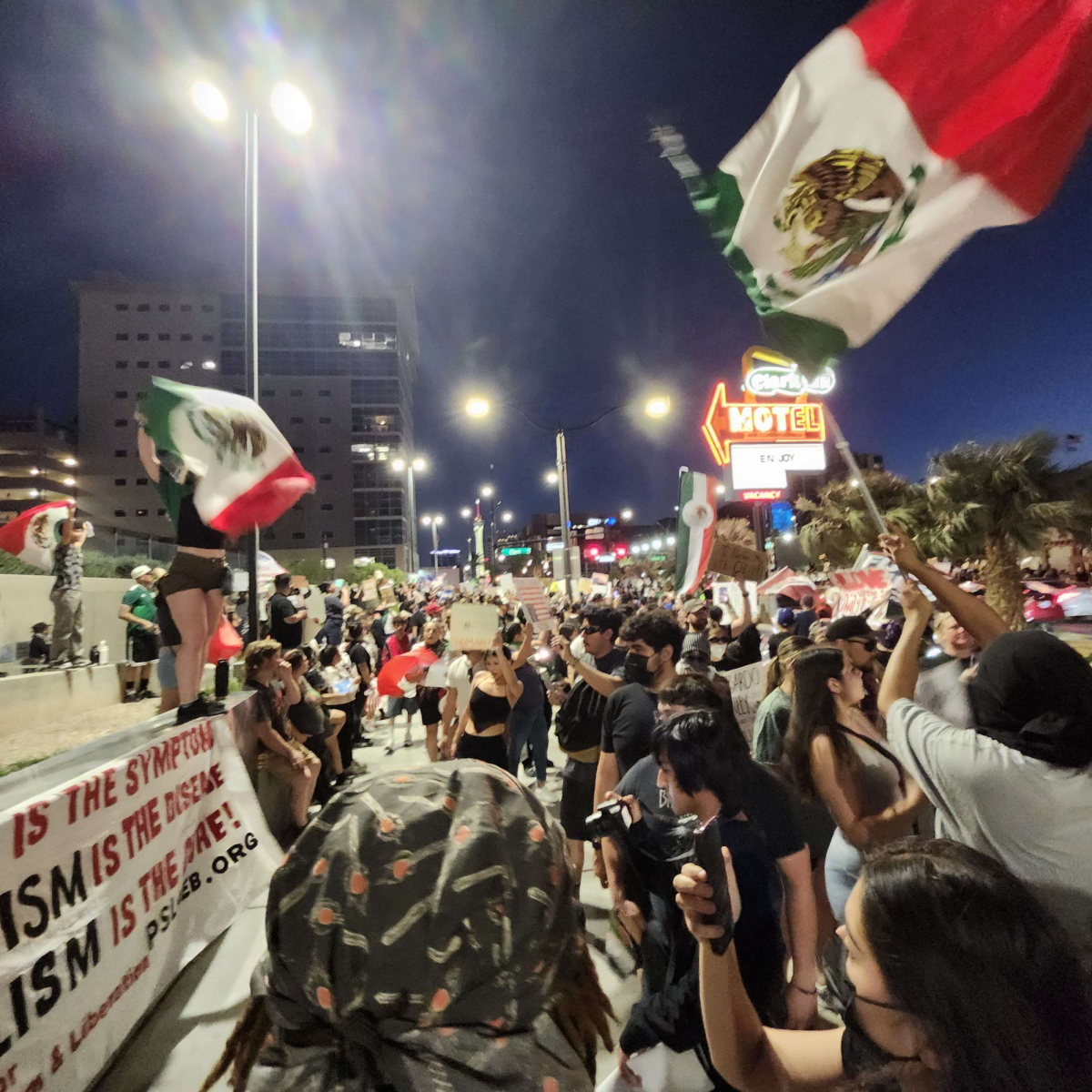
Rubber bullets, tear gas, riot shields and batons are all factors that journalists have to worry about when reporting on a protest. CSUN journalism majors were invited to discuss these and more during the “ICE & Covering Conflict” panel discussion on April 29 in Manzanita Hall.
Former CSUN Student Ryanne Mena – who’s now a crime, public safety and immigration reporter for the Southern California News Group – headlined the event along with current student photographers Blake Fagan and Benjamin Hanson. Together, the three spoke about their experiences covering protests and gave students advice.
While reporting, Mena has been shot twice with non-lethal rounds and is now going to court over the matter.
“[This is] the world that [we’re] graduating into,” she said. “What’s happening now isn’t going to stop when you graduate.”
Fagan, while showcasing photos he’s taken at the No Kings Protests, the Free America Walkout and Camarillo ICE raid, told much of the same story.
“I’ve had AR-15s pointed at me,” Fagan said. “I know a lot of people who have gotten hit, shot, detained, ziptied.”
When asked how someone should stay calm during a protest, Fagan said that “it comes with experience” and that if approached by an officer in full gear, it would be best to get out of the way and act simply as a reporter should.
David Grewe, journalism professor and panel organizer, showed students a list of Personal Protective Equipment (PPE) that journalists usually use at these demonstrations, including bump helmets, respirators, plate carriers and level IIA plates.
Most notably, however, is press identification gear. While being one of the most important pieces of equipment for a journalist, it can also be one of the easiest to obtain.
“With the press markers, I got them off Amazon,” Fagan said. “Anybody can be press … [but] you have to act a certain way, or they aren’t going to see you as press.”

Photos of Department of Homeland Security (DHS) officers pushing Hanson while he was showing them his press pass were up on the screen during the discussion, along with other photos he’s taken. One depicted a man holding a Mexican flag, standing in the middle of the highway with three police vehicles in front of him. Crowds of protestors were up on the overpass with flags and boards, watching the scene below.
“It almost has that Tiananmen Square vibe, ” Hanson said.
According to Mena, with intense scenes like this, practice is crucial. Even for students who are not planning to report on hard news, the panelists said it is good to have published work on different topics, as it makes students more desirable to potential employers.
For Mena, it is also important that students remember journalists are human beings and not robots. Emotionally taxing stories like demonstrations or investigations on ICE detention centers only make it easier to become overwhelmed and mentally checked out.
“We need to take good care of ourselves, mind, body and soul. So take a break,” she said. “Pace yourself, take breaks, take advantage of your off time, and hopefully afterwards, you’ll remember why you chose journalism.”