Raina faced an agonizing choice. She suffered from excruciating lower abdominal and pelvic pain, yet she feared going to the hospital. As an undocumented immigrant from Honduras, she avoided places where personal information is collected, like medical facilities. But once over-the-counter painkillers stopped working, she asked her daughter, Alondra, to buy her disposable cannabis vapes.
Raina and Alondra, who asked to be identified by their middle names to protect their privacy, said cannabis became their only option when formal healthcare felt too risky.
After immigrating, Raina began experiencing symptoms that were eventually diagnosed as endometriosis, but for a long time, fear kept her from seeking medical care. The diagnosis came only after their neighbor’s son, a doctor, visited their home and examined Raina free of charge. With no resources and limited options, the family turned to alternative methods.
“He mentioned a weed store nearby and said some people used marijuana to help with pain,” Alondra said. “My mom was really desperate at that point, so she decided to try it. It helped with the pain, at least in the short term, but it wasn’t a permanent fix. It’s now a Band-Aid over a bullet hole situation.”
As cannabis legalization sweeps across the U.S., a quiet collision is unfolding. Portable modern marijuana products are easier than ever to buy, yet they still exist in a regulatory gray zone, with loose oversight, unpredictable health risks and lingering federal penalties.
At the same time, many noncitizens are turning to cannabis as a workaround for a medical system they can’t trust or afford. However, this alternative wellness market is built on shaky ground and vulnerable immigrant users may face health and legal implications.

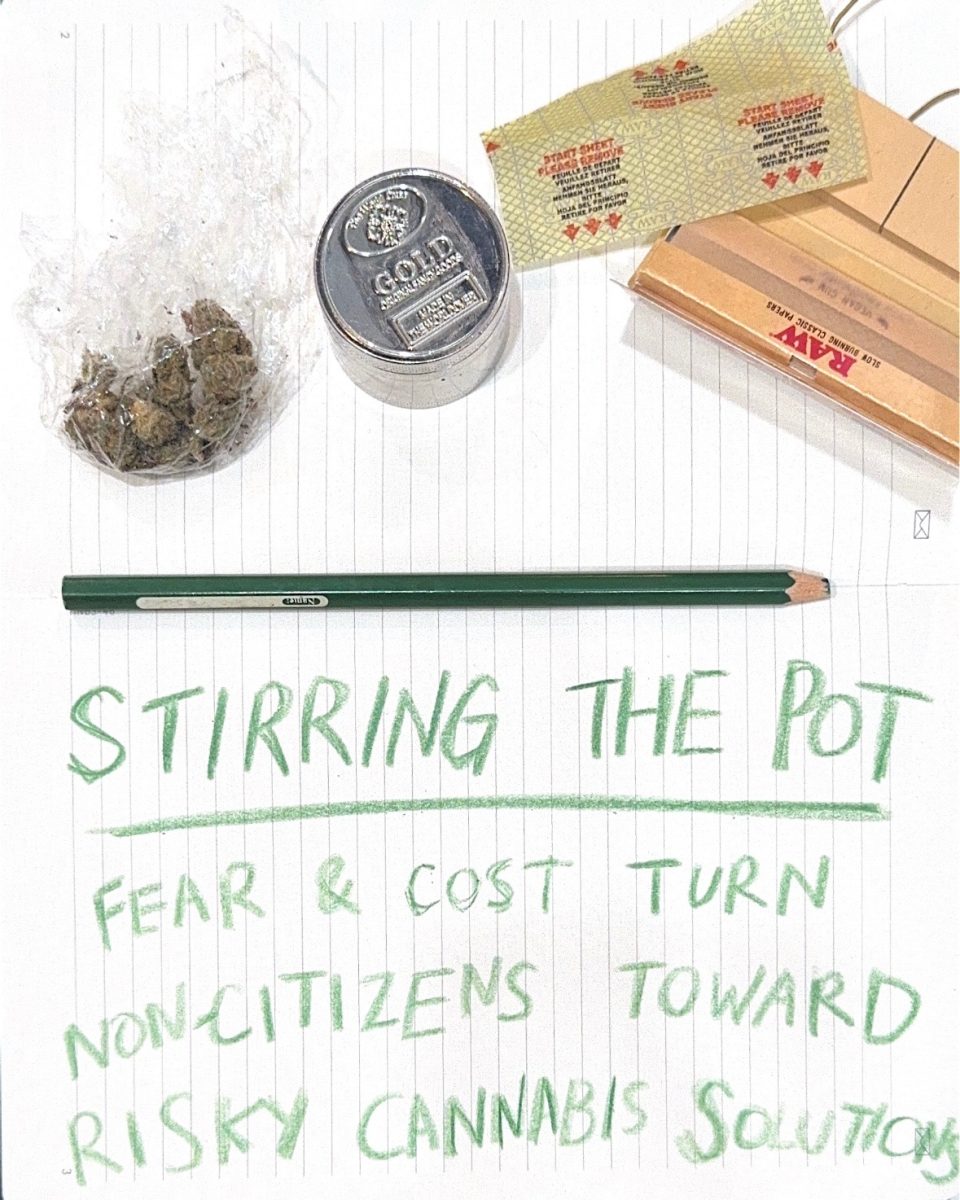
Illustration by Kari Trail
For immigrants who fear traditional healthcare settings, dispensaries represent an accessible and affordable alternative. Nearly 45% of undocumented immigrants are uninsured, compared to just 8% of U.S. citizens, largely because they’re ineligible for federal programs like Medicare, Medicaid and the Affordable Care Act marketplaces.
With a quick flash of identification and some cash, access to pain relief is often easier through a storefront than a hospital door.
Jay Santos from Xzibit’s West Coast Cannabis in Chatsworth said many are paranoid of handing over their IDs in dispensaries, but that should not be a concern in the slightest.
“We’ve noticed a lot of regulars who are not coming in like they used to who have passports. A lot of people are very afraid of being deported,” Santos said.
Chad Britton, manager at Strain Caregivers in Chatsworth, said both dispensaries accept a variety of identification documents, including passports and IDs from different states or countries, making access easy for customers.
“We don’t really have the ability to check citizenship or anything like that. And to be honest, we wouldn’t – it wouldn’t matter to us,” said Britton. He assured that when IDs are scanned, it’s solely to track purchasing patterns rather than customer identities.
Illustration by Kari Trail
This ease of access comes with serious consequences for immigrants. Rachel Ray, managing attorney at the University of California Immigrant Legal Services Center (UCIMM), emphasized that despite state-level legalization, marijuana remains illegal under federal law.
“A drug-related arrest or conviction can have serious consequences, including deportation, for non-citizens living in the U.S.,” Ray said.
Even lawful purchases from licensed dispensaries can become grounds for immigration trouble. Ray noted that some immigration officers question non-citizens about past marijuana use, even in states where it is legal.
According to her, non-citizens applying for green cards, asylum, DACA or citizenship may be asked if they have ever used marijuana. These questions can come up during immigration interviews with USCIS, visa applications, medical exams or routine encounters with immigration officials.
“Many people today who use marijuana recreationally, medicinally or may work in the industry still don’t know that marijuana use can affect immigration status and only learn about the consequences when they meet with an immigration attorney,” Ray said.
In a system where legality varies by jurisdiction but immigration consequences are federally enforced, one uninformed decision can quietly sabotage years of progress toward legal residency, protection or citizenship.
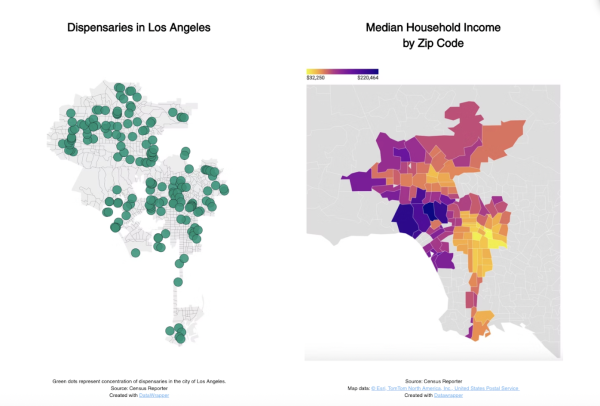
Dispensaries are abundant in Los Angeles, with over 1,400 active licenses for cannabis sales and nearly 300 retail stores. Dispensaries are citywide but heavily concentrated in East LA, North Hollywood, Chatsworth and downtown.
For people like Raina, what began as a last resort now reflects a broader shift in how underserved Americans access relief. Dispensary workers describe a growing number of fearful, yet regular customers.
Despite its growing role as a substitute for formal care, marijuana remains under-researched, with limited studies on its long-term health effects. As legalization spreads and cannabis usage becomes more normalized, there is currently a lack of FDA regulations, according to the National Institute on Drug Abuse, as well as a need for renewed investment in a healthcare system that many have been forced to abandon.
During President Donald Trump’s previous term, the administration rescinded policies that had curbed federal prosecution of marijuana cases in states where it was legal and introduced budget proposals that removed protections for state medical marijuana programs.
However, a 2025 Pew Research poll reflected that a majority of Republicans under 50 support the legalization of medical and recreational marijuana. This points to a generational shift that may pressure the administration to reconsider its stance and explore what cannabis reform could look like under Secretary of Health and Human Services Robert F. Kennedy Jr.
Beyond politics and policy, the human dimension remains clear: many immigrants turn to cannabis as a form of pain relief when traditional healthcare is inaccessible or unaffordable. For these communities, weed represents not just recreation, but reprieve; a small measure of autonomy in a system that often leaves them without reliable care or resources.