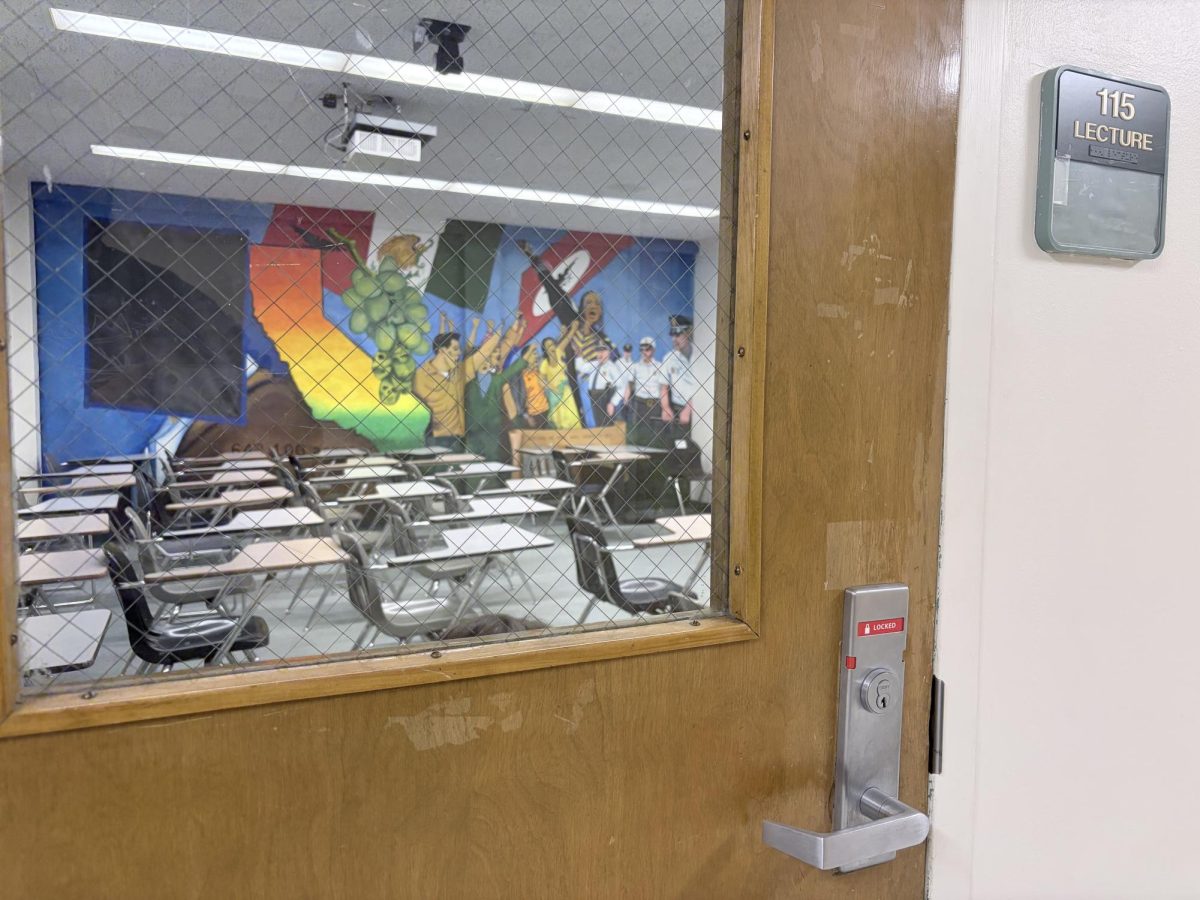

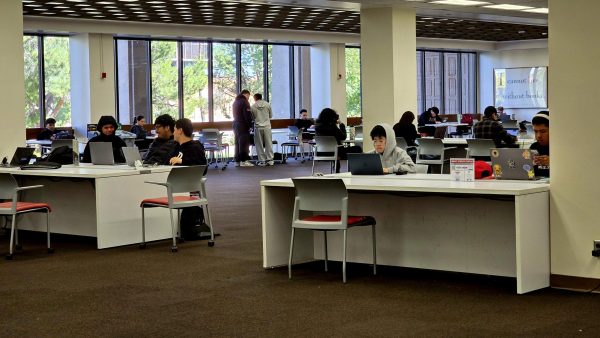
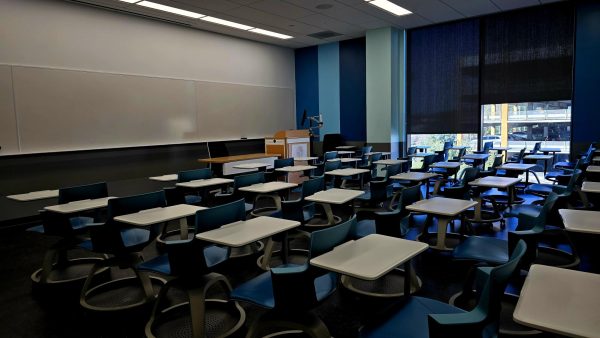
CSUN students learn differently every day. Some learn in lecture classrooms, taking notes as professors educate. Others attend Zoom meetings in the library nook with headphones in, attending synchronous courses in between times of self-learning. Then there are students who learn asynchronously, finishing their online coursework on their own time.
Each of these class formats – in-person, remote or hybrid – impact students’ ability to manage time, stay focused and determine success on CSUN’s campus.
Junior criminal justice major Ingrid Esparza Bojorquez said she enjoys having classes in-person because it is easy to connect with professors and fellow classmates. She explained that it is more convenient to ask questions and interact with others during a lecture when students are face-to-face with the professor. While Bojorquez sometimes takes classes over Zoom, it can be harder for her to pay attention online.
“I do find it a little distracting to be on my computer sometimes because there are pop-ups and notifications,” Bojorquez said. She noted that watching recorded lectures helps her go over the small things she may have missed during class.
Julie Flores, a journalism sophomore, believes that attending classes in person helps her remain disciplined and organized.
“Driving back and forth to school helps keep me on a schedule and sets me up to stay on track,” Flores said. While long days can be tiresome, being present helps her stay motivated.
Flores also stated that structure is important when it comes to succeeding in classes, explaining that when instructors clearly organize their courses and expectations, it makes learning easier for students.
Others attending CSUN value flexibility over structure. Junior art major Maitha Alremeithi said that online learning works best for her because she can’t always commute to campus, preferring to avoid traffic. However, she noted that sometimes it can be hard to stay motivated while at home.
“Some days I feel very focused, but other days I just feel so overwhelmed, even if the class is online or not,” Alremeithi said, adding that having more time slot options when building schedules could help students succeed.
Junior psychology major Adrian Ferrando said he enjoys learning in person because there is better engagement and more structure to the classes.
“Online learning is draining, and I don’t feel like I get as much out of it,” Ferrando said. “If my classes were all online, I feel like I would just be listening to someone talking in the background. If you have a good professor that keeps it interesting and you can understand them, online can work too, but in person is the best.”

Across the CSU system, students have access to flexible digital options through CSU Fully Online, which allows enrollment in virtual courses across campuses. Some courses, such as CHS 100 (Chicana/o Culture), are offered in multiple formats in person, hybrid and fully online, reflecting the growing shift toward adaptable learning models as universities respond to changing student needs.
Health administration major Ben Asur thinks blending formats is ideal for time management. For Asur, set meetings motivate him, but open classes allow him to proceed at his own pace.
“It’s less stressful because you don’t have to be here sitting in a classroom every day,” he said. “If you learn in more than one format, you’ll be more prepared, and it gives you more flexibility.”
Computer science junior Arad Rokni said attending classes in person allows for more attention.
Faculty see formats differently as well. Ronald Davidson, a professor of geography and environmental studies, says engagement can differ depending on format. Students can connect more in person because of body language, tone and overall “classroom vibe.” Online learning isn’t quite the same.
“When you’re doing online learning, you’re just staring at a screen. You don’t see the students,” Davidson said. He added that it’s difficult to get a sense of who is engaged during remote learning. However, Davidson said that good, small online courses could be beneficial.
Nayan G. Ramirez, associate professor of criminology and justice studies and faculty developer, feels there is no format that fits all students.
“Each format offers different strengths and challenges, depending on course design and student needs,” he said. “Ultimately, student success depends more on clear expectations, thoughtful design and meaningful interaction than on the format itself.”
On campus, students move between classrooms, dorms, libraries and online spaces, shaping how learning fits into their daily routines. Some thrive on structure and face-to-face interaction, while others value flexibility and independence. For many, success comes from finding the balance that best supports focus, motivation and time management.
As learning continues evolving, students and faculty agree that format alone does not determine success. Instead, engagement, organization and access to resources play the defining role in shaping the modern college experience.