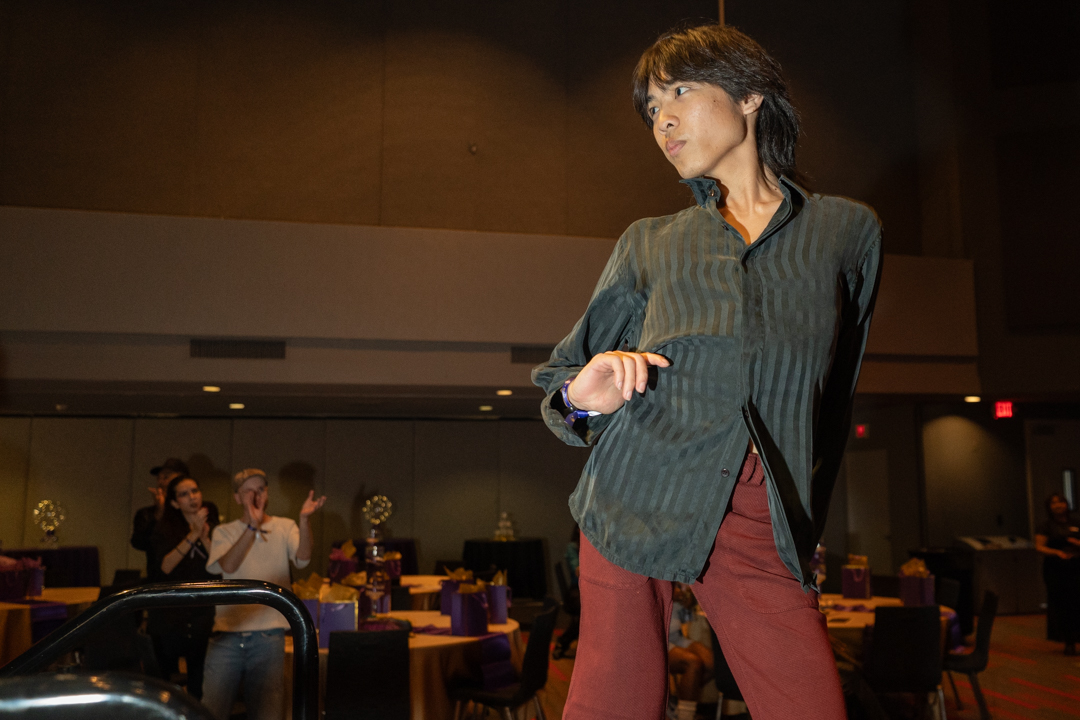
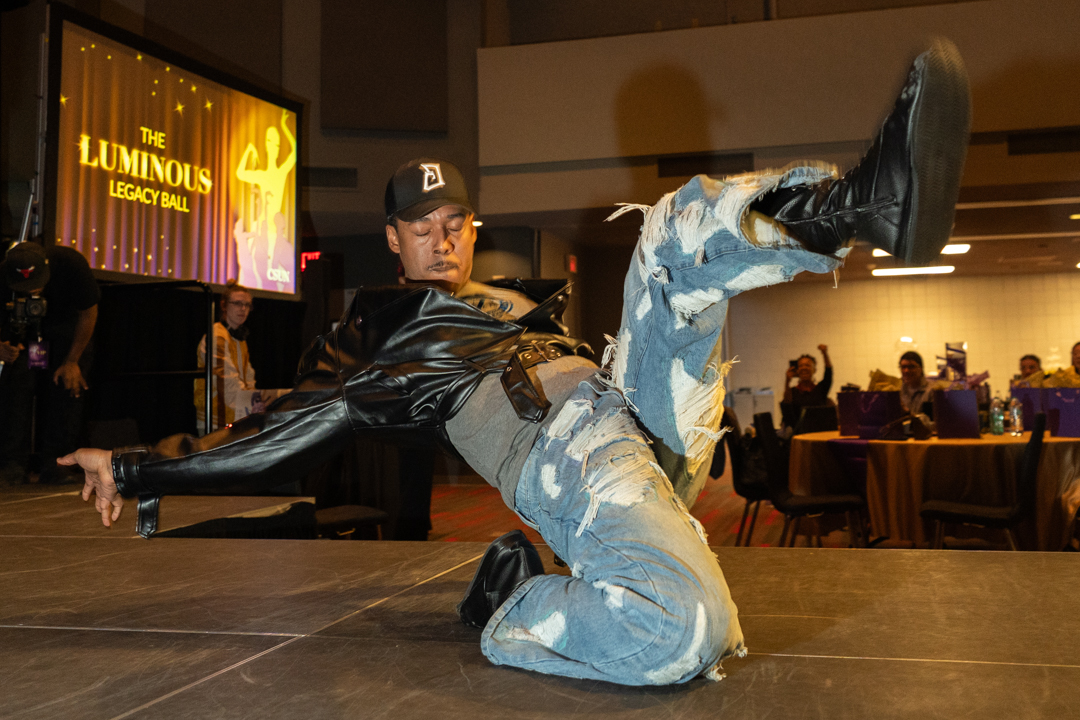
Doors opened at the Northridge Conference Center on Saturday as music, food and anticipation filled the space for CSUN’s first-ever Luminous Legacy Ball. The program included a ballroom competition with categories such as “Solar Elegance” and “Light Speed Legends,” centering on themes of Black history, queer culture and house legacy.
Hosted in collaboration with the House of LaBeija, the Africana Studies Department and Queer Studies Program, the event combined education and performance, highlighting ballroom culture’s roots in Black and LGBTQ+ resistance and community-building.
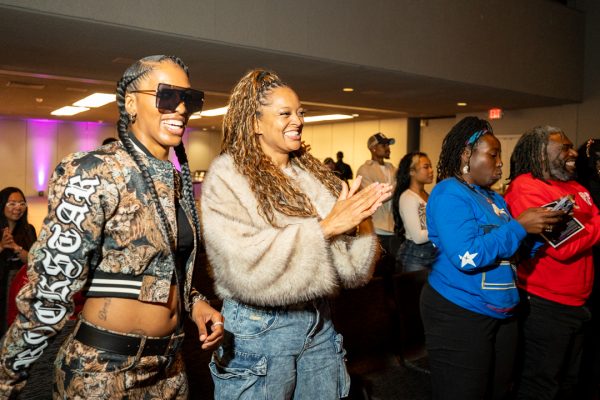
Ballroom culture emerged in the late 1960s as a space created by Black and Latinx LGBTQ+ communities, particularly transgender women and gay men of color who were excluded from mainstream pageant systems. Houses in the ballroom scene, such as the House of LaBeija, function as chosen families by offering mentorship, protection and community – a structure that can be documented in films like “Paris is Burning.”
Throughout the evening, competitors walked in categories ranging from best dressed, titled “Solar Elegance,” to performance, titled “Light Speed Legends.”
For organizers, the night was more than performance – it was about visibility.
“This event is really a big celebration for Black History Month, as well as queer culture,” a Pride Center staff member said, requesting anonymity to speak candidly about the event. “It’s essentially a safe space for people, especially people of color in the queer community, to express themselves and be who they are – be out loud and proud.”
She referenced ballroom’s cultural roots, noting its depiction in “Paris is Burning” and “Pose,” both of which highlight house culture within Black and Latino queer communities.
“There’s a lot of intersectionality,” she said. “You can be queer and Black, you can be queer and Hispanic. We want to bring that to life.”
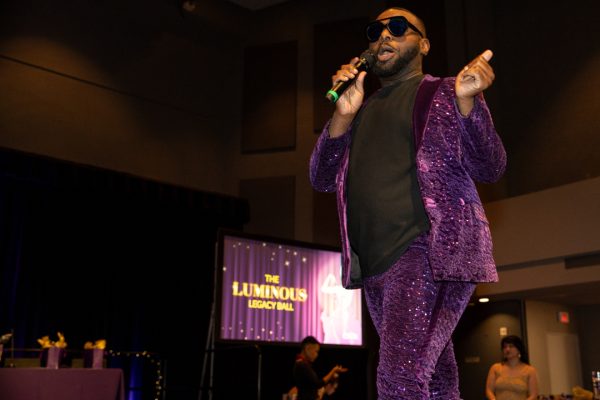
Jared Brown, a graduate assistant at the Pride Center, described the ball as both a celebration and an introduction for students unfamiliar with ballroom culture.
“This is an opportunity to celebrate not only Black queer history, but also Black History Month,” Brown said. “A lot of students don’t really have an idea of what ballroom is … so this is their first experience.”
According to Brown, hosting the ball in partnership with the Department of Africana Studies and the Queer Studies Program demonstrates collaboration between academic affairs and student affairs across campus.
For students in attendance, the impact was immediate.
“I think it means that CSUN really works to make this feel inclusive,” Kevin Wongbitavas, a junior majoring in psychology, said. “It gives people a space to connect … that’s really important.”
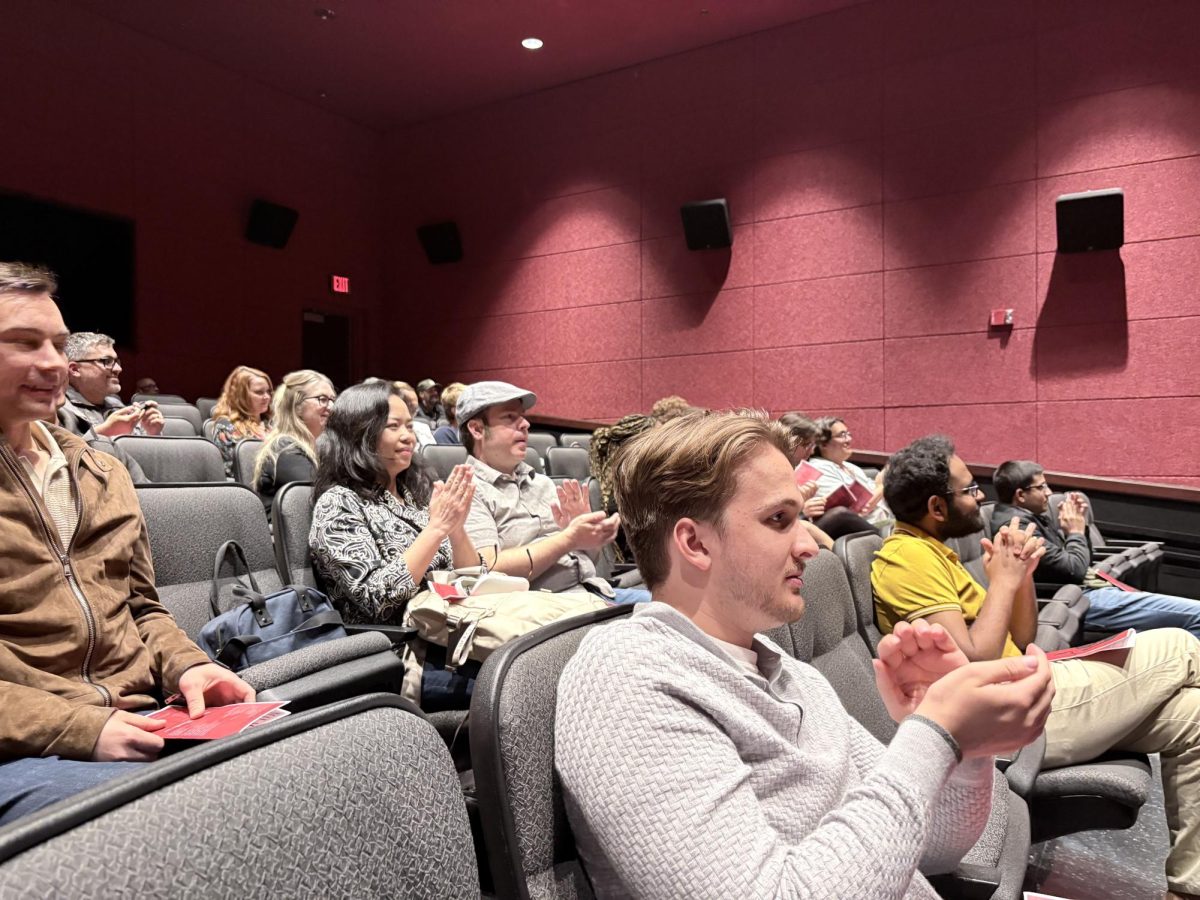
Competitors walked and performed as audience members cheered from their seats throughout the evening. Attendees said the event created space for connection, and organizers indicated interest in continuing the ball in future years.
“For students who may feel unseen, this ballroom is the perfect place to come and show your most authentic self,” Brown said. “If you can’t be seen in the ballroom scene, how are you going to be seen in the real world?”