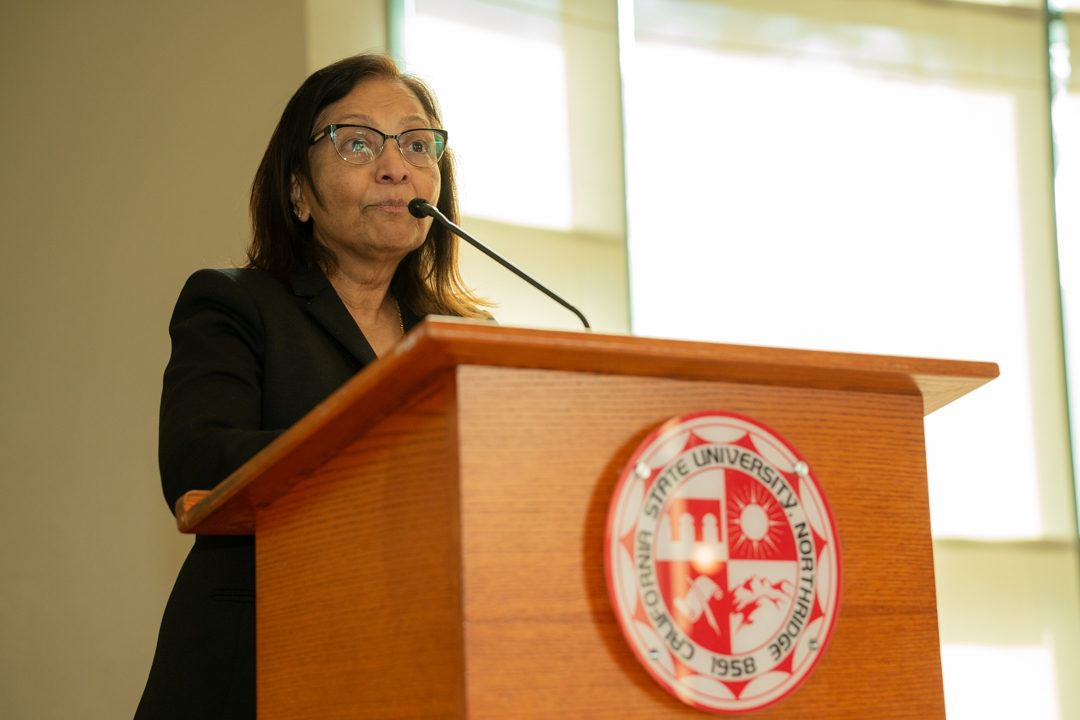
The Faculty Senate of CSUN (FS) failed to pass a resolution that would have called for the resignation or removal of Provost Meera Komarraju on Feb. 21 in a 29-32 vote. 10 senators withheld or failed to vote.
The resolution, titled the “No Confidence Resolution,” additionally called for the position to be filled by “an interim provost selected from the current administration at CSUN who have more experience working with the students, faculty, staff, and administration of CSUN, until a permanent replacement can be found,” according to the seven-page document.
The Senate originally introduced this resolution on Dec. 1, 2025, three days before their final meeting of the fall semester, stating a lack of confidence in the current university provost’s ability to perform her roles effectively. The resolution stemmed from a slow build-up of tensions against Komarraju, related to problems with grant funding, employee morale, hiring practices and other issues.
The resolution introduced 18 points in which the Senate claims Komarraju has failed to perform her duties. Among those issues is Komarraju’s decision to end the Large Grant Program (LGP) over the summer of 2025, after a whistleblower reported noncompliance with federal regulations. Though the claims were proven true, the resolution claims that Komarraju made decisions without faculty input, which has impacted or halted research across campus.
The resolution passed its first round of votes last semester and needed one more round of votes to be passed as a consensus of the FS.
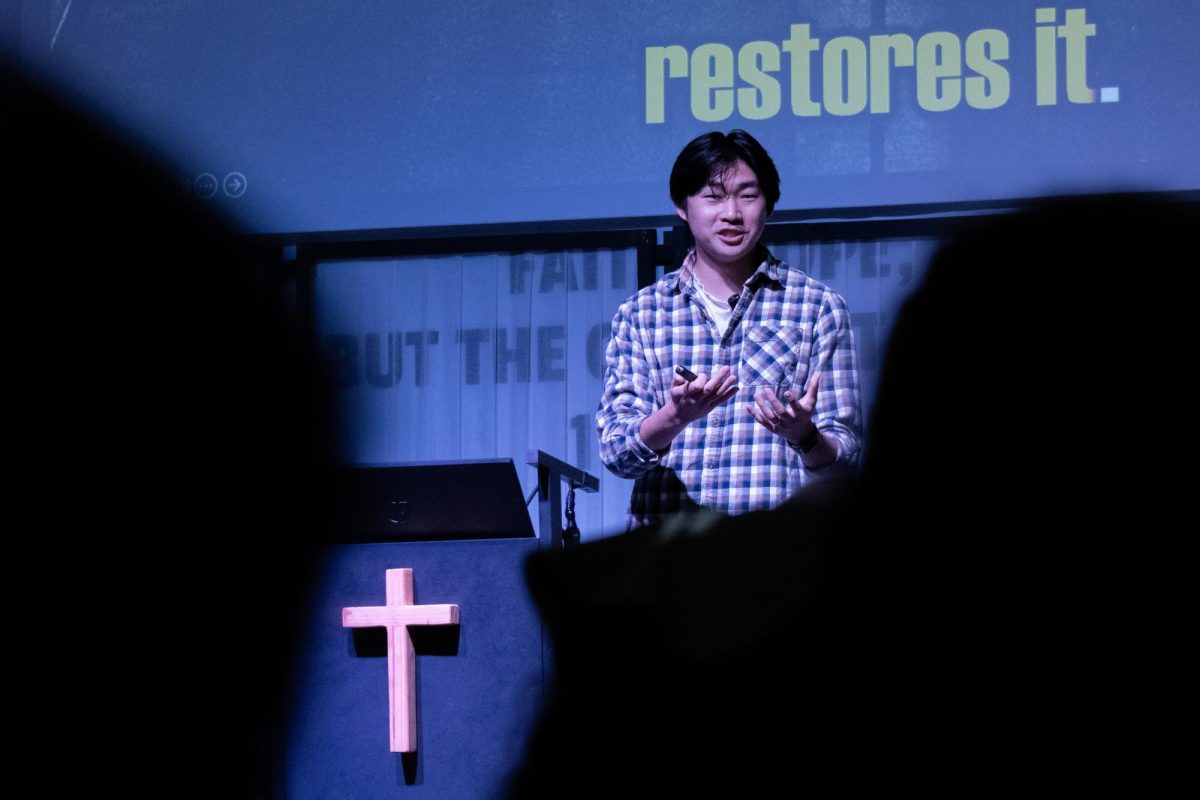
“I’m disappointed, but I still think it makes a strong statement that close to 50% something, like 48% of the Faculty Senate, still voted that they don’t have confidence in the provost leadership,” said FS faculty member Casey TerHorst. “I’m hoping that still makes a statement, and that hopefully change might still come out of it, changes in leadership, changes in policies and procedures.
TerHorst has been the unofficial “face” of the resolution, speaking closely with members regarding their concerns and personal conflicts with the provost. He said that some members feel more comfortable using him as a spokesperson on their concerns, in fear of retaliation that could impact their tenure. The document reiterates these claims, stating that “the culture of fear and retaliation established by the Provost have led to a severe decline in faculty morale.”
President of the Faculty Senate Jeffrey Wiegley said that once the resolution passed the first vote, it became the voice of the entire FS because of the structure of Robert’s Rules of Order, or a set of parliamentary guidelines.
“Once one person makes a motion and a second person seconds it, those two people aren’t considered to have ownership of that. It just becomes the entire body. It’s owned by them,” he said. “The faculty that are behind this are all of us, not I’m not saying we all support it, but it’s our issue to deal with.
Before the second vote, Wiegley made clear that the resolution, even if passed, does not necessarily mean that the provost would be removed and is ultimately up to the discretion of the CSUN president and the provost.
“If we pass the resolution, it’s a loud voice that says we don’t like this person as our leadership,” he said. “We want them to either recognize themselves that they’re doing a bad job and to step down voluntarily or to have the President make a choice to remove them from the position, but neither one has to.”
The vote, originally scheduled for the end of the February FS meeting, was pushed back due to time constraints. During the meeting, however, some felt that members of the senate were drawing out discussions in a “bad faith” attempt to stop the vote from proceeding. The vote was then held asynchronously from Feb. 18 to Feb. 20.
College of Science and Mathematics Special Assistant to the Dean Robert Espinoza thinks that the cuts to the LGP were the tipping point for FS members in his college to support this resolution, since they rely on that funding to have dedicated compensation and “reassign” time for research.
Espinoza said that although faculty were told the CSU required the LGP to be shut down, he has not seen any evidence proving this to be true. In a letter from Interim Executive Vice Chancellor and Financial Chief Officer Patrick J. Lenz, it was required that CSUN discontinue all Non-Compliant LGP Practices, but it doesn’t require the program to shut down entirely.
“It’s not really clear what we can believe anymore,” he said. “There has been an erosion of trust, which is one of the major concerns about this resolution.”
In response to the cutting of the LGP, Komarraju said that she is committed to research at CSUN and confirmed that she is in the process of designing a new grant program that complies with CSU regulations and expands research to “faculty and students across all disciplines.”
The resolution also addressed concerns over unfair hiring practices, increased workloads and governance over faculty instead of a collaborative effort. One specific point mentioned the status of CSUN being a Black-serving institution, but claims that the university has failed to hire well-qualified Black administrators to serve students.
The last point of the resolution claims that the provost has not “[upheld] the core values of the university and frequently acts in opposition to the goals of CSUN’s Road Map to the Future.”
Komarraju was unavailable for comment, but prepared a written statement where she reiterated that she is honored to hold her position in the university and, as a first-generation college student, was “drawn to CSUN’s mission and deep commitment to equity, social mobility, and fostering a sense of belonging for all students.”
She claims that the resolution has allegations that are “either factually inaccurate or lack important context,” though it is not stated which allegations are being referred to. She also acknowledged that in a leadership position, there will always be some people who are disappointed or disagree, but that she makes “decisions carefully and deliberately, seeking to understand how they affect people based on their unique perspectives and lived experiences.”
Overall, Komarraju stated she is disappointed in the resolution and desires to address the concerns with “accuracy and good faith,” through shared governance.
TerHorst added that parts of the resolution may still be considered separately and hopes that it will still result in a change on a smaller scale.