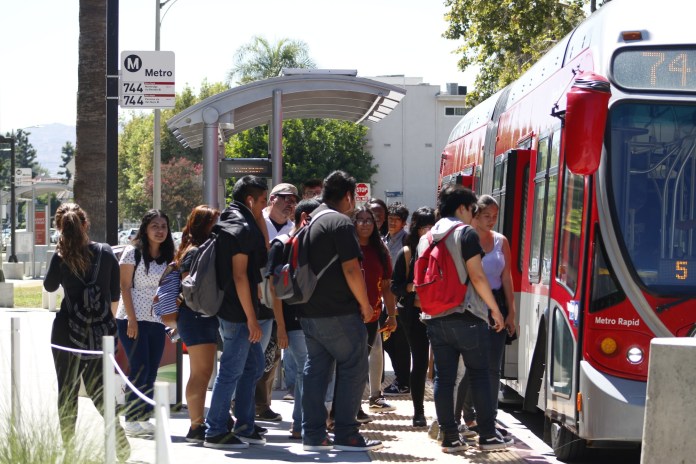
Students who purchased the CSUN Metro U-Pass this semester may have noticed a higher discount than in previous years, as the price dropped from $95 to $60. This was accomplished through a collaborative effort between Associated Students (AS) and the Young Democratic Socialists of America (YDSA) club on campus.
The Metro U-Pass is a discounted program that provides students semester-long access to all Metro services, including buses, Metro Rapid and Metro Rail. Though the discount is granted through CSUN enrollment, the pass is unlimited and can be used for any travel activity.
The push for lower prices began when YDSA questioned why Metro prices were so high and successfully got them lowered to $80. Since then, they have been working with AS to bring the price further down for commuter students who rely on public transportation to attend school.
One member of AS helping lead conversations with Metro is Marcelo Cabrera Figueroa, the senator for the College of Social and Behavioral Sciences.
“This is a big win for a lot of students,” Figueroa said. “A lot of people have complained since last year, when I first transferred here, that the price was unaffordable. You know, ‘$95 is way too much. I’d rather pay my $1.20 a day,’ because to some people, it genuinely feels like less in the moment.”
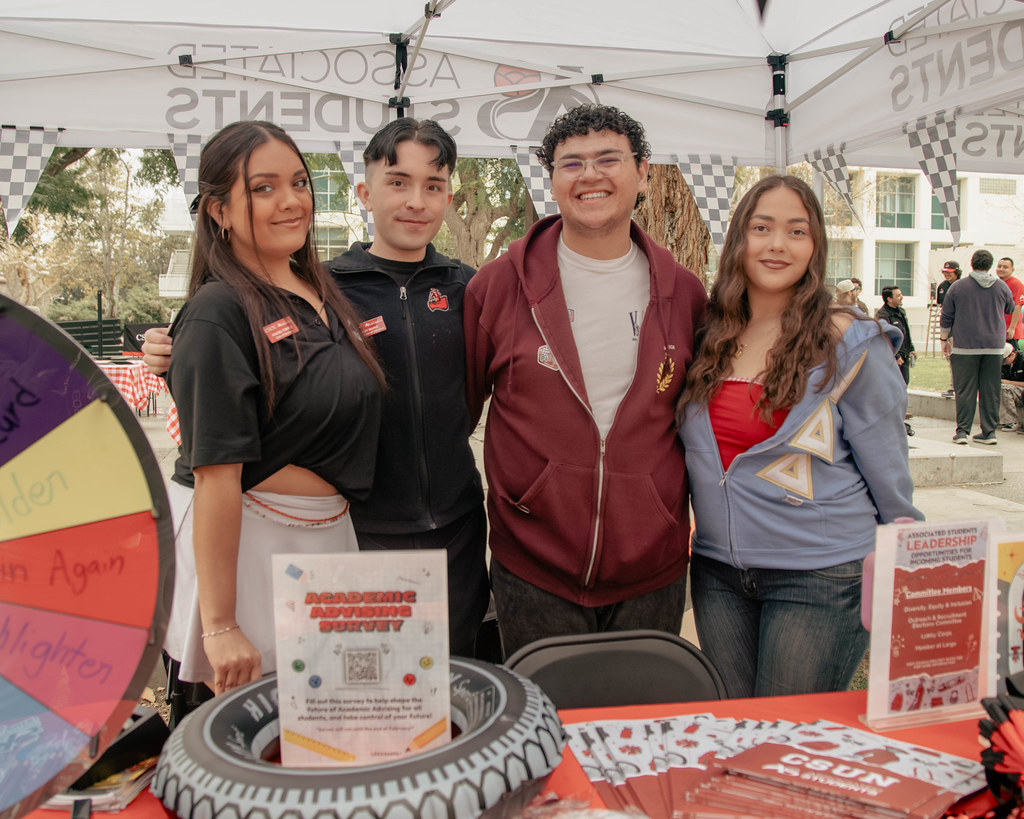
The first step to making this change was to collect surveys from students, gauging ridership among commuters and interest in using the pass. AS distributed this survey through tabling events and by emailing deans and department heads to reach more students. It opened at the end of Fall 2025 and closed the second week of the current semester.
“I would definitely love to get more students’ feedback, maybe have further discussions on this,” Figueroa said. “This is a big campus. It’s like 38,000 students. I want to reflect as many of those students as possible.”
The survey revealed a “balancing act” with Metro. To lower prices, ridership needs to increase, but students are hesitant to buy passes because of the high cost.
Figueroa believes that low visibility on campus may also contribute to the lack of interest in U-Passes. He has planned educational campaigns and marketing campaigns to help raise student awareness.
According to the survey, 57% of students did not know where to get a Metro Pass, and 75% had heard of the term Metro U-pass.
“You can know about something all day. But if you can’t get it, what point is it or what value is it to you?” Figueroa asked.
Ultimately, AS’s goal is to make passes free or at least keep the price as low as possible for students – within the $10 to $15 range.
“I’m a former community college transfer, so I had a free Metro pass because of state subsidies. So, it’s part of why this is such a personal thing to me,” Figueroa said.
While discussing the effort that AS has put into making these discounts happen, he also encouraged students to get involved on campus with student organizations that they relate to and fight for change that is important to them. Feedback from students can go a long way in making change, according to Figueroa.
“I already believe them, but Metro needs to believe them. CSUN administration needs to believe them. State politicians need to believe them,” Figueroa said. “So we need physical students to actually show up, make their voices heard, and then from there, that’s how we fight for a better future.”
Currently, Metro U-Passes are available for purchase through the AS Ticket Office and will remain valid until May 24.
While transportation is a major focus, AS is also navigating broader financial changes. Emily Teret, the AS chair of finance, took over in September and has been working to catch up on funding requests dating back to July. Her primary mission is to advocate for students and promote the funding and financial support that AS offers, which many students are not aware of.
“I think a big issue that I’ve been facing recently is a lot of clubs get new officers, and the previous officers don’t notify them about how the process works,” Teret explained. “It really depends on the communication of the club.”
Through AS, students have four funding options. Student Travel assists with general travel for events like conferences, while Student Travel Academic Research (STAR) is tailored for when a student or group is invited to present their research or project. For more general needs, the Supplemental Fund acts like an extension of a club’s annual budget to cover speaker/performance programs, promotional costs and rental facilities on campus. Lastly, the Philanthropy Fund, which was created after COVID, is used for charity events or club promotions.
Despite its “wonderful purpose,” Figueroa said, this branch of funding has decreased since few clubs use it. In a single year, the fund went from $15,000 to $7,500 due to underuse.
“I’s for charity, and it’s to raise awareness and to raise funds for charity or organizational programs that help, you know, whatever it is. It could be, you know, breast cancer awareness or the children’s hospital,” Figueroa said.
A recent use of philanthropic funding is the GoBabyGo initiative with CSUN’s American Society of Mechanical Engineering (ASME), which was student-driven and organized. Participants modified ride-on cars for children with disabilities. After completing six cars, they had a Formula One-style race.
“It was really adorable,” Figueroa said. “The families of each of the children came and placed the children. They were all accessibility compliant, customized to each of the kids and their specific conditions.”
Despite broader budget cuts, the half a million dollars allocated for students has not been affected. AS uses the Code on Finance, which is available as public information, for funding regulations. For example, the maximum amount the committee can allocate to a single student traveling is $800, and it can cover only 50% of their overall expenses.
To address the gap between large and small clubs, “viewpoint neutrality” has been proposed. It limits all clubs to the same budget to ensure equal opportunity for all organizations, regardless of the number of club members.
“If we could give every club or every student as much money as they wanted, we would, but we do have a limit, and we want to try to be as fair as possible,” Teret said. “We want to give all students the same chance.”
If a request for funding for an event exceeds $800, which it usually does according to Teret, it goes to the Finance Committee and then to the Senate for a decision during the 9 a.m. Monday meetings in the Grand Salon. If everything goes as scheduled, the whole process takes about four weeks.
Some issues that can delay the approval process include a lack of clarity on the event details, such as a petition to reserve a location on campus, supplies for a specific activity or any guest speakers, which may require clubs to return and answer the committee’s questions to determine the amount to be approved.
It is rare for a request to be denied, but Teret encourages as many clubs as possible to inform themselves on the code of finance and to plead their case for funding. She, along with the committee, offers a presentation on finance to demonstrate the process and explain the available funding. She has also started working with the AS marketing team to post informational videos on the AS Instagram account.
“It’s very rare when we say no,” Teret said. “It’s not just students that are part of this committee, we also have some advisors. So, we have our controller, we have our executive director, maybe a university advisor, that are all there to support us.”
Clubs can find the link to apply under the CSUN financing page, along with any information for supplemental funding.