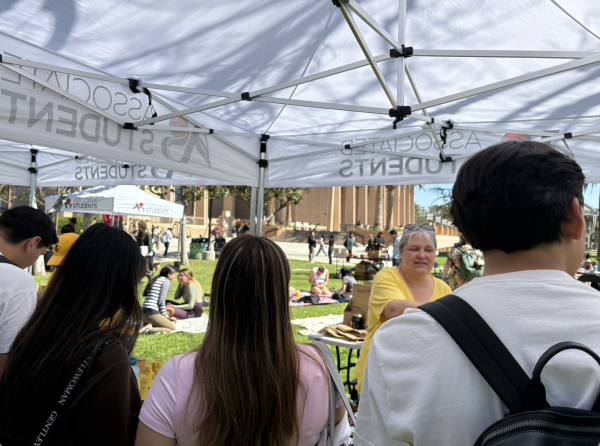
An Associated Students (AS) member, dressed in bee costume, greeted students at the check-in table, welcoming them to the annual “Save the Bees” event. As temperatures reached over 80 degrees, students gathered on Bayramian Lawn, which was decorated with bee baths, to learn about the role bees play in daily life and spoke with local organizations such as the S.O.W. Collective, a neighborhood backyard farming initiative.
The annual event returned for its second year, aiming to raise awareness about the importance of bees. Liz Cartojano, AS sustainability coordinator, oversees sustainability programming for AS. The event itself was led by student organizer Alonna Eskandari.
Cartojano said the goal of the event is to raise awareness about the role bees play in daily life.
“One out of every three bites of food we eat is pollinated by bees,” she said. She added that bee populations remain in decline due to habitat loss and pesticide use, making education and small actions, such as creating bee-friendly spaces, especially important.
Cartojano said the event was first proposed by an event producer whom they’ve worked with in the past and debuted last year.
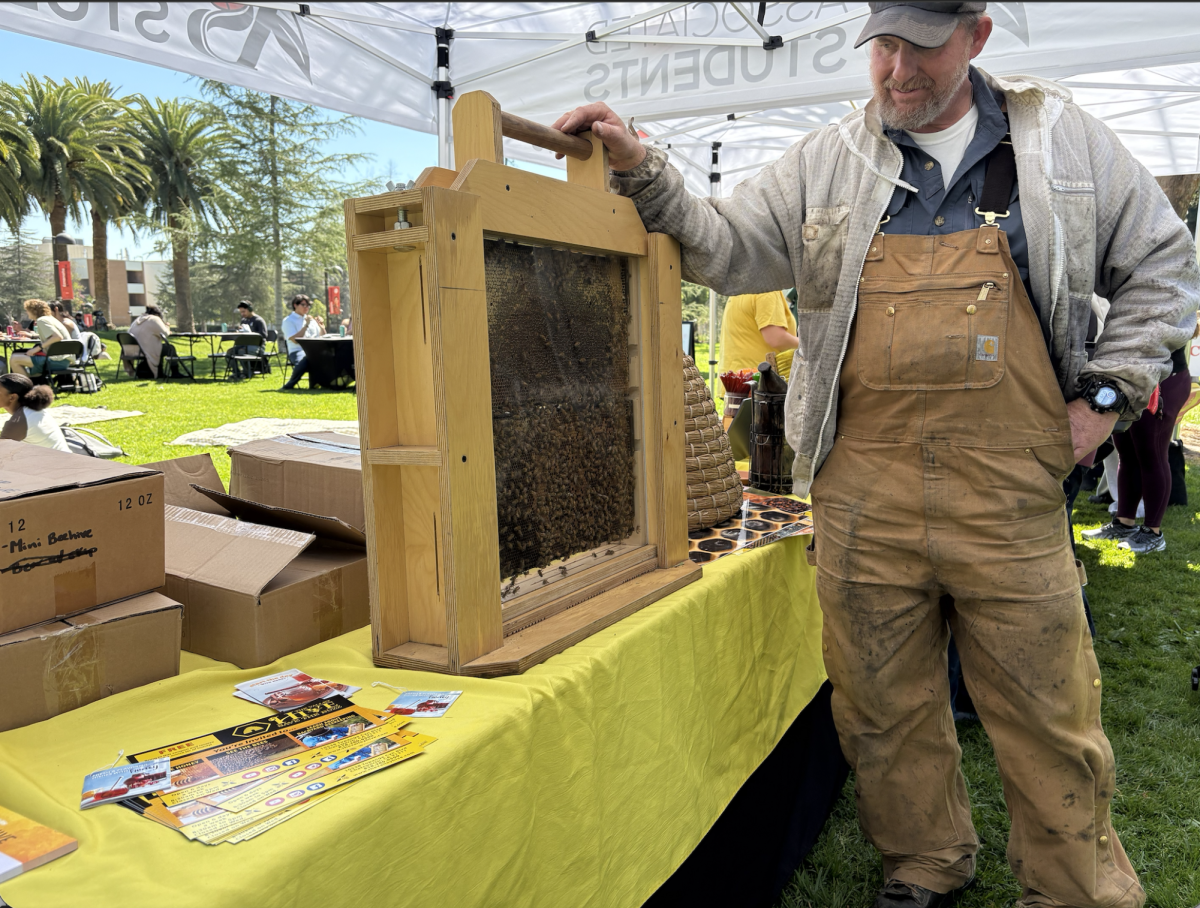
One of the featured booths included The Valley Hive, a beekeeping organization based in Chatsworth. Keith Roberts, co-founder and beekeeper at The Valley Hive, brought a live observation hive to the event. The hive and honey tasting station were positioned near the center of the lawn, drawing immediate attention.
A small crowd gathered around the enclosure as Roberts pointed out the queen bee. At one point, a student asked whether the bees could breathe inside the hive. Roberts smiled and reassured the group that the enclosure was properly ventilated, comparing it to taking the bees on a “little field trip.”
As bees moved across the honeycomb inside the observation hive, students leaned closer for a better look. Roberts explained that queen bees can live for two years or longer, while worker bees typically live four to six weeks. Roberts then explained that a single bee produces about one-twelfth of a tablespoon of honey, meaning it takes tens of thousands of bees working together to produce up to 60 pounds of honey in a year.
Next to the hive, a selection of honey was available for tasting. Students formed a small crowd around the table, sampling varieties ranging from creamy honey-cinnamon to the popular creamy matcha. A volunteer assisting with the tasting described the matcha as tasting like “sweet grass.”
Among those sampling honey was Cythinia Guzman, a biology major who said she and a friend stopped by after seeing the event while on their way to lunch. Guzman said she was glad she returned, adding that she was surprised to learn that beekeepers can use powdered sugar to check bees for mites rather than the alternative method of alcohol, which kills them.
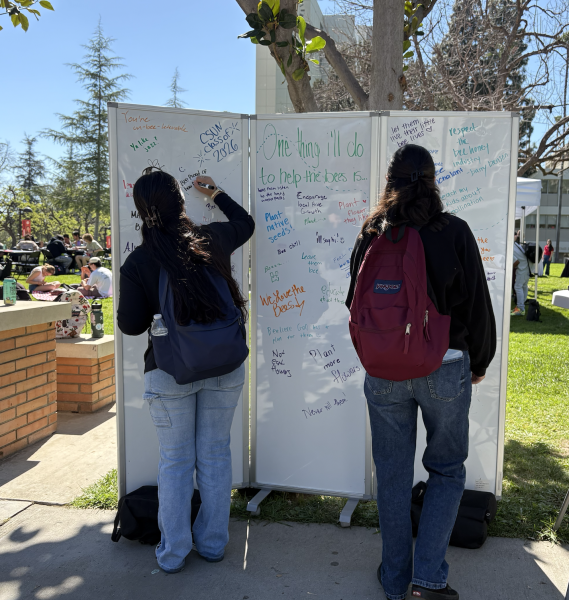
Elizabeth Martinez, a sociology major, said she was drawn to the event because it focused on nature and offered an opportunity to gain new knowledge. She was surprised to learn how accessible planting can be.
“I thought planting was more of a complex process, but it’s not,” Martinez said.
As the afternoon wound down and the crowd thinned, AS members continued welcoming new arrivals. Some students remained seated at tables, while others stretched across blankets on the grass. Music played in the background as conversations about bees mixed with talk of the beach and upcoming plans. The small painted bowls, soon to be placed outside as bee baths, reflected the event’s balance of lighthearted campus energy and a shared interest in learning more about bees.