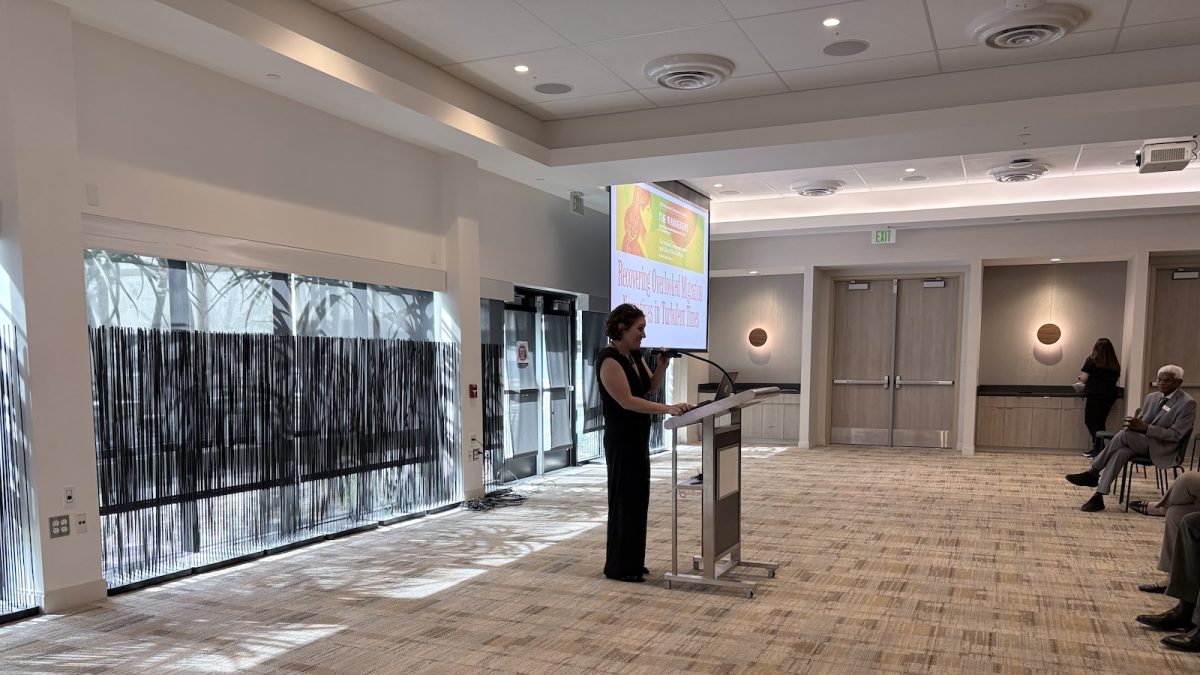

A documentary exploring the influence of news coverage on public understanding of transgender issues was screened at the Elaine & Alan Armer Screening Room, bringing a national conversation about journalism, policy and identity to campus.
The screening, presented by the Queer Studies program, featured director Sam Feder’s 2025 documentary “Heightened Scrutiny,” followed by a talkback with Feder, moderated by Queer Studies professor Sid Hansen and Cinema and Television Arts (CTVA) professor Guillermo Rodriguez.
The film follows American Civil Liberties Union (ACLU) attorney Chase Strangio as he becomes the first and openly transgender person to argue a case before the U.S. Supreme Court. It examined how reporting on transgender issues influences public understanding and policy decisions.
The documentary situates Strangio’s case within a broader debate over gender-affirming care, placing his legal work in the context of increasing restrictions on transgender healthcare across the United States. It highlighted how these issues have intersected with political discourse and legislation, shaping how such policies are discussed and challenged.
Through interviews with journalists, advocates and media analysts, “Heightened Scrutiny” investigates how reporting on transgender issues is often presented through biased framing and misinformation and how those portrayals can contribute to national political debates.
Feder said the film aims to examine how journalism shapes conversations around transgender issues and their broader social and political implications.
During the post-screening discussion, Feder emphasized the direct relationship between media coverage and real-world consequences, stating that coverage “has a direct impact on the public discourse.” He noted that as mainstream media shifted toward skepticism of transgender rights, “the mass population followed,” adding that such coverage has given people “permission to debate our human rights.”
Feder also pointed out the growing connection between editorial perspectives and lawmaking, arguing that coverage can move quickly from public discourse to policymaking.
Hansen and Rodriguez expanded on the film’s themes during the discussion, emphasizing how media framing can influence public understanding of complex social issues.
Rodriguez pointed to research showing that major outlets such as The New York Times often frame transgender people as a threat rather than a group under threat.
“The news media really set the political agenda,” Rodriguez said, noting that press coverage often portrays transgender people as a liability rather than individuals facing harm.
Hansen added that media commentary can influence legal and political outcomes, reinforcing broader systemic consequences.
The discussion addressed how repeated perspectives in major publications can influence audiences’ interpretations of complex and often misunderstood topics, such as LGBTQIA+ rights.
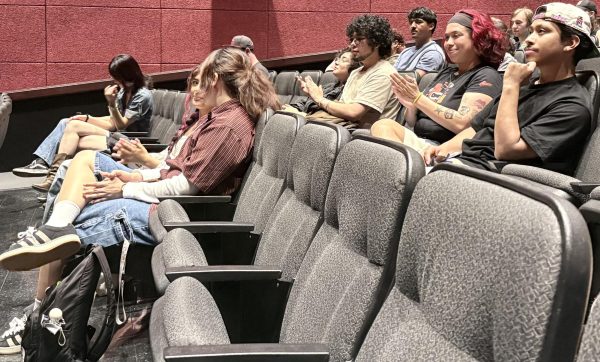
Audience members engaged directly with the film’s themes, with one attendee questioning how perspectives on representation have evolved from beyond visibility to systemic change.
Feder responded that while representation remains important, increased visibility has often been accompanied by heightened scrutiny and backlash, reinforcing the film’s central argument about the limits of representation alone.
The screening and discussion left attendees considering not only how transgender issues are covered, but also how those portrayals shape ongoing conversations beyond the screen.