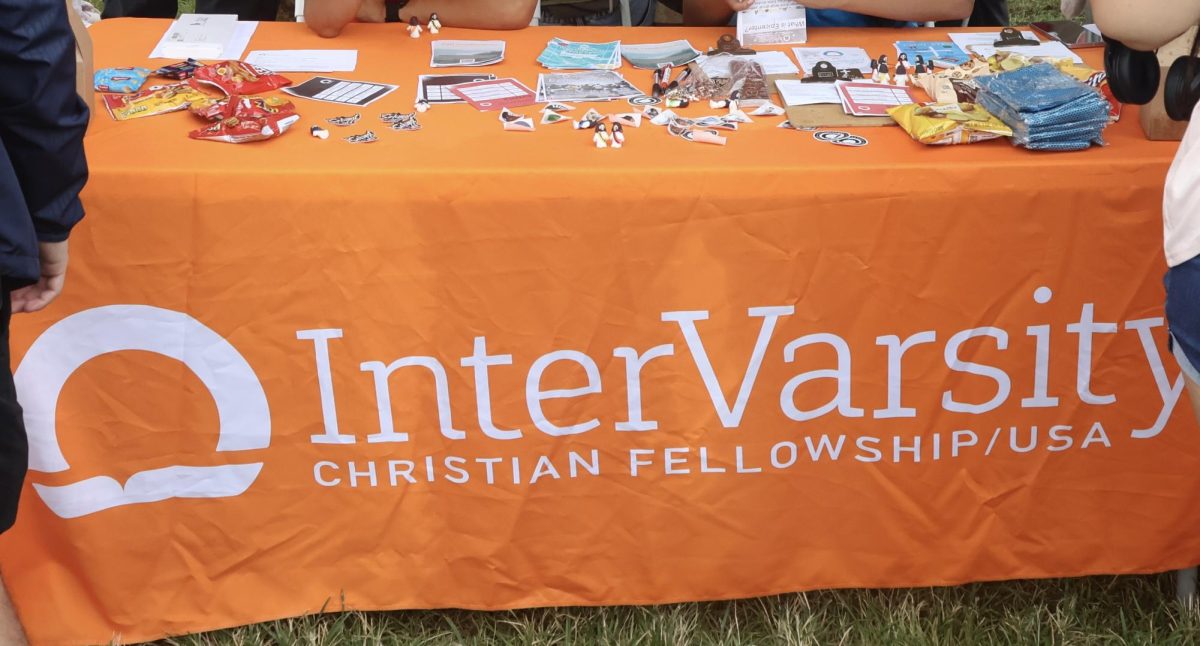

Sammi Trainer, a junior art major and transfer student, was walking toward the University Library with a friend when an unknown man approached them, placed his hand on her back and guided her to his table.
Trainer recalled him asking them to follow him before handing her a pen and paper. When she politely declined, his demeanor instantly shifted from calling her “princess” to demanding $10 for “wasting his time,” claiming she looked like she had “money glasses.”
Trainer flipped him off and walked away. She said the encounter left her shocked and uncomfortable enough that she now avoids petition tables by taking longer routes between classes.
Four years after the Daily Sundial reported similar harassment complaints, students say signature gatherers, often paid by third-party firms, are still approaching them aggressively and sometimes refusing to take no for an answer. CSUN’s time, place and manner policy permits this in outdoor spaces, like sidewalks, quads and near the Matador statue, but not inside buildings or when blocking paths.
“They are allowed to approach people. They are allowed to ask for signatures,” CSUN Department of Police Services (DPS) Commander Gabriel Kearney said. “But if somebody says no, they have to let that go.”

Trainer did not report her encounter near the library. She said because she was new to campus, she felt unsure of how to respond and doubted anything would come of it. The experience made her feel less safe and more aware of how she was being approached.
Freshman political science major Nicholas Deliberto had a similar experience earlier this semester while eating breakfast outside the Sierra Center with his girlfriend. After multiple refusals, the petitioner pressed him, asking, “You’re good? What does that mean?” He then added, “You don’t seem so good,” before walking away.
Deliberto said they both felt disturbed in an area where signs restrict solicitation.
“That’s an encounter I will always remember,” Deliberto said. “It really spoke volumes about how little they care about people and how much they care about the signature.”
Deliberto reported the incident to DPS and the Matador Involvement Center (MIC). He said an officer told him the petitioner was “technically within his right” under the First Amendment and had not directly threatened him, so DPS could only file an incident report.
Deliberto said that he felt dismissed.
“DPS won’t call it harassment, but I will. They won’t take no for an answer — it’s bad faith,” Deliberto said.
Kearney disputed the idea that nothing happens after reports, saying DPS took Deliberto’s complaint seriously.
“We pulled up that incident and looked for it on the closed-circuit TV cameras that cover the campus,” he said. “We didn’t see any crime committed, but the fact that the students still felt like they had been impeded was enough for us to act on.”
An officer located the man about an hour later. According to Kearney, the petitioner was given a “very stern admonition” and told what he could and could not do. If he continued approaching and harassing students, he would be served with a 626 trespass order, which is a seven-day campus ban, with violations a misdemeanor.
DPS receives about one complaint per week, with no increase since a 2022 Sundial report on solicitor harassment. Typical responses include warnings or trespass orders.
Deliberto saw the same man collecting signatures days later near the Sierra Center. He advises peers not to interact with petitioners.
“The less signatures they get, the more they’ll realize they shouldn’t be coming to this campus,” Deliberto said.
Students say petitioners use tactics to convince them to sign their petitions. These include promises of 30 seconds that stretch longer, guilt-driven appeals such as “you don’t want to stop billionaires?” and unclear explanations of what petitions support.
Kearney calls these “word games” by paid gatherers.
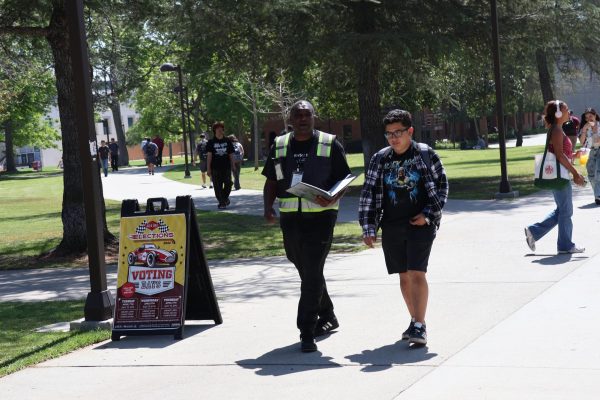
“They’ll use whatever ruse or tricks that they can to get those signatures because they want to get paid,” Kearney said.
Kearney urges students and staff to call DPS in any situation, no matter how minor it seems. He emphasized that people should not avoid reaching out just because they are unsure whether something is a police issue, since DPS is available around the clock and can help with any concern on campus.
Many students struggle with confrontation, Kearney said, but can benefit from learning how to assert clear boundaries.
“They need to educate themselves on what they can and cannot do, and they need to develop the confidence to stick up for themselves,” he said. “I would like to see students, if they’re approached, say, ‘No, I am not interested in signing your petition. Do not talk to me again.’”
Kearney also said DPS also consults with Student Affairs before taking action to balance campus safety with First Amendment rights on a public campus.
While reports have not increased, discomfort remains. For many students, “no” still doesn’t feel like enough, turning a simple walk to class into a constant calculation: engage, ignore or reroute.