
Residents attended the bi-weekly Residence Housing Association (RHA) town hall meeting held in Building 22 on March 5. Community members brought concerns about plumbing, undelivered packages and unwanted guests.
RHA President Christian Loza-Franco opened the meeting with introductions of the executive board members and the meeting itinerary. The RHA also held an open forum where residents addressed concerns about the housing mailroom, washroom facilities and housing maintenance.
“I know that it’s a problem that’s not easily fixed, but when it rains next to Building 13, the sidewalk completely floods,” said Tessa Lawton, a resident of Building 13.
Lawton went on to suggest stepping stones as a solution to the flooding issue. These stepping stones, she said, would help students navigate more easily when exiting and entering due to the large puddles that form between Buildings 13 and 15 during the rainy season.

Building 9 resident Nicholas Deliberto brought to attention the large amounts of mail inside and outside the old mailroom.
“We still get tons and tons of copious amounts of mail,” he said. “I found packages in front of my door. I’ve tripped over a few sometimes. I know a lot of people may not be getting their Amazon packages because of that.”
Deliberto claimed that this issue has not improved since the town hall meeting held three weeks ago, but has placed most of the responsibility on Amazon drivers who are still delivering packages to the retired mailroom.
Deliberto suggested that RHA post signs to inform future drivers of the new mailroom location. He emphasized the sign should include a map highlighting the newly built mailroom and residential building, Hibiscus Hall, along with a Spanish translation to be inclusive of Spanish-speaking drivers.
“From my perspective, it doesn’t look like they have much knowledge on this situation,” Deliberto said, referring to RHA members’ initial reaction to hearing about the mailroom issue during the town hall meeting.
Board members claimed this was not only an issue with delivery drivers but also with residents entering the wrong addresses.
Deliberto argued that this was not an accurate assessment because mostly freshmen are experiencing this issue since the grand opening of Hibiscus Hall on August 4, weeks before the first day of the academic year officially begins. According to Deliberto, freshmen are aware of the new mailroom location, yet residents of Building 9 are still dealing with this problem.
“I think RHA could put a little bit more effort into understanding what this is,” Deliberto said.
RHA advisor Sebastian Artola addressed the confusion, stating that while Amazon delivery drivers misplace packages, Artola and RHA members will gather them and place them in Hibiscus Hall. RHA’s headquarters is in the old mailroom in Building 9, so they give mail attendants an extra hand in ensuring packages reach residents safely.
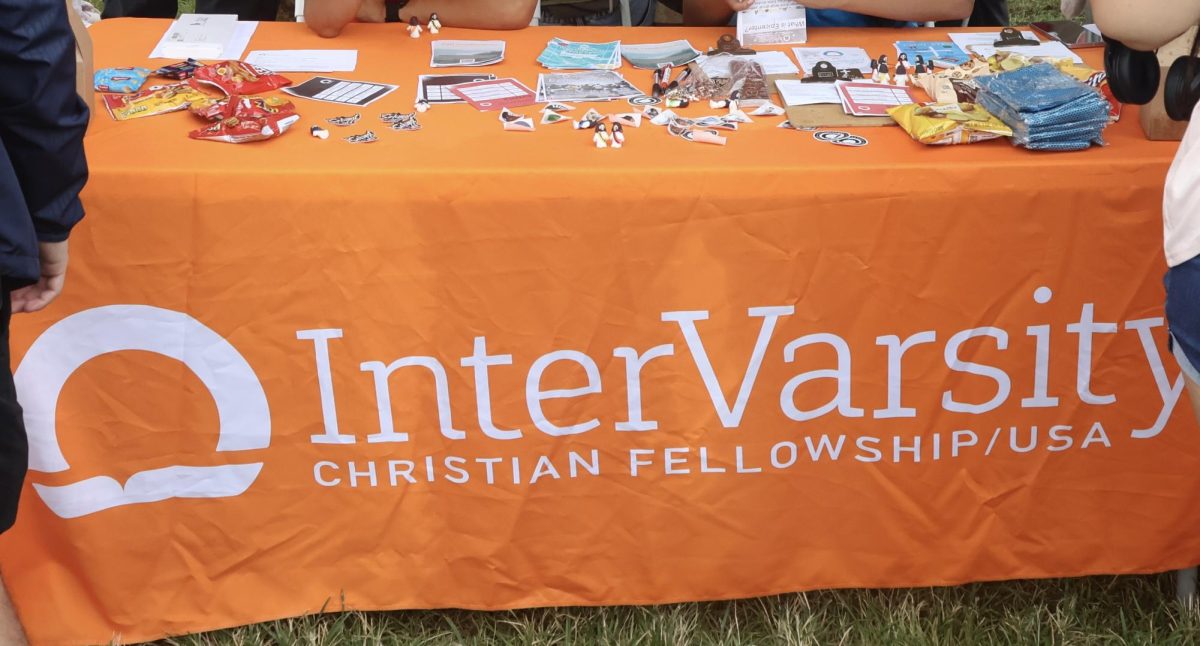
When discussing issues during his stay on campus, Deliberto mentioned a colleague, Kennedy Mondragon in Building 17, who had witnessed a Christian fellowship group entering their building without authorization.
“I’m pretty aware of who lives on my floor,” Mondragon said. “I know none of these people live there. I’ve never seen them before.”
Just last fall semester, Mondragon claimed that the members of this religious club did not reside in housing, yet hosted meetings in dorm living rooms around 6 p.m. on two separate occasions.
Additionally, the members were going to each resident’s door, asking for their name and whether they knew who Jesus was. To maintain access to the freshman dorm, one member allegedly used a door stopper to prop the main entrance door open, allowing anyone to enter.
Mondragon expressed that although they do respect the Christian clubs’ religious beliefs, they feel this poses a safety hazard to residents. They brought their concerns to the RHA president and were told to report any instances to the floor’s resident advisor (RA).
When Mondragon attempted to make a report by calling the RA’s on-duty phone number after the fellowship group made a second appearance, no one answered.
Since then, Mondragon has not seen the same group enter their building. They expressed that RHA should make it known that this form of solicitation is prohibited on housing premises and mostly places the RA of the floor at fault for not addressing the matter.
Building 10 resident Stephanie, who requested an alias, brought complaints to the town hall meeting about moldy puddles in the building’s laundry room. “There’s always this weird flooding/puddle that’s near the washer, and it’s starting to smell kind of moldy,” she said. “I’m concerned that mold is going to be building already, which is going to cause respiratory issues for anyone that’s using the water.”
In response to the washroom-molding issue, Loza-Franco assured the resident that he would speak with maintenance to resolve it, noting that this leak could potentially ruin washing machines. Since then, Stephanie has seen improvements with the leakage from the washing machines, but still claims it smells of must.
Stephanie has resided in student housing for two years, and although she appreciates the convenience of campus living, she has also been dealing with an ongoing roach issue since last fall semester. According to Stephanie, maintenance never resolved the issue, and they were instructed to buy their own roach traps and roach-repellent spray.
“We’re paying $4,400 for what? Bugs? Or for bathrooms to not be working for us?” Stephanie said. To address plumbing issues, she and her roommates considered hiring a plumber. That resolution was soon rejected by housing maintenance due to liability concerns.
Maintenance is contracted with a third-party plumbing company that has its own schedule and clientele. Therefore, residents such as Stephanie will have to wait for service members to come out and cannot outsource plumbing or any services; residents are required to go through CSUN primarily.
“We have this weird bureaucratic tomfoolery where we have to go through CSUN, but CSUN is very slow with regards to things. So, there’s no real winning with it,” Stephanie said.
The housing executive board concluded the forum with a giveaway of “Smiski’s,” a popular green figurine. They also announced upcoming events for residents, including RHA elections and Matachella in April.
In addition to the forum where students aired grievances, the RHA also introduced students to new resources.
Matador Eats floor Supervisor, Rita Severa, introduced new accommodations for students attending the dining hall, Geronimos. Located in CSUN student housing, Geronimos now has $10 cases of drinks and is an affordable alternative for residents compared to the campus convenience store, the Mercado.
Richard Quiroga, vice president of RHA, shares a new reward program app, Stamp me, available on the App Store, with residents. The app helps students earn reward points at various locations on campus for discounted or free meals. Some of the available locations include the Freudian Sip and Sambazon.